 Retro Replay Retro Gaming History, Reviews & Emulation
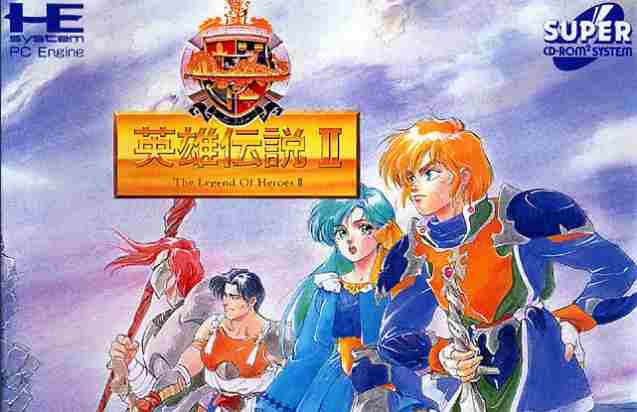
Edia is bringing the CD-ROM² versions of Dragon Slayer: The Legend of Heroes I and II to modern systems worldwide in 2027.
The Trails series did not spring into existence as a fully formed encyclopedia of nations, political factions and recurring heroes. Its roots stretch backward through The Legend of Heroes, and those roots stretch into Nihon Falcom’s even older Dragon Slayer family. In 2027, players outside Japan will receive an unusually direct way to explore that lineage when Edia brings the PC Engine CD-ROM² versions of Dragon Slayer: The Legend of Heroes I & II to PS4, PS5, Nintendo Switch and PC.
Edia confirmed the worldwide rerelease at Tokyo Game Show, where the first title was available to play. The selection of the PC Engine CD editions is important. Disc storage allowed these versions to add voiced scenes and a more theatrical presentation to RPGs born on Japanese computers. They preserve a moment when NEC’s CD hardware was not simply offering more space; it was changing what a console role-playing game could sound like.
The first Legend of Heroes follows Prince Selios, while its sequel continues the world’s story with a later generation. Their systems and pacing predate the conventions modern Trails fans take for granted, but the emphasis on an inhabited world and serialized continuity is recognizable. Playing them today can feel like opening a family album and spotting familiar expressions on people you have never met.
Edia previously announced that it had acquired rights to reissue a broader group of PC Engine CD Falcom titles, including Ys I–IV and The Legend of Xanadu I & II. That context makes this pair more than an isolated port. It may be the first visible step in a wider restoration program for NEC-era Falcom releases. The quality of translation, audio handling, input latency, display scaling and supporting historical material will determine whether the result feels archival or merely available.
Localization is the central question. Edia says the games are intended for a worldwide release, but it has not detailed language support or whether scripts are newly translated. Until that is confirmed, English-speaking fans should celebrate the international plan without assuming every text option. What is certain is that two important CD RPGs are leaving their original hardware behind—and a major modern series is getting part of its ancestry back. Thanks for letting me know, TimeExtension!



The PC Engine CD versions feel like the right ones to preserve because the voiced scenes and theatrical presentation are part of what made that hardware special. If Edia gets the translation, audio, and display scaling right, this could be more than two old RPGs dropped onto a storefront—it could show modern Trails fans where Falcom’s interest in connected worlds really started. I’d love a small historical gallery explaining how Selios and these early games fit into the family tree.
The PC Engine CD versions sound like the right pick for a modern reissue, especially with the voiced scenes and more theatrical presentation. I’m mostly waiting to hear how the worldwide release handles translation, since “international” does not automatically mean an English script.
The PC Engine CD versions sound like the right choice for a historical rerelease, especially with their voiced scenes and more theatrical presentation. I’m curious whether the worldwide launch will include a fresh English translation, though—that detail matters more to me than extra display options.
The PC Engine CD versions seem like the right releases to preserve, since the voiced scenes show how that hardware changed the presentation rather than merely adding storage. I’m most curious about input latency and language options; a worldwide release is exciting, but the translation question will decide how approachable these are.
That’s the key distinction for me too: the voiced scenes are part of the PC Engine CD-ROM² identity, not just extra files on the disc. I’d add that display scaling matters almost as much as latency here, since preserving the theatrical presentation means keeping text and character art readable without making the old screen layout look awkward.
The voiced scenes make this a much more interesting preservation choice than a straight ROM release. I’m glad the piece flags input latency and scaling too—those practical details will decide whether the CD-ROM² versions feel good on a modern screen.