Retro Replay Retro Gaming History, Reviews & Emulation

Sega has never lacked recognizable franchises. That makes the games left between those franchises especially interesting. Some introduced a brilliant way to move, some built an inviting world, and others combined ideas that still feel unusual. They gave us a reason to imagine another game before Sega ever announced one.
Prefer watching to reading? Watch our full Top 15 Sega countdown below, then scroll down for our thoughts on every pick.
For this Retro Replay countdown, Sega games means titles developed or published by Sega. Our choices cross the Genesis, Saturn, and Dreamcast libraries. The ranking is an editorial wish list, not a report of projects in development. We are judging the promise of a follow-up as much as our affection for the original.
Ports, expanded editions, related games, and spiritual successors do not automatically answer the same request. We have noted those distinctions where they matter, particularly for Toy Commander, Landstalker, and Skies of Arcadia. The question is simple: which of these ideas most deserved another full game built around it?
#15: Outtrigger
Platform: Sega Dreamcast

Outtrigger brought an arcade-minded shooter to the Dreamcast, with different characters and weapon specialties feeding its competitive battles. Its appeal was immediate: get moving, find a target, and make the next encounter count. It had the compact energy of something designed to keep a room engaged.
That makes it a useful starting point for this countdown. A sequel would not have to apologize for being colorful or straightforward. There is room for a shooter that puts readable action and quick rematches ahead of a long checklist of unlocks.
Our ideal follow-up would build more arenas around movement and distinctive weapons, then make getting a group together painless. Keep the arcade bite, give every character a clear role, and let the competition create the stories. The original already supplied the right attitude.

#14: The Ooze
Platform: Sega Genesis

The Ooze put players in control of a scientist transformed into a living pool of slime. Released for the Genesis, it stood apart through the basic shape of its protagonist. The character was not merely wearing a different costume; the unusual body was central to the attraction.
A concept this odd benefits from iteration. A sequel could have made its movement easier to read without replacing its personality. The challenge would be preserving that unsettling, slippery quality while giving players more satisfying ways to interact with the world.
Imagine stages built around dividing, stretching, reconnecting, and turning the environment against enemies. Those are ideas for a hypothetical follow-up, not features we are claiming the original contained. The point is that Sega left a remarkably unusual starting position available.

#13: Kid Chameleon
Platform: Sega Genesis

Kid Chameleon built its platforming around masks that granted different forms and abilities. Branching routes and warps added another layer of discovery. Rather than giving the hero one signature move, it kept asking players to adapt to a changing set of tools.
That flexibility is exactly why a sequel feels appealing. A new entry could make navigation and progression friendlier while retaining the pleasure of finding an unexpected transformation. The goal would be more meaningful choices, rather than simply adding more stages.
We would love a follow-up in which familiar rooms changed dramatically depending on the mask you carried. It could reward experimentation without making players feel lost. The original's identity is strong enough that better structure would not need to come at the expense of its eccentricity.

#12: Dark Savior
Platform: Sega Saturn

Dark Savior combined isometric movement and puzzle-adventure elements with a separate fighting mode. Developed by Climax and published by Sega in North America and Europe, it belongs to the more experimental side of the Saturn library. Its parallel scenarios gave that mixture an extra narrative wrinkle.
We are not treating it as an interchangeable substitute for Landstalker, even though the games share creative connections. Dark Savior's own combination of branching narrative and genre changes is the reason it earns a place here. A direct follow-up could give that combination a more coherent identity.
The sequel we would want would let decisions affect how exploration and combat fit together. It could make returning to a familiar location reveal something genuinely different. That would honor the original's willingness to experiment while giving its ideas more room to support one another.

#11: Deep Fear
Platform: Sega Saturn

Deep Fear set its survival horror inside an underwater research facility. Fixed-camera exploration, hostile mutants, and the management of resources were joined by systems involving oxygen. That setting gave Sega's Saturn horror game a source of pressure beyond the creatures themselves.
An isolated base beneath the sea is a strong foundation for another game. A sequel could have varied the threats while keeping the sense that every safe room was temporary. We would want the environment to feel like an active part of the danger.
Picture a follow-up built around deteriorating compartments and difficult decisions about where to restore access first. Those are possibilities for a new design, not promises about a project in development. Deep Fear earns its place because the premise still makes the imagination work.

#10: Astal
Platform: Sega Saturn

Astal arrived early in the Saturn's life with hand-drawn scenery and a hero who could punch, lift, and throw his way through a fantasy setting. A bird companion also contributed to the action. The game offered a distinct visual identity without needing to resemble Sega's other mascots.
That identity is the strongest argument for a sequel. A follow-up could preserve the illustrated look while giving traversal and teamwork more depth. The art should remain the foundation of the design, rather than becoming decoration around a completely unrelated style of game.
We would especially like to see the partnership between Astal and the bird expanded. More situations that encouraged cooperation could make the adventure feel different from a standard mascot revival. It would be a chance to develop what was already distinctive instead of starting from scratch.

#9: Fighters Megamix
Platform: Sega Saturn

Fighters Megamix crossed Virtua Fighter and Fighting Vipers on the Saturn, then added unlockable guests from other Sega games. The Hornet from Daytona USA remains the perfect example of its willingness to be ridiculous. Beneath that playful roster was an actual fighting game, rather than a collection of disconnected jokes.
A sequel could make that balance even more compelling. Sega has enough varied characters and visual styles to support a crossover without everyone feeling interchangeable. The challenge would be giving those guests useful mechanics while preserving the joy of an unexpected matchup.
We would want new arrivals to change how a fight feels, not merely how it looks. A great follow-up could invite players in through familiar faces and keep them through the combat. Few games make a better argument for Sega celebrating its own eccentricity.

#8: Landstalker: The Treasures of King Nole
Platform: Sega Genesis

Landstalker followed treasure hunter Nigel through an isometric action adventure on the Genesis. Puzzles, combat, and platforming occupied the same angled world. Related games and spiritual successors later explored neighboring ideas, but they are not the same thing as continuing Nigel's own adventure.
A sequel could address the readability of its jumps without flattening the perspective that made it memorable. More confident movement would let designers be playful with puzzles rather than relying on uncertainty about where a platform sits. There is a difference between preserving a style and preserving every frustration.
Our ideal new journey would offer another compact world full of secrets, characters, and deliberately constructed dungeons. It would not need a gigantic map to justify its existence. A thoughtful follow-up could make one more treasure hunt feel like an event worth waiting for.

#7: Dynamite Headdy
Platform: Sega Genesis

Dynamite Headdy put a puppet at the center of Treasure's theatrical platforming. His head could attack and interact with the world, while replacement heads changed the action. The presentation made the game feel like a performance that was constantly finding another way to surprise the audience.
A sequel could expand that language without making it predictable. Different kinds of theaters, scenery, and backstage hazards would give the head mechanic plenty of new contexts. The best follow-up would preserve the feeling that a stage might turn into something unexpected halfway through.
We would also want restraint about explaining everything in advance. Part of the appeal is discovering the next joke or mechanical twist through play. Give Headdy more tools and a new production to disrupt, then let the designers surprise us again.

#6: Alien Soldier
Platform: Sega Genesis

Alien Soldier placed a strong emphasis on boss encounters, with short stretches between them giving way to another major fight. Treasure equipped Epsilon-Eagle with a varied set of weapons and movement techniques. The result was a concentrated action game built around learning how to use those tools under pressure.
For us, a sequel would be about expanding that relationship between the player and each opponent. More ordinary stages would not automatically make it better. The follow-up should ask new questions of the combat system while respecting the value of a focused design.
Imagine a new roster of enemies that encouraged different approaches rather than one reliable solution. It could reward experimentation as much as execution. Alien Soldier belongs this high because its particular kind of intensity still suggests so much space for another carefully designed game.

#5: Toy Commander
Platform: Sega Dreamcast

Toy Commander built its missions around miniature vehicles operating inside a house. A room that normally looks ordinary becomes a landscape when the player is flying or driving at toy scale. The related Toy Racer explored a different slice of that world, rather than replacing another full adventure in the original mold.
That distinction matters to this list. We are not pretending that no related release existed. We want another game that develops the mission-based idea, the changes of vehicle, and the pleasure of seeing familiar spaces become places to explore.
A follow-up could introduce new homes, outdoor spaces, or cooperative missions while keeping the toys themselves central. The environments should invite playful discoveries rather than simply provide enormous scenery. Few premises on this list make it so easy to imagine another evening of unexpected adventures.

#4: Comix Zone
Platform: Sega Genesis

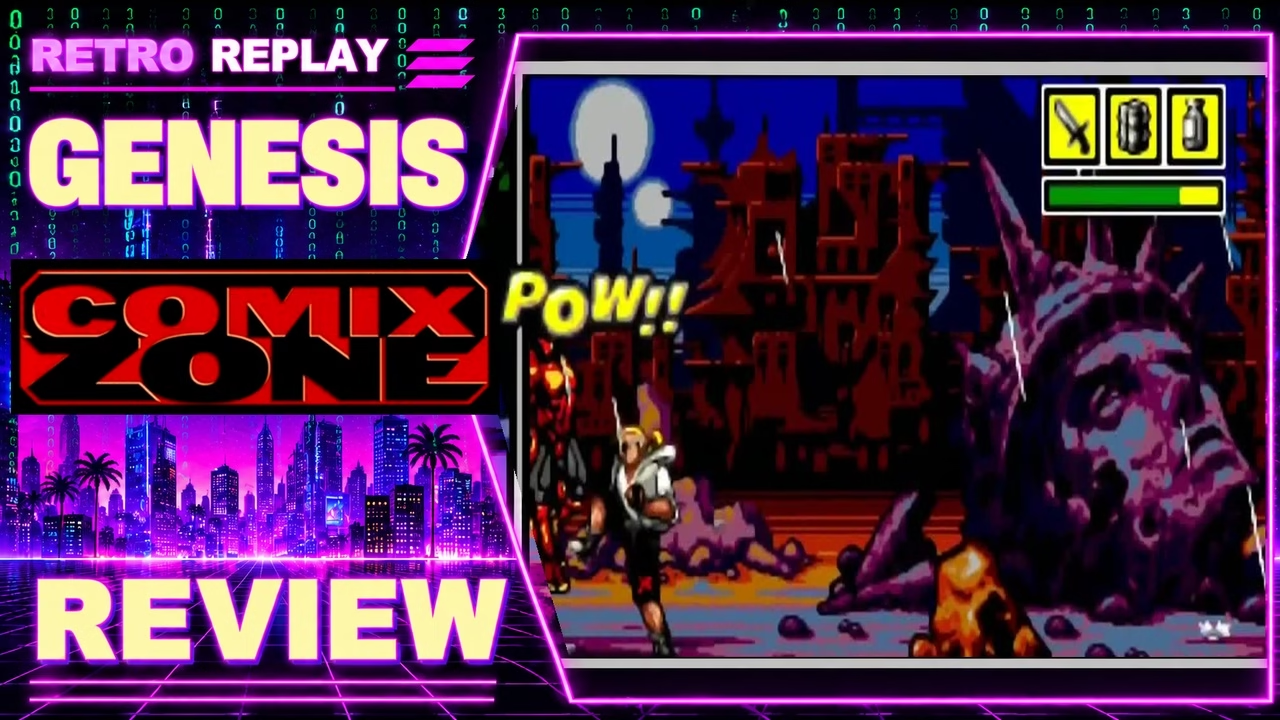
Comix Zone sent artist Sketch Turner into his own comic, with the page's panels shaping the action. Sega Technical Institute made presentation and combat feel connected instead of treating the artwork as a backdrop. It is an idea a screenshot can communicate almost immediately.
That clarity makes a sequel easy to picture without making it easy to design. New comic styles could change the layout and rhythm of the action. Branches between panels could become meaningful choices, with the format doing more than framing another fight.
We would want a follow-up to expand the adventure while staying deliberate about every page. More content should mean more opportunities for the comic to surprise us, rather than simply repeating the same tricks. Sketch deserves another issue because the format still has so much left to say.

#3: Ristar
Platform: Sega Genesis

Ristar's stretchable arms gave his Genesis platforming a recognizable rhythm. Grabbing enemies and objects affected both combat and movement, while the different planets gave that mechanic varied settings. The character felt distinct without needing to be the fastest thing on the screen.
A sequel should begin with that movement rather than a demand to modernize everything at once. New surfaces, objects, and momentum puzzles could broaden the vocabulary of the arms. There is plenty to explore before deciding that the entire game needs a different viewpoint.
The Game Gear version and later rereleases keep parts of Ristar's history accessible, but they do not erase the appeal of a new full adventure. We would love another set of worlds designed around his particular way of interacting with them. He has always looked ready to reach a little further.

#2: Burning Rangers
Platform: Sega Saturn

Burning Rangers put an elite rescue team into futuristic emergencies. Sonic Team built its action around extinguishing fires and getting civilians to safety, with spoken guidance taking the place of a conventional map. Those choices gave the Saturn game a recognizable sense of purpose.
A sequel could make that purpose even stronger through teamwork. Different rescue roles and emergencies that changed during a mission would offer a reason to coordinate, rather than simply compete for a score. The satisfaction should come from getting everyone out.
We would not want a return that treated the rescue premise as an excuse for an unrelated action game. The unusual tone is why it ranks so highly. There is room for spectacle, but the best follow-up would remember the person still waiting beyond the smoke.

#1: Skies of Arcadia
Platform: Sega Dreamcast

Skies of Arcadia followed Vyse and his friends through a world of floating islands and airship travel. Exploration and discoveries sat alongside its role-playing battles, while the ships themselves became part of the adventure's identity. The expanded GameCube release, Legends, offered another way to experience that world.
For this list, the distinction between revisiting the story and continuing the setting is important. We would welcome a new crew or a different corner of the map. A sequel would not have to undo the original ending or repeat every familiar scene to feel like a genuine return.
What we want most is its sense of possibility. Another journey built around discovery, friendship, and the promise of something beyond the clouds would justify the wait. Plenty of games here deserved another outing, but Skies of Arcadia is the one that most makes us want to set off again.

A good sequel does more than make an old game bigger. It recognizes what players responded to and finds another situation in which that idea can flourish. Whether that means rescuing a teammate, turning the page of a comic, or spotting an island beyond the clouds, these games supplied starting points worth revisiting.
Those are our fifteen picks, but there is plenty of room for disagreement. Which Sega game would move straight to the top of your list, and what would you want its sequel to do differently? Tell us your choice, then follow Retro Replay for more countdowns, classic gaming history, and games worth another look.