Retro Replay Retro Gaming History, Reviews & Emulation
Mega Man is on the Genesis. You spot his name in the menu and stop scrolling. Here is the little blue fellow you associate with a Nintendo controller, ready to take on Dr. Wily on Sega’s machine. Call somebody over, choose the game, and wait for the download. A minute is a long time when you want to see whether this is really going to work.
For North American players at the time, Sega Channel was the only official way to play Mega Man: The Wily Wars on a Genesis. There was no American cartridge release to buy, rent, or borrow from a friend. Japan and Europe had cartridges; here, you needed the service. Getting Mega Man onto the family’s Sega was a special attraction all by itself, before you even looked at the rest of the lineup.
Then, when you had finally had enough of Robot Masters for one afternoon, there were other games waiting. Another name, another short download, another title screen. You could start the day delighted that Mega Man had turned up and finish it absorbed in something you had never heard of. Sega Channel had a very good way of spoiling plans to play for just half an hour.
Getting the family television to deliver games
Buying a game in the cartridge years gave the decision a certain weight. You might spend weeks studying magazine screenshots or inspecting the same box at the store. Birthday money only stretched so far. A rental offered a cheaper experiment, although a disappointing choice could still leave you facing most of a weekend with something you had already decided you disliked.
There was pleasure in that routine, too. Friends traded recommendations, older siblings passed judgment, and a borrowed cartridge could become the center of an afternoon. The collection beside the television told a little story of purchases, presents, and fortunate swaps. Sega Channel offered to put a much larger selection within reach of that same controller.
The service’s American rollout began in December 1994, following trials. Sega worked with TCI and Time Warner, joining the games business to companies already delivering entertainment into people’s homes. Subscribers received a rotating library of roughly 50 Genesis games. Monthly prices varied by cable operator, often running around $15. For a household already buying or renting games, the offer was easy to consider.
First, though, you had to get the thing. A parent agreeing that the price sounded reasonable was only the opening round. Your local cable company had to offer Sega Channel, and signing up those operators took work. You could have the Genesis, the television, and a persuasive argument ready to go, then discover that your address put the whole business out of reach.
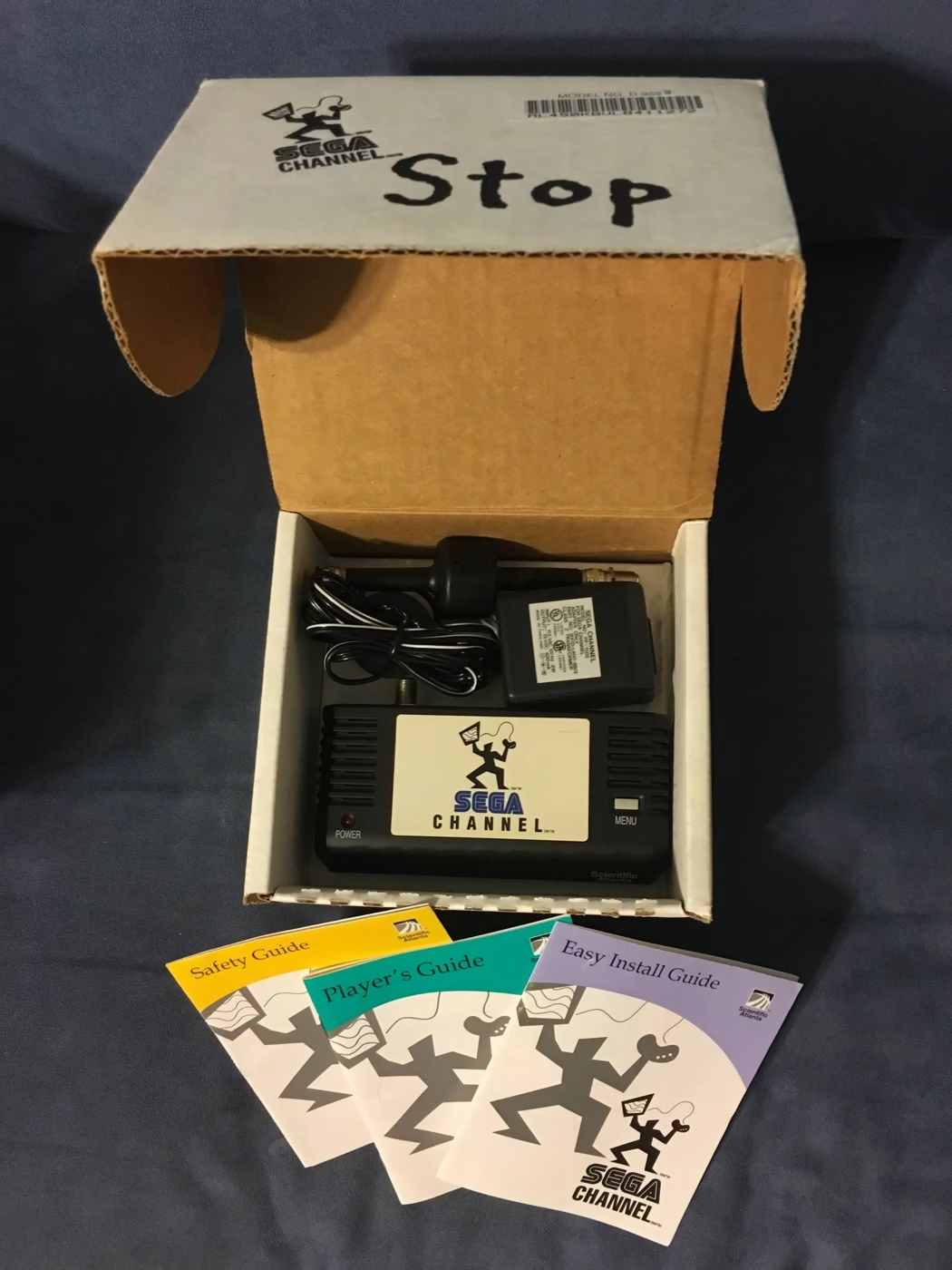
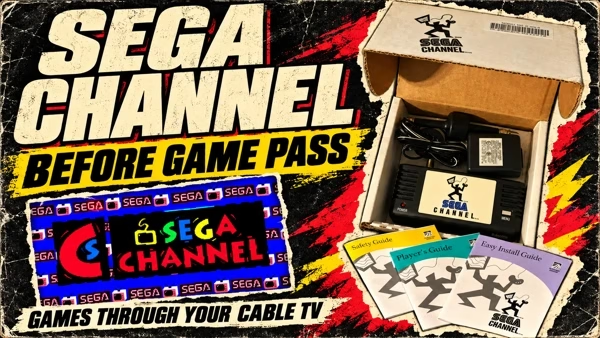
For households that could subscribe, the adapter occupied the Genesis cartridge slot and connected to the cable feed. Its box came with the sort of equipment and booklets that could turn setting up a games accessory into a small family project. There was another power supply to accommodate and another cable to route behind the television. Anyone who had already added hardware to a Genesis would recognize the exercise.
Then came the rewarding part: switch on and see what was waiting. You could sit down intending to play a particular game and spend the first few minutes examining the other choices. Getting distracted before you had even started was an entirely reasonable response.
The wait before the title screen
Choosing a game usually meant waiting about a minute for it to arrive. That could feel remarkably slow if you watched the screen throughout. Compared with getting a ride to the rental store, choosing something, and getting home again, it was a fairly agreeable delay. The controller was already in your hands. You only needed to be patient for a little longer.
While you waited, the adapter was looking through a continuous broadcast for your selection. Sega Channel repeatedly transmitted the available material, and the receiver collected the right game as it came around. Choosing something told the adapter what to watch for. The data kept coming in a loop, allowing a one-way cable connection to respond to a decision made on the couch.
Further up the chain, people had to prepare the material and keep the distribution equipment supplied. The General Instrument server manual describes scheduled content arriving on CDs, being copied to a hard drive, and passing to channel computers for transmission. The American uplink operated in Denver, with satellite distribution carrying the material onward to cable systems.
Somewhere behind an afternoon of games were discs, computers, schedules, and a considerable amount of cable equipment. The person holding the controller only needed the download to finish. Once it did, the game ran on the Genesis itself, with the console handling the action locally.
You did have to learn a few of the adapter’s habits. Switching off erased the downloaded game code. Downloading a different game could wipe saved progress, too, which gave you a reason to think before going back for a quick look at something else. Curiosity was a fine thing until it interfered with the game you had already spent the afternoon playing.
Once the action started, though, there was plenty to occupy your attention. The jump you kept missing was still your problem. So was the friend waiting for a turn. Cable delivery could put another game within reach, but it could do very little about someone insisting they would pass the controller after this next attempt.
A little browsing could take all afternoon
Once you were in, there was plenty to poke around. Categories such as Swords & Spells and Wings & Wheels gave the selection some personality, while Test Drives offered samples of selected games. Hints, news, and submitted artwork filled out the visit. Former programming executive Michael Shorrock and his colleagues had more to prepare than a list of titles. There had to be something worth stopping to read on the way to the next game.

A recovered lineup from one month gives you something more inviting than a broad promise about how many games were available. In the September 1996 selection, you could find Streets of Rage 2, Shinobi III, and Dr. Robotnik’s Mean Bean Machine. Street fights, ninjas, and falling beans would be a perfectly respectable plan for the afternoon.
Start with a familiar favorite and you could settle in immediately. Go further down the list and the evening became a little less predictable. Perhaps a title reminded you of something you had seen in a magazine. Perhaps its description sounded odd enough to deserve a look. You were already paying for the service, so trying it did not require handing over another small pile of money.
A game could win you over with one good moment: an attack that felt right, an enemy doing something ridiculous, or a level that made you lean closer to the screen. Those were things a box could only promise. Having the controller in your hands gave you a better chance of finding them.
Of course, the next download might also turn out to be awful. That possibility was easier to live with when you could go back and try again. Nobody needed to spend the rest of the weekend defending an unfortunate purchase. The menu was still there, and you had other options.
Three games that made the subscription tempting
Among the service’s best-known attractions were games that American players could not originally buy as Genesis cartridges. These are our three picks, with The Wily Wars comfortably taking the top spot. Their exclusivity belongs to their original North American releases: cartridges existed in other regions, and later releases eventually brought them to more players.
1. Mega Man: The Wily Wars
Imagine browsing the games available for your Genesis and finding three Mega Man adventures together. For an American subscriber, this was the sort of discovery that could make the monthly fee feel like money well spent. The Wily Wars remakes the first three NES games with 16-bit graphics and sound, putting a generous helping of Robot Masters within reach of the controller already in your hands.

Start climbing through Cut Man’s stage and there is plenty to take in. The familiar ladders and platforms have been redrawn, and you want to see what is around the next corner. If you know the NES game, you can enjoy spotting the changes. If you are meeting Mega Man here, there are three whole adventures to learn, with all the missed jumps and stubborn boss fights that implies.
Wily Tower gives returning players another reason to stay after revisiting the three adventures. Having Mega Man on a Sega was exciting enough to get someone watching over your shoulder. Having extra stages to explore gave you a good reason to keep the controller when they asked for a turn.
Back then, an American Genesis owner could search the local game store’s shelves and still come home without this one. Sega Channel had the official North American release to itself. The wait for a domestic cartridge stretched all the way to Retro-Bit’s licensed 2021 edition. During the 1990s, a subscriber could simply find it in the menu and start playing. That is a pretty good answer to anyone asking what was so special about this peculiar cable adapter.
2. Alien Soldier
Treasure’s Alien Soldier greets your curiosity with something enormous that wants you dead. Then it has another opponent ready. Its procession of bosses puts your weapons, movement, and reactions under pressure, leaving little room to get comfortable just because you survived the previous fight.

Watch someone who knows what they are doing and the whole business can look wonderfully controlled. Pick up the controller yourself and the learning begins. You have to work out where to stand, when to move, and how to make the tools available to you do something useful before that large enemy gets another opportunity.
Treasure knew it was demanding. In developer interviews preserved by Shmuplations, Masato Maegawa recalled reducing the difficulty and described a game built for experienced players. The difficulty settings themselves were named Super Easy and Super Hard. Anyone hoping that first label guaranteed a relaxing afternoon was being rather optimistic.
The original North American release came through Sega Channel, while other territories received cartridges. It was a terrific game to have available for a brave experiment. A few defeats might persuade you to choose something gentler, or they might leave you convinced that the next attempt would finally be the one.
3. Pulseman
Pulseman brings a different kind of energy. Game Freak’s electrical hero can turn himself into a projectile, and learning to use that ability gives the platforming its own lively rhythm. Bright scenery and an unusual lead character make it a natural game to stop and watch when somebody else has the controller.

Game Freak would become famous for Pokémon, but there is plenty here to enjoy without treating the game as a historical footnote. The pleasure is in getting a feel for what Pulseman can do, then recognizing a chance to use that power. It is the sort of discovery that can make you restart a section because you want to do it better.
Japan received a cartridge, while North America got the game through Sega Channel in 1995. For a subscriber browsing past the familiar names, it offered a colorful surprise. You could begin the afternoon looking for something you already liked and finish it trying to explain this strange electrical fellow to a friend.
Sometimes the game itself had changed
The library could hold smaller surprises as well. Garfield: Caught in the Act: The Lost Levels supplied additional stages through the service. Some other games needed alterations to fit the adapter’s limits. Super Street Fighter II: Limited Edition dropped half the fighters, which could turn choosing your favorite character into a disappointingly short search.
The Video Game History Foundation’s work on these releases documents how unusual the selection could become. Two players remembering the same game might be remembering different contents. A subscriber’s version could be missing something that a friend with a cartridge took for granted.
That sits a little awkwardly beside the freedom of browsing, but it was part of living with the service. There were choices to enjoy and limitations to discover. A game that sounded like a straightforward download could come with a smaller roster or another adjustment hidden behind the familiar name.
The Genesis was getting older
While subscribers were looking through the menu, Sega and its cable partners had a business to keep running. Publishers had to be persuaded to participate, local operators had to carry the service, and the connections had to deliver the data reliably. A good selection could only reach the households those arrangements supported.
Meanwhile, the Saturn and a new generation of consoles were competing for players’ attention. The Genesis still had a library capable of filling a great many afternoons, but anyone studying the newest machines had other reasons to save their money. Sega Channel was selling more to do with hardware that some households were preparing to move beyond.
The service closed in 1998. For the subscriber, that meant the end of a familiar possibility: switching on to see what was available. A cartridge could be put away and returned to years later. The adapter needed a broadcast, and keeping it safely in its box could not supply one.
One more look through the menu
Years later, former staff and collectors helped put some of that experience within reach again. The Video Game History Foundation worked with Shorrock and Ray, a collector known as Sega Channel Guy, whose material included old backups. In December 2025, the foundation announced the recovery of 144 Sega Channel ROMs.
That number includes almost 100 system ROMs, alongside game variants and other material. It is not a count of 144 newly discovered full games. Among the recovered releases was The Lost Levels, while the menus offered another welcome chance to look around the service itself.
Seeing those screens puts the waiting and choosing back beside the games. There are the graphics that greeted subscribers, and the choices that could distract them from whatever they originally intended to play. A hardware photograph can show you the adapter. A recovered menu gets closer to the afternoon that followed plugging it in.
Anyone who has opened a modern subscription library with no firm plan will recognize the temptation. You look for something familiar, notice something unexpected, and start wondering whether there is time to try both. Sega Channel brought that habit to a Genesis connected to cable television, with a short download standing between a decision and a game.
Put The Wily Wars first. Give Alien Soldier a chance to embarrass you. Spend a little time learning what Pulseman can do. Somewhere in that afternoon, a game you had barely heard of might become the one you most want to keep playing. Dinner can wait a minute. You have nearly got past this bit.
About the author: David Becker writes about retro video games and gaming history at Retro Replay. He enjoys digging into forgotten stories, exploring the people behind the games, and making gaming’s past an entertaining place to visit.