 Retro Replay Retro Gaming History, Reviews & Emulation
Retro Replay Review
Gameplay
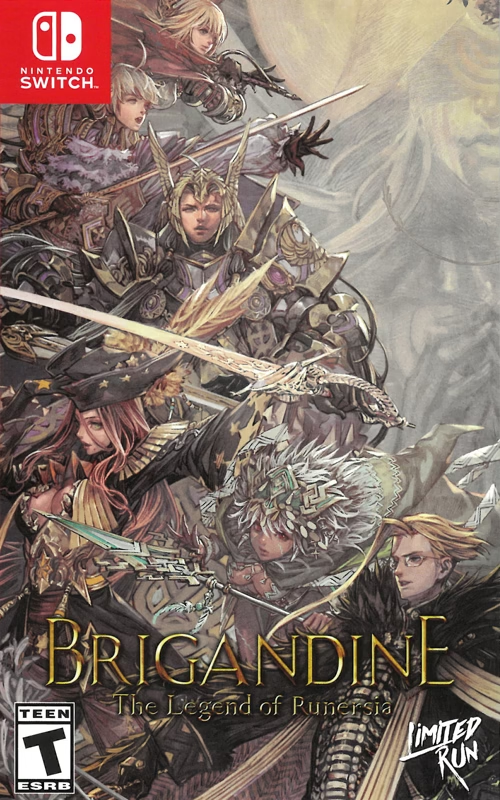
The first thing Brigandine: The Legend of Runersia gets right is scale. Choosing one of six nations makes the campaign feel like a commitment rather than a string of disconnected missions. You are not just moving a handful of named heroes through isolated maps. You are trying to carry a nation across Runersia, with Rune Knights at the head of summoned monster troops.
Combat has the patient, positional rhythm that strategy-RPG fans want from hexagonal maps. A monster roster that includes dragons and ghouls gives each army a pleasing fantasy flavor, while the Rune Knights keep the forces from feeling anonymous. The game asks you to think in terms of a whole fighting force, not simply protect one overpowered protagonist and let everyone else trail behind.
That broader focus can also be where the friction sets in. Battles reward planning and commitment, so this is not the best fit if you want fast tactical skirmishes with little setup or long-term consequence. But when a carefully assembled group starts to feel like your nation’s army rather than a disposable collection of units, the slower pace pays off.
Graphics
The game uses an anime-inspired fantasy look, with isometric battlefields that give you a clear diagonal view of the hexes and the troops occupying them. The strongest visual draw is the monster-heavy warfare: Rune Knights leading creatures such as dragons and ghouls gives the battles a more colorful fantasy character than a standard army-versus-army campaign.
Story
Runersia’s story is built around a clean objective: select one of six nations and pursue the continent’s unification. It is a useful frame for a strategy game because every campaign starts from a different national perspective instead of treating the map as a neutral board.
Do not come in expecting this premise to replace the tactics. The central conflict is empire-scale and direct, with the nation you select serving as your route through the campaign. That makes the story more effective as a reason to invest in your chosen side than as a standalone fantasy drama.
Still, the six-nation structure gives repeat campaigns a natural sense of contrast. If the idea of seeing the same continental struggle from another power’s side appeals to you, there is more reason to return than there would be in a single fixed-path campaign. For background on the original campaign’s return, the developer introduction to Brigandine’s original campaign is a useful companion read.
Overall Experience
Brigandine: The Legend of Runersia is easy to recommend to you if your favorite strategy RPGs make you care about the army as much as the individual characters. Its mix of national conquest, Rune Knights, and summoned creatures has a distinct pull, especially when you want a fantasy tactics game that thinks beyond one battle at a time.
Its limitations are mostly matters of taste. The deliberate campaign structure and methodical hex battles can feel demanding when you are in the mood for immediate action. You need to enjoy setting a plan, watching it unfold, and accepting that the larger war matters as much as a single victory.
At its best, Runersia turns the familiar fantasy strategy toolkit into a campaign with real ownership. Pick a nation that interests you, give the opening hours enough time to establish the rhythm, and the combination of commanders and monsters starts to click. It is a good, not essential, strategy RPG, but a notably satisfying one for patient tacticians.


Reviews
There are no reviews yet.