 Retro Replay Retro Gaming History, Reviews & Emulation

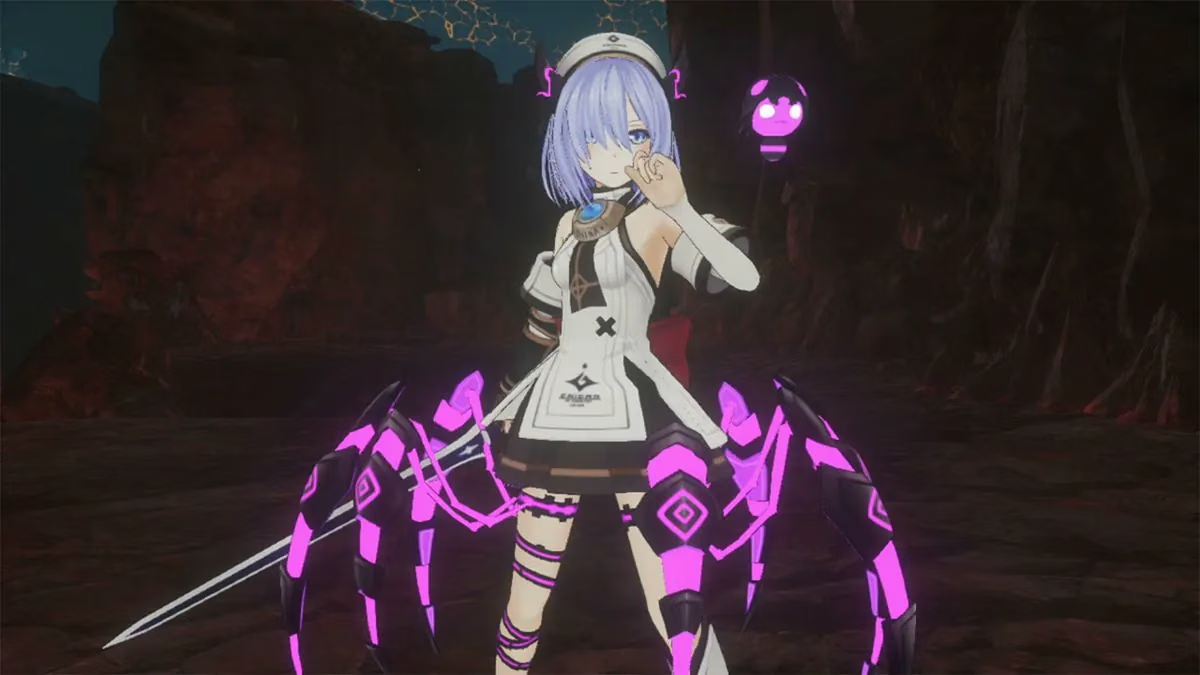



Game Overview
Gameplay
The first thing Death end re;Quest does right is make its split structure feel like more than a gimmick. You are not simply alternating between combat and long conversations for pacing’s sake. The real-world investigative visual-novel segments give the RPG material a mystery to chew on, while the game-world sections let you act on that tension in turn-based fights. If you like JRPGs with a lot of reading between battles, this back-and-forth can be compelling from the start.
Combat has a welcome streak of chaos. Knockbacks and chained attacks encourage you to think past the most obvious command, and that extra push makes encounters feel more active than a basic take-turns-and-heal routine. The ability to change the battle genre into fighting, shooting, slot, puzzle, or billiards sequences is an unusually bold idea. Some of that variety will land better for you than others, but it consistently prevents the game from settling into one predictable combat pattern.
That ambition is also where frustration can set in. Death end re;Quest asks you to roll with several very different modes of play, and it is not interested in being a streamlined comfort-food RPG. The best approach is to meet it halfway: enjoy the novelty, engage with the investigative sections instead of treating them as interruptions, and do not expect every genre detour to be equally satisfying. Its strongest moments come from the sense that the game is willing to get weird.
Story
The central hook, in which the boundary between a fantasy game world and reality starts to blur, gives the visual-novel portions real purpose. It is a darker, more uneasy setup than the usual “trapped in a game” premise, and the investigation angle helps separate the story from a standard save-the-world JRPG. The anime tone will be a clear preference check, but the mystery is the reason to keep moving between its two worlds.
Overall Experience
Death end re;Quest is easier to recommend for its personality than its polish. It throws together turn-based RPG combat, investigative storytelling, and genre-switching battles with a level of confidence that is hard not to respect. Even when a particular detour feels more cute than essential, there is usually another oddball idea close behind it.
You should give it a chance if you want a JRPG that values surprise over consistency. Fans of visual novels who want more active battles, or RPG fans who are happy to read through a mystery, are the natural audience. If you mainly want a clean, combat-first adventure with one stable ruleset, the constant shifts may feel like the game is pulling you away from what you came for.
The Nintendo Switch version is the one to get if you want the complete package, since it includes the free and paid DLC released for earlier versions alongside the original Japanese content. At 7.1, it lands as a good, uneven cult-style JRPG: inventive enough to stand out, occasionally overstuffed, and far more memorable than a safer game built from the same ingredients.

Reviews
There are no reviews yet.