 Retro Replay Retro Replay gaming reviews, news, emulation, geek stuff and more!



Retro Replay Review
Gameplay
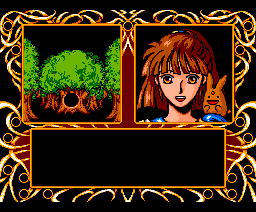
Madō Monogatari 1-2-3 unfolds as a classic first-person dungeon crawler, spread across three distinct chapters that each stand on their own yet share the same core mechanics. From the very first room of Satan Tower in chapter one, you navigate a 2.5D maze filled with traps, secret doors, and puzzles. Instead of sifting through raw numbers and statistics, the game uses visual cues—Arle Nadja’s portrait darkens as she takes damage, while a ring of colored gems around the screen pulses with each experience point gained. This approach keeps you focused on exploration and strategy rather than micromanaging stats.
(HEY YOU!! We hope you enjoy! We try not to run ads. So basically, this is a very expensive hobby running this site. Please consider joining us for updates, forums, and more. Network w/ us to make some cash or friends while retro gaming, and you can win some free retro games for posting. Okay, carry on 👍)
Combat is turn-based and spell-driven. Early on, you unlock a modest repertoire of elemental attacks and recovery spells, but as you progress through the three games, Arle’s arsenal grows substantially. Facing off against imps, slimes, skeletons, and more exotic foes from the Puyo Puyo universe, you must choose your spells carefully, manage MP reserves, and adapt to enemy immunities. Since each chapter resets your level and spells, you get to relearn and refine tactics three times over—an unusual but rewarding design choice.
Puzzle solving is just as integral as combat. Locked doors require found keys or solved riddles; pressure plates open new corridors; hidden switches can only be revealed by reading cryptic notes. The NPC encounters sprinkled throughout each dungeon add flavor and occasional side quests, such as fetching items or answering trivia about Puyo Puyo characters. While some puzzles can feel obtuse without guidance, they provide welcome variety and a sense of achievement once overcome.
Graphics
Graphically, Madō Monogatari 1-2-3 is pure 1990s charm. The 2.5D corridor views are rendered with simple yet crisp pixel art, giving just enough detail to distinguish walls, doors, and hazards. Spell animations are bright and expressive: fireballs burst into dancing embers, ice bolts leave frosty trails, and healing spells glow with comforting warmth. Though modest by today’s standards, the visuals hold up through clear design and nostalgic appeal.
Outside of battle, NPC portraits and Arle’s own sprite are lively and well-animated. Each chapter refines the character art slightly—colors get richer, lines sharper—but the overall style remains cohesive. Enemy sprites are equally well-crafted, with the minotaur boss in the final chapter delivering an especially imposing pixel silhouette. The consistent art direction ties all three games together into a seamless package.
The interface is both functional and stylish. Health, MP, and experience are communicated through pictures rather than bars or numbers, which helps maintain immersion in the dungeon environment. Menus are straightforward, with clear icons for spells, items, and status checks. Loading transitions are virtually instantaneous on emulated or re-released versions, so you spend more time adventuring and less time waiting.
Story
The narrative of Madō Monogatari 1-2-3 centers on Arle Nadja’s growth from novice magic student to seasoned sorceress. Chapter one casts her as a wide-eyed apprentice determined to conquer the notorious Satan Tower and prove her worth. In chapter two, a 16-year-old Arle must break free from a prison dungeon and thwart the machinations of those who betrayed her. Finally, chapter three pits her against an evil sorceress seeking vengeance for Arle’s past victories.
While the storylines are relatively light on dialogue and cutscenes, they carry a beguiling sense of humor and charm. NPCs—many lifted directly from the Puyo Puyo franchise—offer playful banter, cryptic advice, or unexpected plot twists. The motivations remain straightforward: overcome obstacles, defeat villains, and grow stronger. Yet within that simplicity lies a satisfying progression, as Arle’s backstory and personality slowly unfold through each dungeon crawl.
The package’s episodic nature means you’re never far from closure. Each chapter features its own self-contained mini-arc, complete with a climax, boss fight, and epilogue. This structure is perfect for bite-sized play sessions, allowing you to experience a complete narrative in a few hours before moving on to the next installment. The cumulative effect is a trilogy that feels greater than the sum of its parts.
Overall Experience
Madō Monogatari 1-2-3 offers tremendous value for fans of retro JRPGs and dungeon crawlers. Three independent campaigns in one package ensure hours of engagement, with each chapter introducing fresh enemies, puzzles, and environments. The reusable engine means you’re immediately familiar with controls and mechanics, yet the time jumps and evolving spell lists keep each game feeling distinct.
The balance of combat, exploration, and puzzle-solving remains consistently satisfying throughout. Leveling up via the gemstone ring system is a clever twist on experience points, giving instant visual feedback whenever you gain a level. Occasional difficulty spikes may prompt backtracking or strategic grinding, but the clear UI and fast menu navigation minimize frustration. Malfunctioning maze traps and fiendish floor layouts challenge even seasoned dungeon divers.
Ultimately, this trilogy is a delightful time capsule of early ’90s game design, wrapped in the whimsical lore of Puyo Puyo. If you appreciate pixel art, methodical turn-based battles, and lighthearted storytelling, Madō Monogatari 1-2-3 delivers a charming and cohesive adventure. While it may not compete with modern RPG epics in scope, its tight design, nostalgic allure, and three-in-one format make it a must-have for collectors and newcomers alike.


Reviews
There are no reviews yet.