 Retro Replay Retro Gaming History, Reviews & Emulation
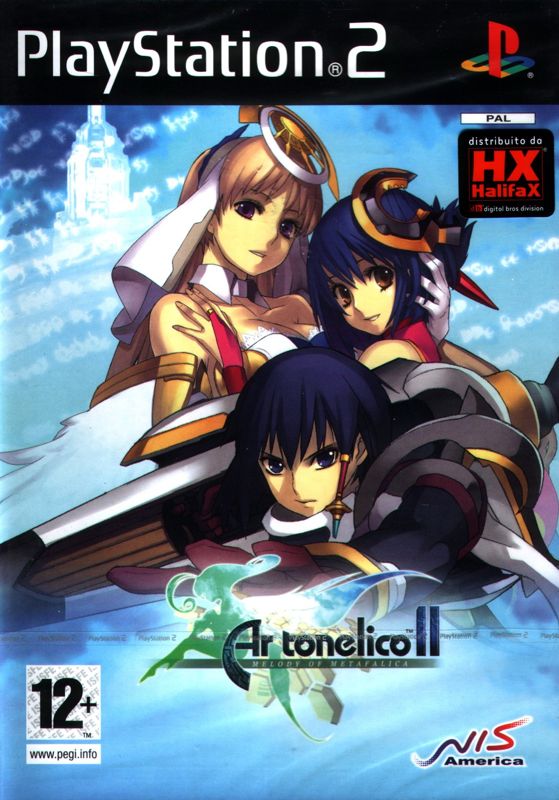
Retro Replay Review
Gameplay
Ar tonelico II starts like a familiar turn-based JRPG, then quickly asks you to pay attention in a different way. Random encounters are divided between an Attack phase and a Defend phase. During attacks, your front-line fighters have a limited window to act while a Reyvateil in the rear prepares Song Magic. You are not simply selecting a spell and waiting for it to happen; you decide which song to build and when to release it. That creates a satisfying sense of mounting pressure when you can line up a strong magical finish before the clock runs down.
The defensive half is where the game earns its more active feel. Enemies target the singing Reyvateils, and the rest of your party has to guard them through timed defensive actions. It makes protecting the back line a constant concern rather than a passive stat check. Attacks also work better when they sync with a Reyvateil’s requests, so combat rewards following the team’s rhythm instead of treating every turn as an isolated command.
That rhythm can be frustrating until it clicks. You have timers, character attacks, a charging singer, synchronization demands, and incoming pressure to track, which is more to juggle than a straightforward menu-driven battle system. Stick with it, though, and the structure has more tension than the average random battle. It feels good when a planned sequence holds together, your defenders keep the singers safe, and the Song Magic lands at the right moment.
Outside battle, the Dive system is central rather than optional flavor. Croix enters the Cosmospheres of specific Reyvateils, navigating text-heavy, dating-style scenes that explore their emotions. These choices can alter the storyline and are how you craft new Song Magic. You can also convert evil Reyvateils through Diving, then equip them in an extra item slot for offensive or defensive benefits. The catch is significant: Croix must commit to one of the three main heroines instead of freely moving among all their inner worlds. Choose with intention rather than assuming you can sample every path in one run.
Graphics
The game uses an anime-styled JRPG look, with the action framed from a third-person perspective outside combat. Its clearest visual strength is the focus on its heroines and fantasy setting, which suits a story built around singers, emotion, and mystical Song Magic.
Story
Set a year and a half after Ar tonelico: Melody of Elemia, Melody of Metafalica sends Grand Bell knight Croix into the Reyvateil region during a deadly epidemic. That immediate crisis gives the journey urgency, but the larger conflict is stranger and more ambitious: Metafalss rebels against the Goddess controlling their world, hoping to create a utopia through the legendary Hymnos song, Metafalica.
This is not a detached quest where the plot happens around a generic party. The heroines are the center of the experience, and the Cosmosphere dives make their feelings, choices, and relationships part of the progression. Since those scenes influence both the narrative and your Song Magic, reading closely is not just for lore completion; it affects how your version of the journey develops.
The required commitment to one main heroine gives the story a welcome sense of consequence, even if it means accepting that other paths are closed off. If you enjoy JRPGs that spend real time inside their characters’ emotional worlds, that focus is a strength. If you want a fast-moving adventure with minimal dialogue, the text-heavy Dive sequences may test your patience.
Overall Experience
Ar tonelico II: Melody of Metafalica is a distinctly niche JRPG, but it has real character. Its best idea is the way battles connect physical attacks, timed defense, and music-based magic into one escalating exchange. The system asks more of you than routine turn trading, and the payoff is a combat loop that feels deliberately coordinated rather than automatic.
Its other major commitment is emotional. You will spend substantial time in written character scenes, making choices inside the heroines’ Cosmospheres and eventually choosing one route to pursue. That combination of romance-adjacent dialogue, branching character focus, and RPG progression will either be the reason you remember it or the reason you bounce off it.
Give it a chance if you enjoy anime-flavored JRPGs with unconventional battle systems and are happy for character relationships to carry mechanical weight. Skip it if random encounters, timed defense, and a text-dense route commitment sound like chores. For the right gamer, its odd blend of songs, strategy, and intimate character writing is worth the adjustment period.


Reviews
There are no reviews yet.