 Retro Replay Retro Gaming History, Reviews & Emulation



Retro Replay Review
Gameplay
The first stretch of Endonesia asks you to accept its peculiar logic, then rewards you when it starts to make sense. You are not merely collecting objects and trying them on obstacles; you are transferring emotions to the world’s inhabitants. Hunger, for instance, can push an animal to seek food and open a route. It is a simple example, but it captures what makes the game memorable: progress comes from considering what a character or creature might do when their feelings change.
That gives the puzzle solving a more conversational rhythm than a standard RPG. You need to pay attention to inhabitants, carry the right emotional response into the right situation, and test connections between people, animals, and blocked paths. The RPG-style statistics, item gathering, and character growth add a sense that the boy is developing alongside your understanding of Endonesia rather than just ticking off isolated puzzles.
The day-night cycle is where the game can turn demanding. Exploration has a daily limit because exhaustion depletes health, while hunger makes the boy slower and blurs his vision. A large world becomes harder to casually comb through when the clock and basic needs are pressing on you. That friction will either make each successful plan feel earned or frustrate you when you are close to an answer but have to manage another day first.

Graphics
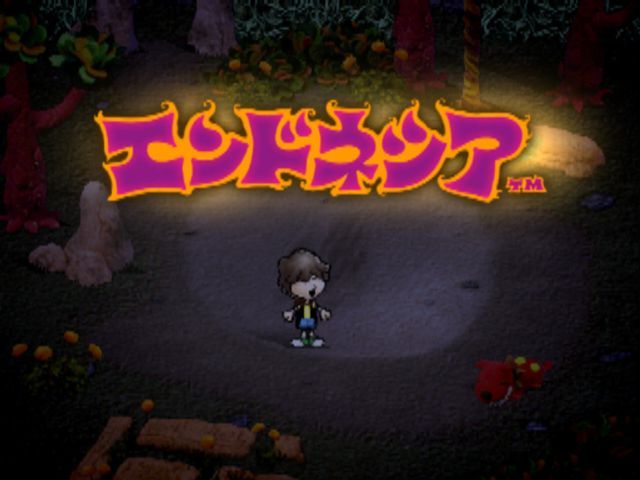
The game uses a third-person view to follow a young boy through Endonesia’s park-born other world. Its clearest visual hook is the contrast built into that setup: an ordinary child placed in a fantasy realm populated by inhabitants and gods, with the camera keeping your attention on his journey through it.

Story
There is an immediate, clean pull to the premise. A boy enters a park, finds himself somewhere impossible, and receives a message from a mysterious voice: call upon fifty gods if you want to go home. It gives the adventure a concrete destination without making the route feel routine.
More importantly, the story’s stated theme of sharing emotions is not just decoration around the puzzles. The same idea governs how you affect people and animals, so the central task of returning home is tied to learning how Endonesia’s inhabitants respond to one another. That union of theme and interaction is the game’s strongest argument for itself.
Do not expect the setup to behave like a conventional heroic fantasy. The focus is a child navigating an unfamiliar place through empathy, observation, and indirect solutions, not brute force. If that sounds inviting, the fifty-god goal has the right kind of strange, storybook momentum.
Overall Experience
Endonesia is for the gamer who wants an adventure game to feel a little awkward, surprising, and personal rather than smoothly streamlined. Its emotion-based puzzles are an inspired foundation, and the need to look at inhabitants as causes of change rather than quest dispensers gives the world a character all its own.
The survival pressure is the major dividing line. Time limits, exhaustion, and hunger ensure that wandering has consequences, but they can make experimentation less relaxing. If you tend to bounce off adventures when a puzzle blocks your progress, the extra pressure may wear thin. If you like planning a day, noticing a clue, and returning with a better idea, it creates useful tension.
The payoff is a game whose oddness has purpose. It comes from the same creative lineage as Moon: Remix RPG Adventure, Giftpia, and Chulip, and it earns that company through its willingness to make emotion the tool you use to understand a world. Give it a chance if you value unusual puzzle design over convenience; skip it if you need your adventure games to move quickly and explain themselves plainly.


Reviews
There are no reviews yet.