 Retro Replay Retro Replay gaming reviews, news, emulation, geek stuff and more!


Retro Replay Review
Gameplay
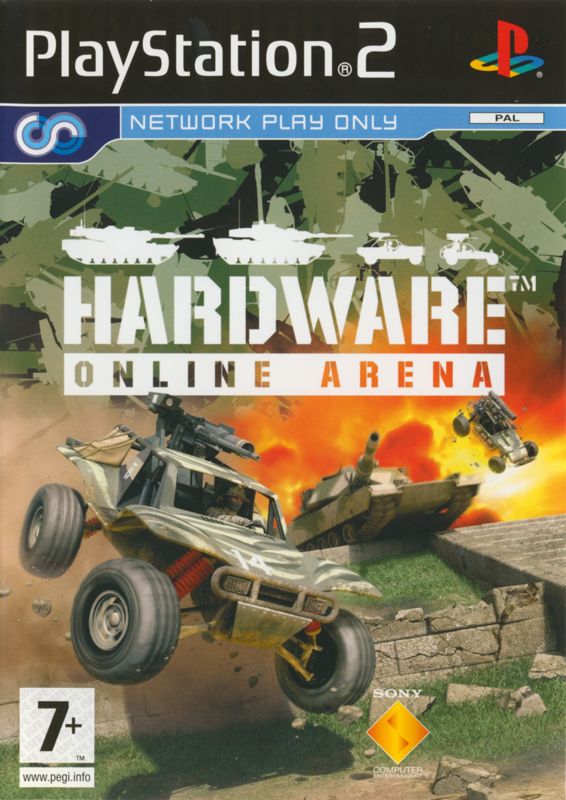
Hardware: Online Arena thrusts players into fast-paced vehicular combat, offering a balanced roster of tanks and jeeps that cater to different playstyles. Jeep pilots will appreciate the nimble acceleration and tight turning radius, making hit-and-run tactics and map control their bread and butter. Conversely, tank enthusiasts can plow through chokepoints, relying on hefty armor and devastating firepower to brutally reshape the battlefield.
(HEY YOU!! We hope you enjoy! We try not to run ads. So basically, this is a very expensive hobby running this site. Please consider joining us for updates, forums, and more. Network w/ us to make some cash or friends while retro gaming, and you can win some free retro games for posting. Okay, carry on 👍)
The variety of pick-ups scattered across each map keeps matches unpredictable. From guided missiles that lock onto your target’s underbelly to piercing lasers that cut through multiple opponents, each weapon introduces tactical depth. The inclusion of an all-map air strike ups the ante—its double-edged nature demands situational awareness and forces teams to scramble for cover the moment a glowing flare appears in the sky.
With five distinct arenas—Arctic, Quarry, Ruins, Mayan Temple, and Area 51—players must constantly adapt to shifting terrain and chokepoints. Blizzard winds in the Arctic slow vehicles to a crawl, while the dense foliage of the Ruins provides ample ambush spots. Meanwhile, narrow catwalks in the Mayan Temple challenge drivers to balance speed against the risk of plummeting to their demise.
Graphics
Released on the original PlayStation, Hardware: Online Arena’s graphics were ambitious for its time. Each environment sports unique color palettes and thematic props, from ice-crusted supply crates in the Arctic to moss-covered stone walls in the Ruins. Though the polygon count is modest by modern standards, creative texturing and dynamic lighting help each level feel lived-in and distinct.
Vehicle models are crisp and utilitarian, with visible dents and scorch marks that evolve as combat unfolds. Particle effects—explosions, dust clouds, and mud splatters—add kinetic feedback and heighten immersion. Online matches occasionally suffer minor frame dips when multiple missiles detonate simultaneously, but these hiccups rarely compromise the thrill of high-octane duels.
The user interface is clean and intuitive, placing health bars, mini-maps, and weapon icons within easy view. While pop-in can occur on larger maps like Quarry, the draw distance remains sufficient for long-range engagements. Overall, the graphics strike a practical balance: functional enough to keep players oriented yet dynamic enough to sustain the adrenaline rush.
Story
Hardware: Online Arena doesn’t center around a sprawling narrative or single-player campaign. Instead, it embraces the ethos of mid-2000s multiplayer shooters: drop players into a competitive arena and let the mayhem unfold. The sparse story framework hints at a clandestine global tournament pitting state-of-the-art war machines against one another, but the emphasis remains squarely on action.
The single-player training mode provides minimal lore, presenting each environment as a “mission” for vehicle familiarization rather than chapters in a cohesive storyline. Brief epilogues or mission summaries explain objective parameters but rarely delve into character motivations or world-building. This minimalist approach may disappoint narrative-driven gamers, yet it keeps the focus laser-sharpened on core mechanics.
That said, the lack of an expansive plot fosters an open canvas for player-driven stories. Memorable moments—like a last-second air-strike turnabout or a clutch ambush in the Mayan Temple—become personal anecdotes that outshine any scripted tale. For many, the emergent drama of online play effectively becomes the game’s de facto storyline.
Overall Experience
Hardware: Online Arena excels as a pick-up-and-play online shooter, offering satisfying vehicular combat sessions that hinge on quick reflexes and map awareness. The training mode ensures newcomers can learn the ropes before diving into the fray, while veterans can hone advanced tactics like artillery suppression and intercept maneuvers.
Server stability and matchmaking quality vary depending on the community size and region, but dedicated fan servers have kept the game alive years after its launch. Team-based strategies emerge organically as players coordinate vehicle types—tanks forming the spearhead and jeeps flanking to secure power-ups and capture control points in modes like King of the Hill.
Ultimately, Hardware: Online Arena delivers a focused, adrenaline-packed experience that rewards both individual skill and team coordination. Though its story is skeletal and graphics nostalgic, the core gameplay loop remains as engaging today as it was at release—making it a worthwhile pick for fans of vehicular mayhem and competitive multiplayer action.


Reviews
There are no reviews yet.