 Retro Replay Retro Replay gaming reviews, news, emulation, geek stuff and more!
Retro Replay Review
Gameplay
Shin Megami Tensei III: Nocturne delivers a deeply strategic turn-based combat system built around its signature “Press Turn” mechanic. By exploiting enemy weaknesses you not only deal bonus damage, but also earn extra actions—turns you can chain into devastating combos. Conversely, missteps and ignored resistances can see your party punished with lost actions, keeping every encounter tense and rewarding careful planning.
(HEY YOU!! We hope you enjoy! We try not to run ads. So basically, this is a very expensive hobby running this site. Please consider joining us for updates, forums, and more. Network w/ us to make some cash or friends while retro gaming, and you can win some free retro games for posting. Okay, carry on 👍)
Beyond raw combat, the game leans heavily on demon negotiation and fusion. Running into a demon in a dungeon doesn’t always mean an immediate fight: you can talk your way to recruit them, provided you choose responses that flatter or intimidate. Once they’re on your side, demons can be fused at special terminals to create more powerful allies, opening up rich customization paths for your team’s elemental affinities, skills, and special traits.
The protagonist himself uses Magatama—symbiotic creatures that grant him new abilities and alter his resistances. Leveling up lets you allocate stat points and learn Magatama-borne powers permanently, so you can swap Magatama on the fly without losing hard-earned skills. This dual-layer progression system encourages experimentation: balancing offense, defense, elemental coverage, and support magic becomes a satisfying puzzle.
Exploration also plays a key role. Maze-like dungeons are dotted with random encounters, hidden passages, and environmental hazards. Mapping each floor by hand or relying on in-game guides sharpens your sense of accomplishment when you finally reach bosses or rare treasure rooms. Overall, Nocturne’s gameplay demands attention, rewards patience, and rarely feels repetitive even after dozens of hours.
Graphics
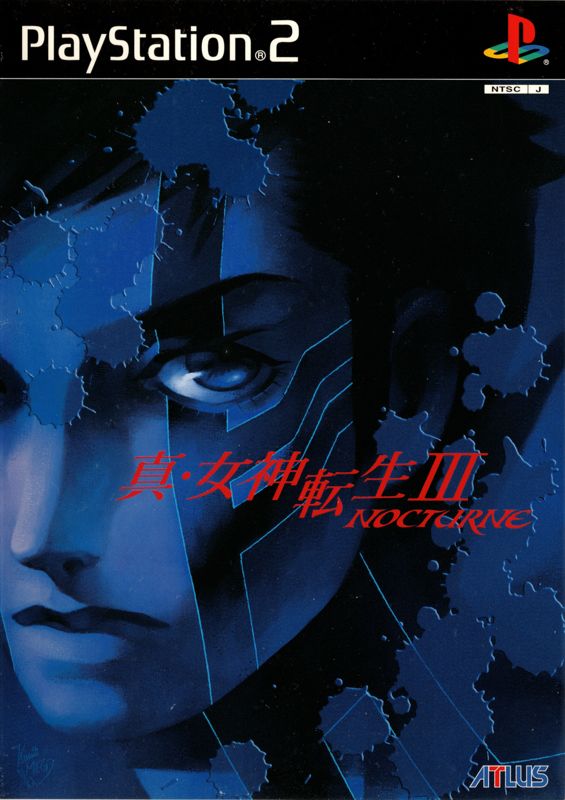
Nocturne’s art direction leans into stark contrasts and surrealist designs. Character and demon concepts—penned by series veteran Kazuma Kaneko—blend gothic, cybernetic, and mythological elements seamlessly. The hero’s demon form is a standout: its silhouette against a blood-red sky encapsulates the game’s post-apocalyptic dread.
Environments in the Vortex World range from crumbling urban ruins to twisted, otherworldly plains. Despite the PlayStation 2’s hardware limits at launch, background textures and lighting effects evoke a tangible atmosphere of decay. The color palette—shifting between ash-gray cityscapes and vibrant demon lairs—keeps every area feeling distinct and thematically coherent.
Character models and demon sprites have aged surprisingly well, especially in the remastered HD version. Animations are crisp during skill executions, and particle effects for elemental attacks still pack a visual punch. Menus and UI elements are cleanly presented, with Japanese typography that enhances the game’s dark aesthetic without sacrificing readability.
Story
The narrative kicks off with an ordinary Tokyo student experiencing a prophetic dream in which a mysterious woman, Yuko Takao, warns of an impending apocalypse. Moments later he awakens on a subway bound for Yoyogi Park, where recent riots and missing executives hint at something far larger and far more sinister unfolding under Tokyo’s surface.
Following a traumatic visit to the hospital—now crawling with demons—the hero witnesses the Conception, a massive cataclysm that destroys humanity’s world and births the new Vortex World. Left transformed into a demon himself, he must navigate this nightmarish realm populated by competing ideologies and power-hungry factions.
As you explore, you’ll forge uneasy alliances, confront philosophical dilemmas, and decide whether to champion Law, Chaos, or strike out on your own path. These pivotal choices branch the storyline toward one of five distinct endings, each offering a unique commentary on creation, destruction, and humanity’s capacity for rebirth.
The sparse but evocative dialogue, combined with moments of genuine moral weight, ensures the plot remains engaging throughout. While certain plot beats lean on traditional JRPG tropes, the overall tone—bleak yet hopeful—sets Nocturne apart from more conventional fantasy narratives.
Overall Experience
Shin Megami Tensei III: Nocturne is not for casual players. Its punishing difficulty, labyrinthine dungeons, and demand for micromanagement can feel overwhelming at first. However, those willing to master its systems will find an immensely rewarding experience that balances challenge, customization, and storytelling in near-perfect proportion.
Replay value is high: multiple endings, demon fusion trees, and divergent moral paths invite several playthroughs. Each run encourages different strategies—one might focus on creating a team with sheer brute force, another on elemental mastery to exploit Press Turn advantages.
The game’s soundtrack and ambient sound design deserve special mention. Haunting melodies and industrial percussion tracks heighten the tension of exploration, while battle themes punctuate each skirmish with urgency. Together with crisp sound effects, the audio design perfectly complements the game’s dystopian visuals and themes.
In sum, Shin Megami Tensei III: Nocturne stands as a hallmark of its genre. It challenges, provokes, and ultimately rewards players who appreciate deep systems, dark storytelling, and the satisfaction of forging order from chaos. For fans of strategic JRPGs seeking a mature, uncompromising adventure, this is a must-play title.


Reviews
There are no reviews yet.