 Retro Replay Retro Gaming History, Reviews & Emulation

Retro Replay Review
Gameplay
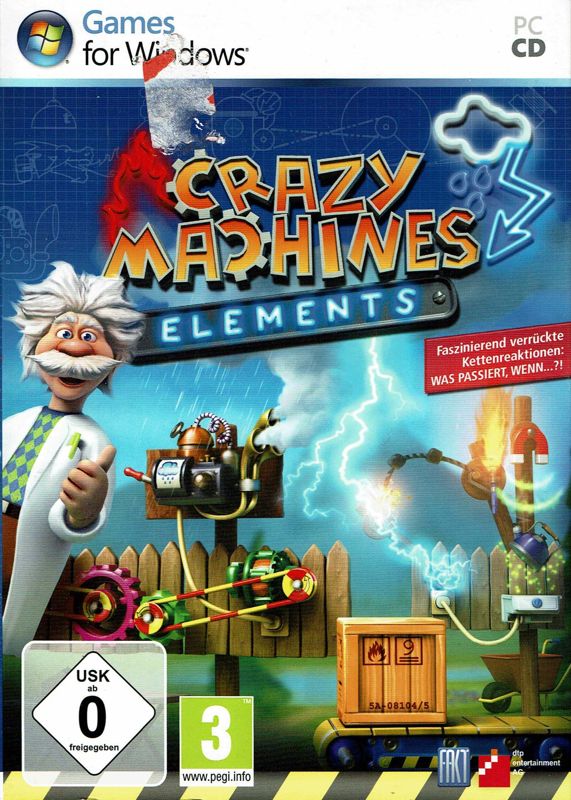
The first few minutes have the exact pull a machine-building puzzle game needs: you are handed a goal, an incomplete setup, and a small collection of parts, then left to make the pieces cooperate. Sometimes that goal is as bluntly fun as blasting a vase with nitroglycerine. You place the available components around the field, start the experiment, and get an immediate verdict. When the chain finally works, the payoff is wonderfully clean.
Elements has more than 100 puzzles, so it has room to build a long run of these small victories. The basic loop is easy to understand, but that does not mean every solution arrives easily. Frustration can set in when you can see the desired outcome but cannot yet find the arrangement that triggers it. That is the point where patience matters: this is a game about revising an idea, testing it, and revising again rather than muscling through on reflexes.
The newer tools, including a flamethrower and windmill, give the component box a little extra personality. Golden cogwheels tucked into levels also encourage you to think beyond the shortest route to a clear, since catching them is deliberately harder than merely solving the experiment. Once you finish puzzles, challenges ask you to complete missions with as few components as possible. That is the mode for anyone who enjoys turning a functional contraption into a neat one.
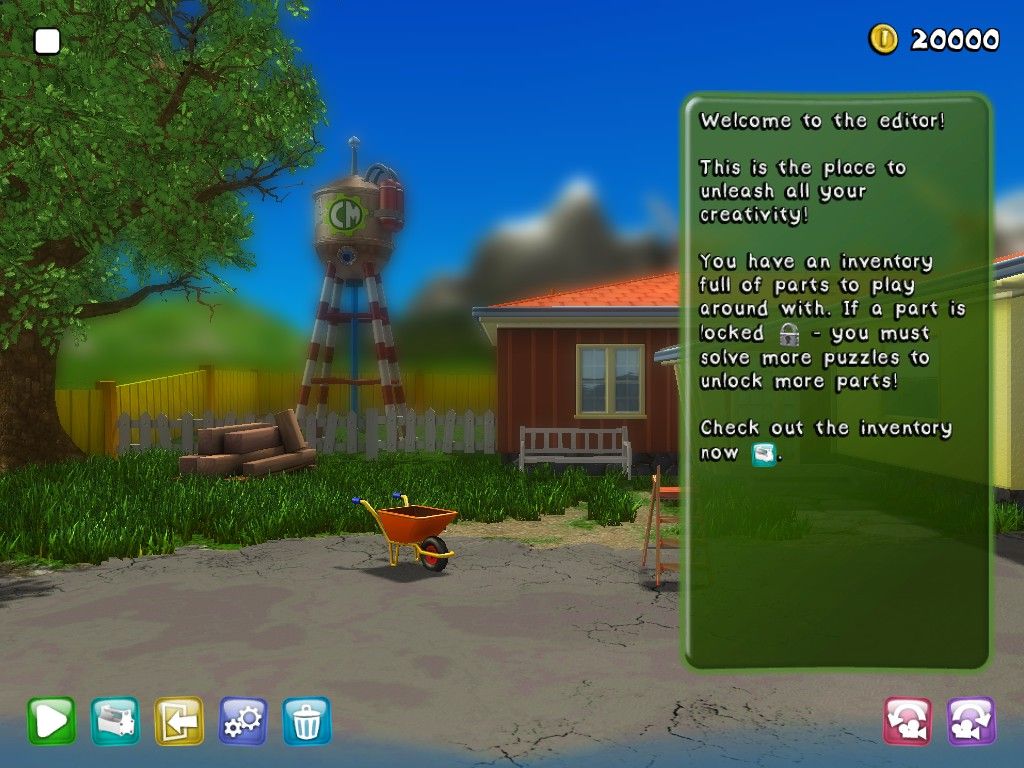
The editor is a meaningful extra for the right kind of player. If completing a puzzle makes you immediately wonder what else the same parts could do, being able to build machines or puzzles for other players extends the pleasure. If you only want a guided set of levels, the main experiment list already carries the game; the editor is for the tinkerers who want to stay at the workbench.
Graphics
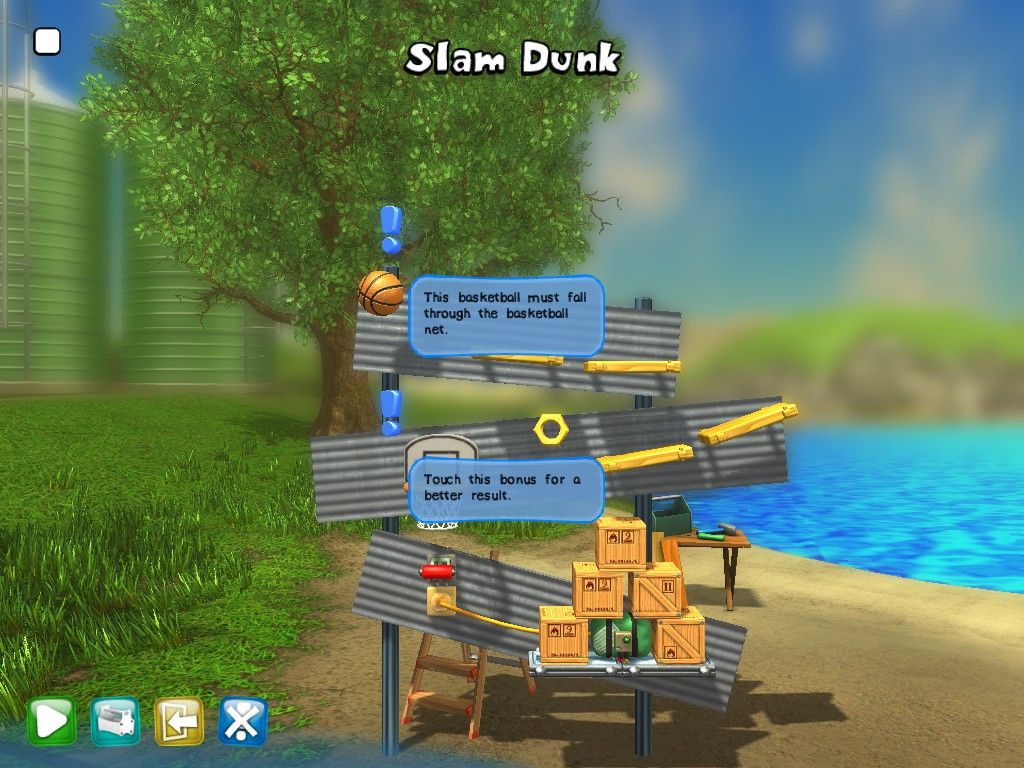
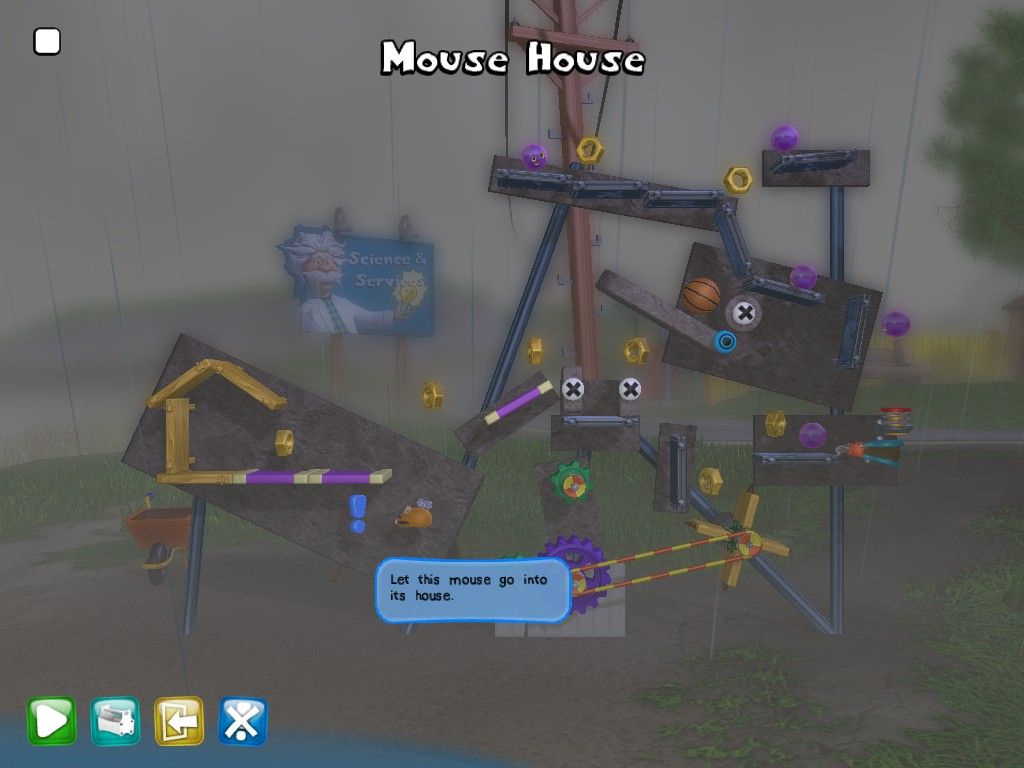
The game uses a side-view puzzle field, keeping the components and their connections in one clear working space. The most memorable images come from the apparatus itself: a vase waiting to be hit, nitroglycerine ready to go off, and practical parts such as windmills and flamethrowers arranged into increasingly odd machines.
Story
Crazy Machines: Elements frames its action as a run of experiments rather than asking you to follow a conventional adventure. Each level supplies its own tiny bit of dramatic context: here is the target, here are the parts, now make the outcome happen. It is a useful fit for a game that wants your attention on cause and effect.
That modest framing works because the machine becomes the event. A successful experiment has a beginning, middle, and end all on its own: you set the pieces, commit to the start, and watch whether your plan reaches its target. The game does not need much more ceremony to make a solved puzzle feel like a completed little stunt.
If you want character-driven plotting or a big narrative reason to push onward, this will not be the source of that motivation. Progress comes from curiosity, the next experiment, and the urge to make a cleaner solution or grab a difficult cogwheel. For this series, that is a sensible priority.
Overall Experience
Crazy Machines: Elements is a dependable chain-reaction puzzler with a strong core loop and enough levels to make that loop worthwhile. Its best moments are not flashy revelations; they are the satisfying seconds after a plan you doubted suddenly works. You build, you test, you learn what failed, and you come back with a better arrangement.
The game is less compelling if you need each sequel to dramatically reshape the formula. Elements adds components and gives completion-minded players cogwheels, efficiency challenges, and an editor, but it remains recognizably Crazy Machines. That familiarity is either reassurance or a limitation, depending on how much you already enjoy this particular brand of trial-and-error engineering.
Give it a chance if you like self-contained logic problems and do not mind spending time on a stubborn setup before it clicks. The challenge missions are especially worthwhile for anyone who sees a successful solution as the start of the real puzzle. At 6.6, it lands as a good, workmanlike entry: enjoyable machinery, useful extras, and a formula that remains more dependable than surprising.


Reviews
There are no reviews yet.