 Retro Replay Retro Gaming History, Reviews & Emulation
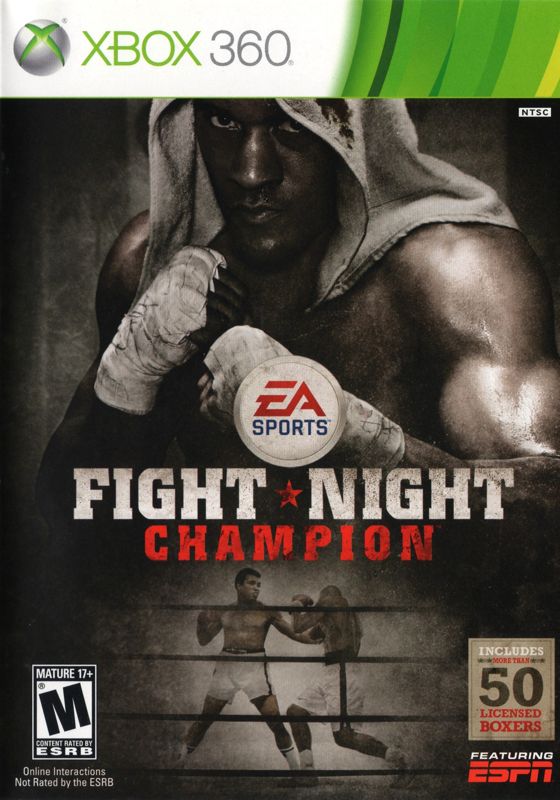
Retro Replay Review
Gameplay
The first few fights make a strong case for patience. You can still throw yourself into combinations, but Fight Night Champion punishes that kind of impatience more clearly than a lot of sports games do. Repeatedly leaning on one hand, taking punishment to a single area, or simply winging too many shots drains your effectiveness through its body-part stamina system. That turns every round into a small calculation: work the body, protect your head, change hands, and leave enough in reserve to matter later.
The revised Full-Spectrum Punch Control is a meaningful improvement. Tapping the right stick in one of eight directions is more immediate than the circular motions used for hooks and uppercuts before, so you spend less time wrestling with input and more time reading the opponent. Face-button punching is also supported, which is a smart concession rather than a compromise. Use whichever scheme lets you focus on timing, guard, and position; that is where the satisfying part of Champion lives.
Stats and punch perks add a little volatility to careers. A strengthened punch can gain flash knockdown or flash knockout potential, so one clean connection can abruptly change a fight. It is exciting when it happens, though it also means the most carefully managed round can end in an instant. The broader system still rewards disciplined boxing enough that these moments feel like danger you must respect, not pure chaos.
Legacy Mode does not radically reinvent its career loop, but its training revision gives the calendar more bite. You build a boxer, spend earned experience on growth, and now choose when to pay for specialist gyms around the world. Training costs stamina, so cramming every available week full of work can leave you underprepared in the way that matters most: with reduced stamina when the bell rings. It is a simple pressure point, but it makes rest feel like a real decision instead of dead time.
Graphics
Champion Mode uses cutscenes between its roughly 20 controllable fights to carry Andre Bishop’s career, giving the boxing a more continuous, campaign-like flow than a string of isolated exhibition matches.
Story
Champion Mode is the reason this entry feels more authored than a standard boxing career game. You play as Andre Bishop, a former Olympic middleweight champion whose path runs through jail, a return to the sport, and a comeback attempt. The mode has a clear forward pull because each fight is tied to what is happening to him rather than existing solely as the next item on a schedule.
That focus comes with a tradeoff. Andre is a defined fighter, so you cannot reshape his strengths, weaknesses, or training to suit your preferred style. If you like the ownership of creating a boxer from scratch, Legacy Mode remains the better home. But fixing the fighter lets Champion Mode build bouts around specific circumstances instead of trying to accommodate every possible build.
Those circumstances are often the story mode’s most memorable idea and its most likely source of frustration. One fight may demand a knockout by a certain round; another can begin with a cut eye or injured arm; another opponent may have one terrifying punch you need to avoid. They force you to adapt and can make victories feel earned, but they also reduce the freedom to box every match at your own pace. Go in ready to solve a series of pressured fights, not just chase an unbeaten record.
Overall Experience
Fight Night Champion understands that boxing gets compelling when offense has consequences. Its stamina model asks you to vary your attack, protect vulnerable areas, and avoid turning every round into a frantic exchange. Once that starts clicking, even a straightforward fight has momentum: a tired arm, a battered head, or a reckless opponent can change your priorities quickly.
Champion Mode adds a worthwhile campaign spine, and Legacy Mode supplies the more open-ended boxer-building route. Neither mode cancels out the other. One is for a directed run through difficult, often constrained bouts; the other is for managing a career and developing a fighter over time. The online gyms and World Championships offer another competitive outlet for anyone who wants to take that developed skill against other people.
The game is strongest for you if you enjoy sports games that ask for adjustment rather than constant aggression. The special rules in Champion Mode will occasionally feel like the game has put its thumb on the scale, and Legacy’s changes are evolutionary rather than sweeping. Still, the revised controls, defensive options, and stamina pressure make the core fighting satisfying enough to carry the whole package. This is a tough, thoughtful boxing game with a story mode that gives its best fights real stakes.


Reviews
There are no reviews yet.