 Retro Replay Retro Replay gaming reviews, news, emulation, geek stuff and more!
Retro Replay Review
Gameplay
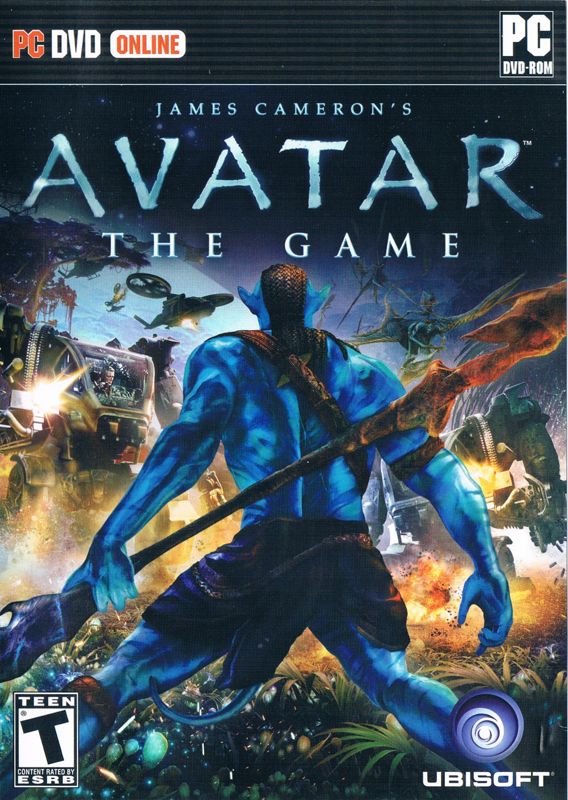
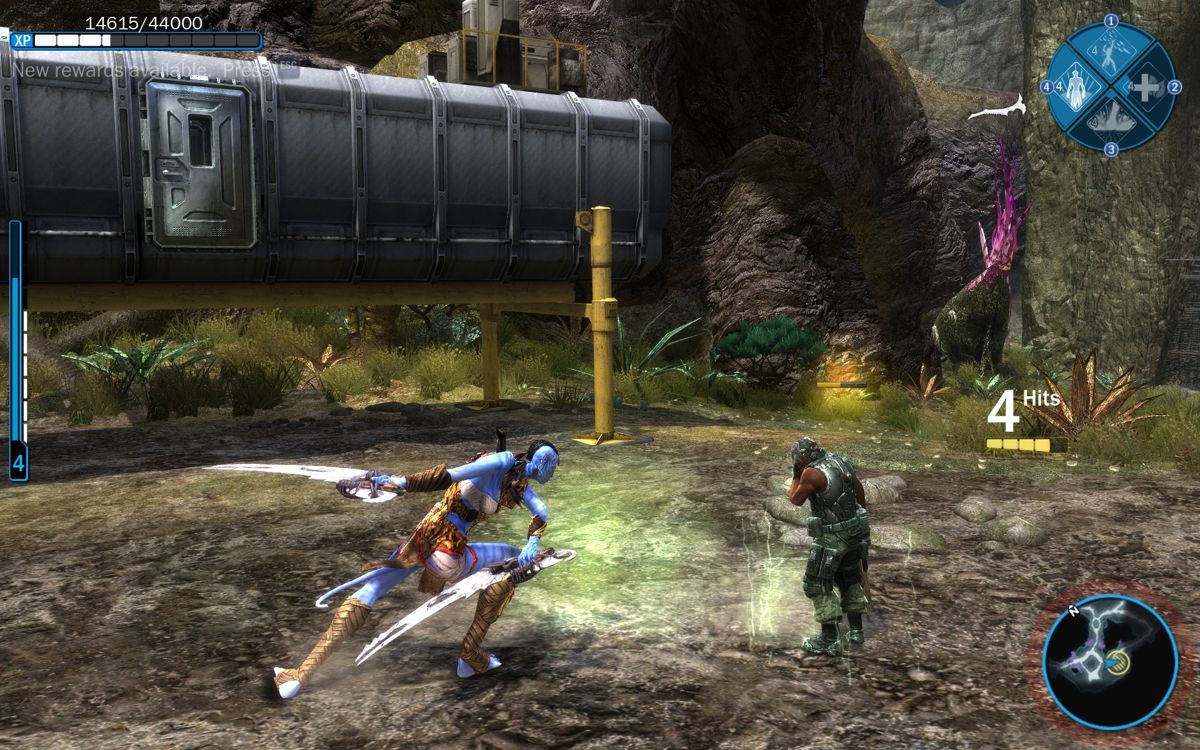
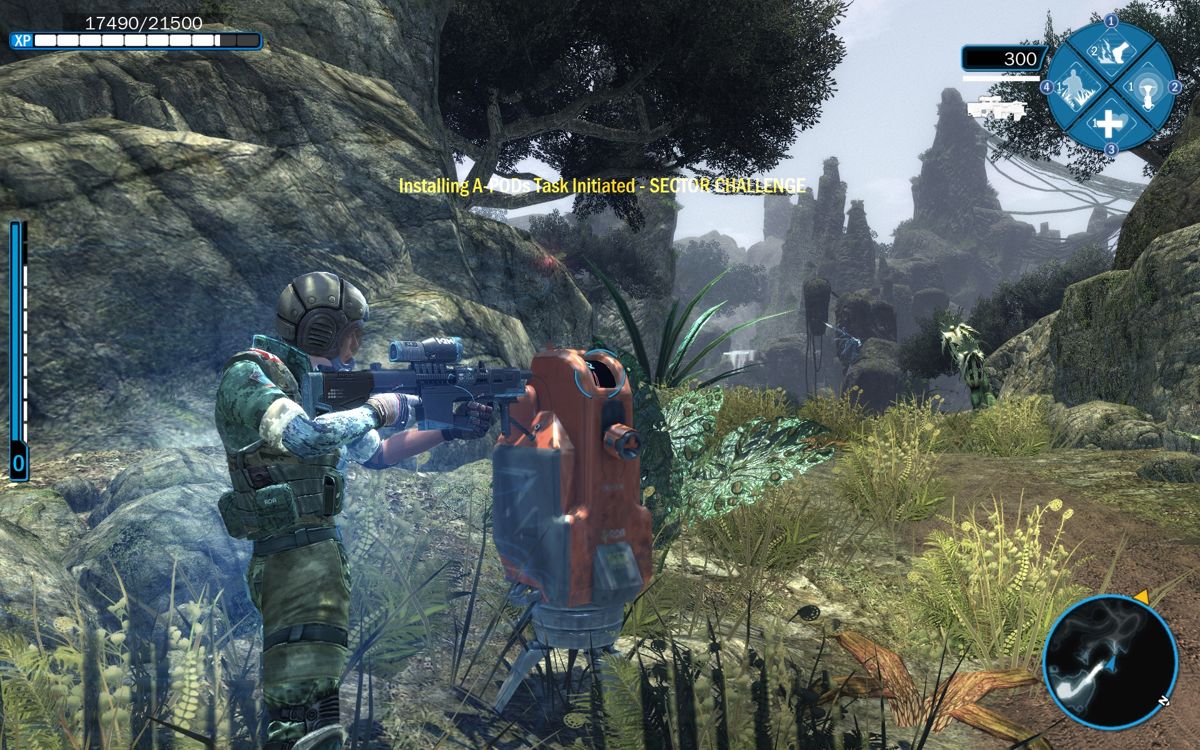
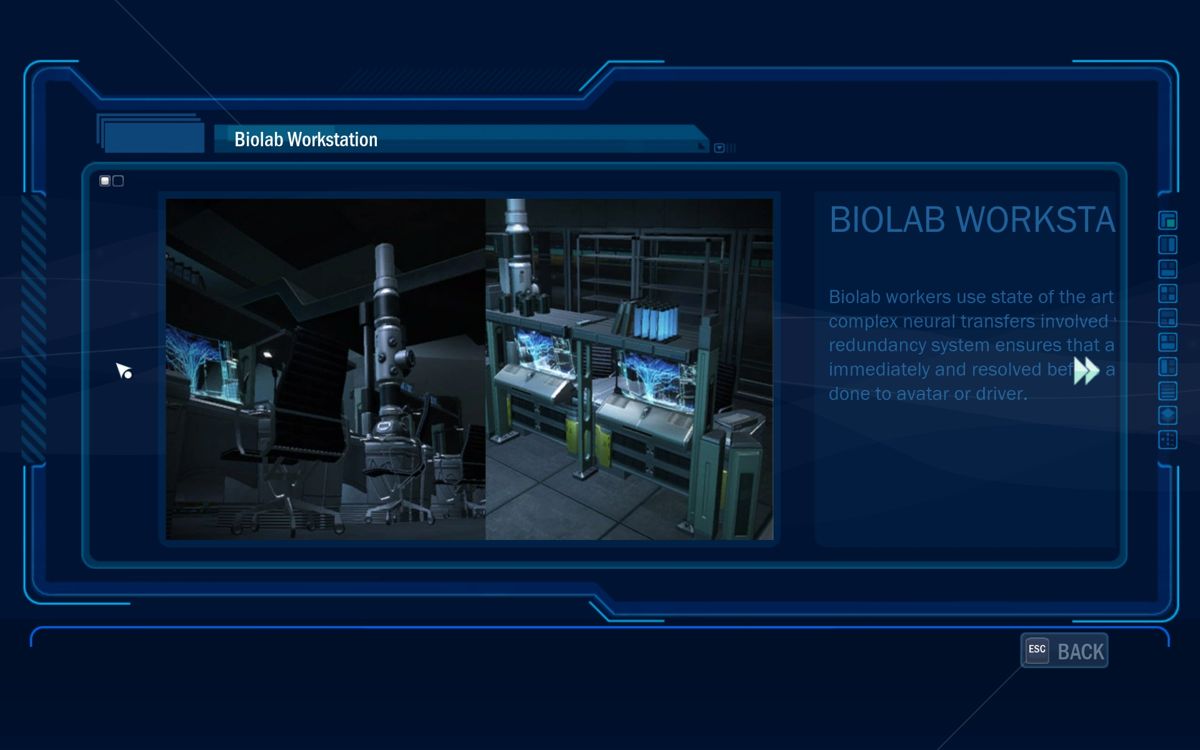
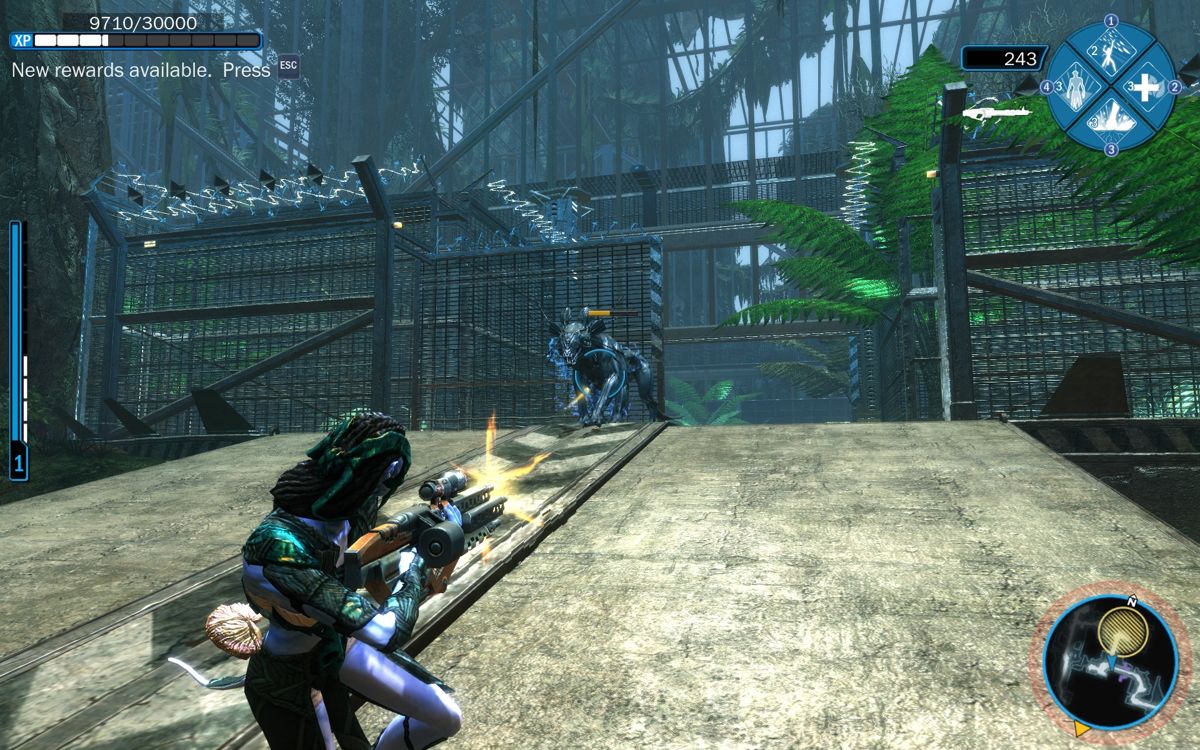
James Cameron’s Avatar: The Game offers a robust third-person shooter experience built around a key moral choice early in the campaign. Players select either the RDA human forces or the indigenous Na’vi clan, and this choice dramatically alters weapons, abilities, and tactics. As a human operative, you’ll find yourself in heavily armed suits, driving buggies or helicopters across Pandora’s rugged terrain. As a Na’vi warrior, you’ll rely on agile bows, melee weapons, and the planet itself to guide and protect you.
(HEY YOU!! We hope you enjoy! We try not to run ads. So basically, this is a very expensive hobby running this site. Please consider joining us for updates, forums, and more. Network w/ us to make some cash or friends while retro gaming, and you can win some free retro games for posting. Okay, carry on 👍)
The core combat loop revolves around completing objectives, collecting DNA and cell samples, and gaining experience to unlock new abilities. Human players can construct ammo and health pods at strategic points, while Na’vi characters benefit from the planet’s friendliness but must harvest resources to craft arrows and potions. Both factions share a leveling system that grants access to powerful attacks—such as cloaking or explosive flamethrowers—and abilities to revive instantly if enough samples have been gathered.
Beyond the standard campaign missions, Avatar: The Game incorporates a turn-based world-domination mini-game at each teleportation hub. Conquering sectors in this strategy layer rewards additional XP and boosts weapon damage in the field. While the mini-game can feel simplistic—combat is resolved automatically based on unit counts—it adds a welcome strategic diversion between firefights and stealth runs.
Multiplayer rounds out the gameplay offering five team-based modes: King of the Hill, Capture the Flag, Team Deathmatch, Capture and Hold, and Final Fight, which pits RDA defenders against Na’vi attackers in missile-destruction scenarios. Each mode is balanced around the distinct strengths of both factions, ensuring that no single playstyle dominates. Though multiplayer encounters can suffer occasional balance issues, the variety of modes keeps matches fresh and encourages players to master both human and Na’vi arsenals.
Graphics
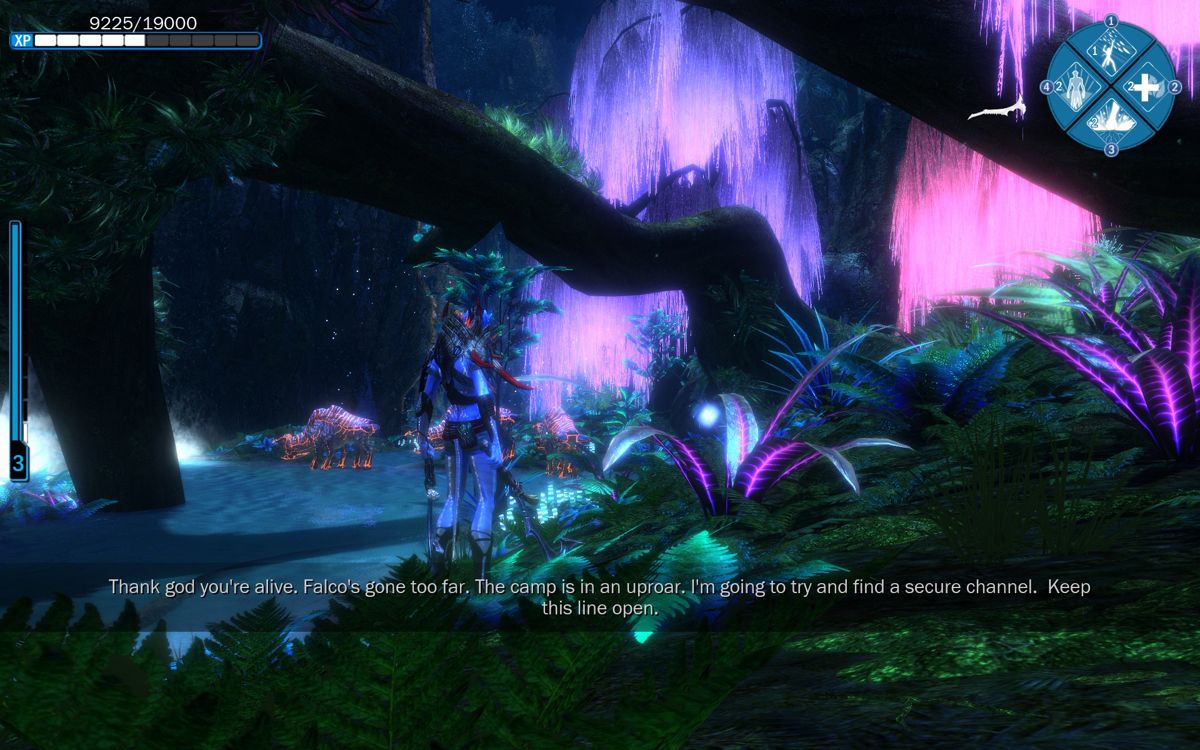
Visually, Avatar: The Game strives to capture the lush beauty of Cameron’s Pandora. Forests glimmer with bioluminescent plants, while the swirling mists and floating mountains evoke a strong sense of otherworldliness. Texture detail on trees, rocks, and plant life holds up well even at higher draw distances, making exploration genuinely immersive.
Character models vary in quality depending on faction choice. Human soldiers and machinery are sharp and mechanical, with convincing wear on armor and vehicles. The Na’vi are tall, graceful, and richly detailed, their glowing tattoos and tribal warpaint standing out against the natural backdrops. Creature animations—whether riding the giant ikran or fending off hostile fauna—are fluid, though occasional clipping issues arise when large mounts navigate tight spaces.
Lighting is one of the game’s strongest assets. Dynamic shadows cast by evening sunrays, flickering campfires, and glowing plant life combine to create memorable vistas and tense stealth moments. Water reflections and particle effects—like dust kicked up by a passing gunship—add further polish. On mid-range hardware, you can expect a stable frame rate, but pushing every eye-candy setting may introduce dips in more crowded or particle-heavy sequences.
Story
Although Avatar: The Game borrows its setting and tone from the blockbuster film, it forges an original narrative centered on Lance Corporal Ryder, a signal specialist thrust into Pandora’s ecological and cultural conflict. The story unfolds with Ryder enrolled in the controversial Avatar Program, merging human and Na’vi DNA to facilitate deeper interaction with the native population. This premise smartly expands the universe beyond the movie’s characters, inviting players to shape Pandora’s fate.
Early on, a pivotal choice determines your allegiances: assist the RDA’s resource-extraction efforts or defend the Na’vi’s sacred Well of Souls. Each campaign branch offers unique missions, NPCs, and dilemmas, giving genuine weight to your decision. Human missions revolve around sabotage, escorting convoys, and rescuing fellow soldiers. Na’vi assignments involve stealthy reconnaissance, spiritual pilgrimages, and tribal rites that unlock supernatural abilities.
While the overarching conflict is compelling—humans versus nature—a handful of cutscenes and dialogue exchanges can feel stilted or cliché. Some mission objectives veer toward generic shooter tropes, yet the emotional stakes of you versus your former comrades or newfound tribal family inject moments of gravitas. Minor side quests, like liberating Na’vi outposts or defending RDA supply lines, flesh out the world and provide additional context to the main storyline.
Overall Experience
James Cameron’s Avatar: The Game delivers a satisfying blend of action, exploration, and strategic decision-making. The dual-faction structure adds high replay value; switching allegiances not only changes gear and combat style but also reveals new sections of Pandora and alternative narrative beats. The world-domination mini-game, while simple, brings a layer of long-term progression that dovetails neatly with the FPS mechanics.
Performance and polish are generally strong, though occasional clipping and AI pathing quirks pop up in both campaign and multiplayer. The levelling system and resource-gathering mechanics keep players invested, rewarding both aggressive play and careful planning. Multiplayer maps reflect the single-player environments, extending the life of beautifully designed locales into competitive skirmishes.
For fans of the film universe, the game offers a deeper dive into Pandora’s ecosystems and cultures, albeit with a handful of narrative rough edges. Shooter enthusiasts will appreciate the variety of weapons and the contrast between high-tech RDA hardware and primal Na’vi combat. While not without flaws, Avatar: The Game stands out as an ambitious licensed title that successfully marries spectacle with player agency, making it a worthy addition to any collection.


Reviews
There are no reviews yet.