 Retro Replay Retro Gaming History, Reviews & Emulation


Retro Replay Review
Gameplay
The first stretch makes a convincing case for controlling two unlikely partners rather than one all-purpose hero. Arkail is built to stand in the middle of a fight, while Styx can thin a group before the brawl begins. When you spot a route that lets Styx quietly remove guards and then send Arkail into whoever remains, the game feels deliberate in a satisfying way. You are not simply choosing the strongest attack; you are deciding when subtlety has run its course.
Combat runs in real time, but slowing time to a crawl opens a tactical menu where you queue skills, choose targets, and set up attacks before letting the action play out. That approach can take a little patience early on. Once it clicks, though, it gives fights a welcome planning phase without turning them into fully turn-based battles. Stuns, buffs, and targeted attacks matter because the pair have distinct jobs, and trying to force either character into the other’s role is a quick way to lose control of an encounter.
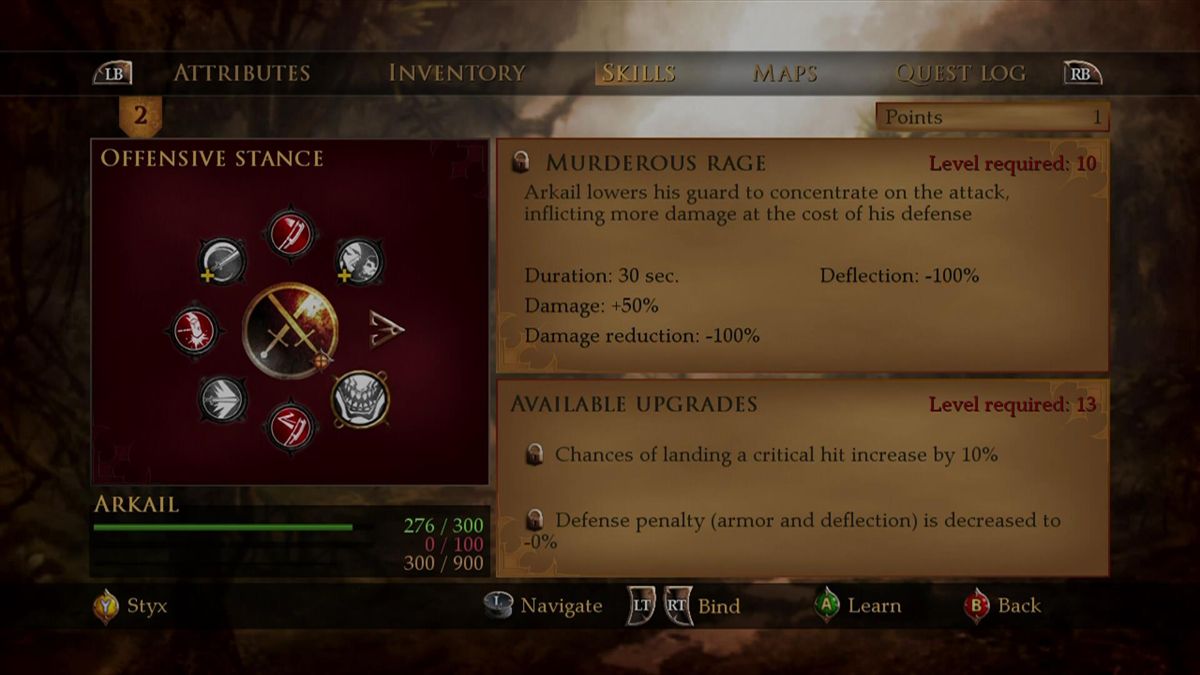
Arkail’s rage is the system with the sharpest edge. Taking hits fills his meter, and the payoff is explosive damage; the catch is that berserk Arkail becomes hard to manage, drops his defenses, and may hurt allies. The Backlash vulnerability after rage ends means this is not a panic button to press thoughtlessly. It is a risky tool that rewards timing, especially when Styx has already helped reduce the number of threats.
Styx’s stealth adds another layer rather than serving as a brief detour. Line of sight governs discovery, while dogs can catch his scent, so you cannot rely on a single trick. His ability to reach places Arkail cannot—sometimes with a literal throw from the larger Orc—makes exploration feel tied to the duo’s relationship and skill set. Between fights, hub areas offer conversations, smaller quests, loot, trading, and character advancement through core attributes and weapon or attack upgrades.

Graphics
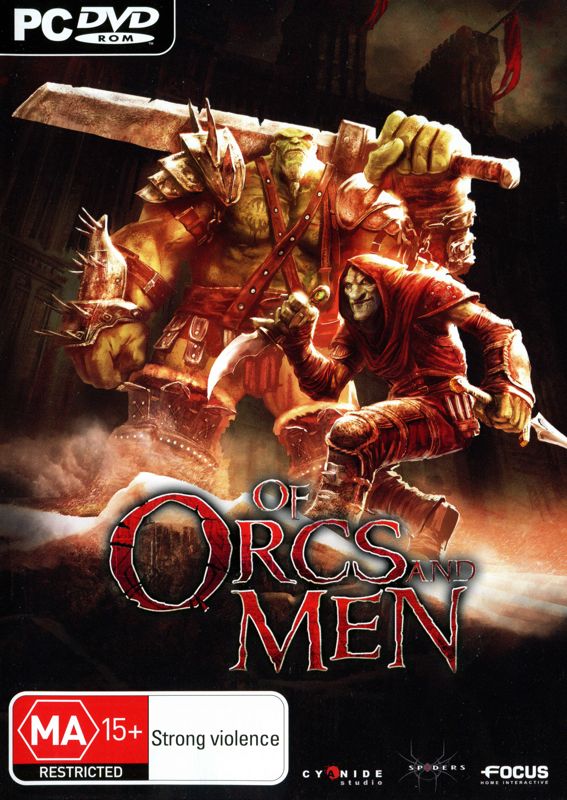
The behind-view camera keeps Arkail and Styx at the center of the action, which suits a game built around an enormous Orc and a smaller Goblin moving through the same dangerous spaces. The clearest visual contrast comes from that physical mismatch: Arkail looks like the fighter who can force a confrontation, while Styx’s smaller frame fits the sneaking and ledge-reaching side of the adventure.
Story
This is fantasy from the side that is usually handed a sword and labelled the enemy. Arkail begins as an elite Orc soldier caught between conflict with Goblins and the long war against humans, elves, and dwarves. The Northern forces’ gigantic wall, built to cut off the South, gives the world a harsh political pressure beyond the usual good-versus-evil setup.
The central mission—to kill the human Emperor—is blunt, but the more interesting hook is the partnership that forms around it. Arkail and Styx become the main protagonists for most of the game, and the premise gains its weight from asking you to follow an Orc and Goblin through a world that treats their side as a threat to be contained or crushed.
Do not come expecting a gentle heroic quest. The war has lasted ten years, the factions are already entrenched, and the goal is an assassination at the heart of the opposing power. That grim angle is the story’s strongest asset. For more background on the game’s release and history, see this overview of Of Orcs and Men.
Overall Experience
Of Orcs and Men is at its best when you treat it as a two-person tactical adventure rather than a simple action game. Slow time, set up a plan, use Styx to create an opening, then decide whether Arkail should control the fight or gamble on rage. That rhythm gives the journey its own identity.
Frustration can set in if you want immediate, frictionless combat. Arkail’s berserk state has real drawbacks, stealth has rules beyond merely staying out of sight, and the tactical menu asks you to think ahead. Yet those same constraints keep the two protagonists from blending into interchangeable RPG archetypes. Their limitations are what make successful encounters feel earned.
Give it a chance if you enjoy darker fantasy, a role reversal that places Orcs and Goblins in the lead, and combat where preparation matters as much as aggression. The payoff is not a power fantasy without consequences; it is the satisfaction of learning how Arkail’s force and Styx’s cunning can cover one another’s weaknesses.



Reviews
There are no reviews yet.