 Retro Replay Retro Gaming History, Reviews & Emulation
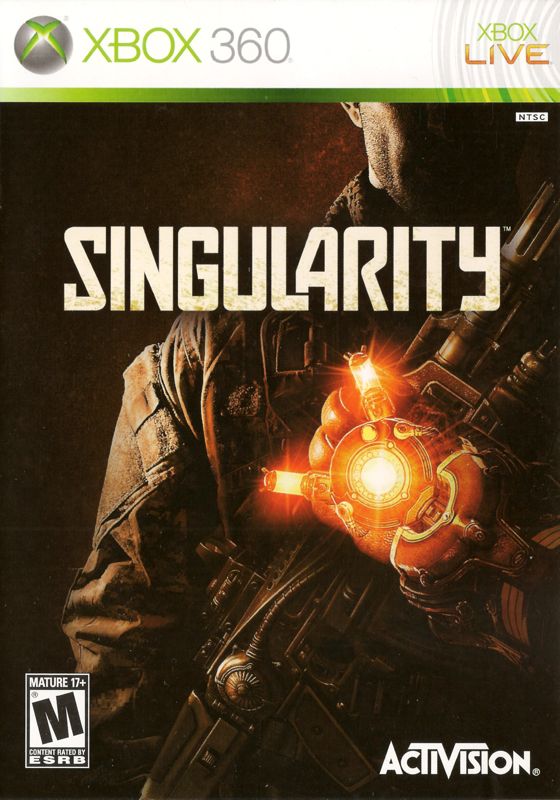
Retro Replay Review
Gameplay
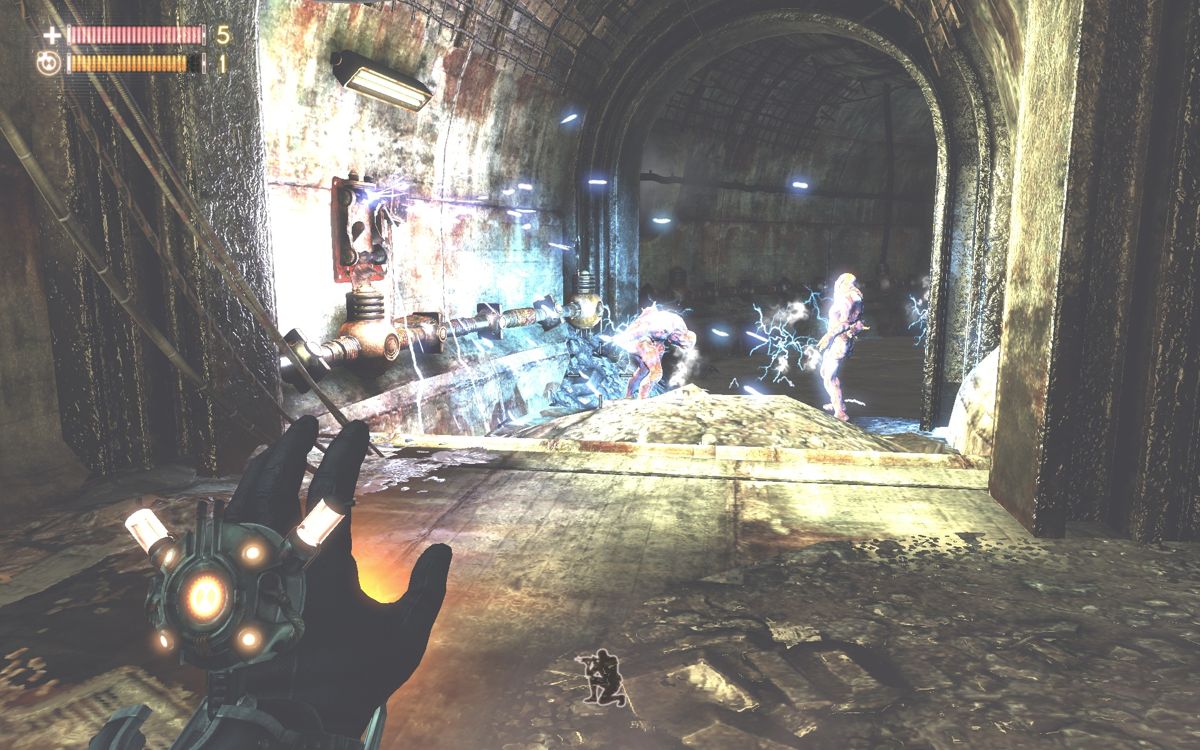
The first hour of Singularity feels agreeably familiar: you are moving through a hostile, ruined island with guns in hand, collecting ammunition and looking for the next way through. Then the Time Manipulation Device starts to take over, and that is when Raven’s shooter finds its own voice. Aging a target to death in seconds is a wonderfully blunt answer to a firefight, and using time on objects gives you a reason to look at spaces as more than shooting galleries.
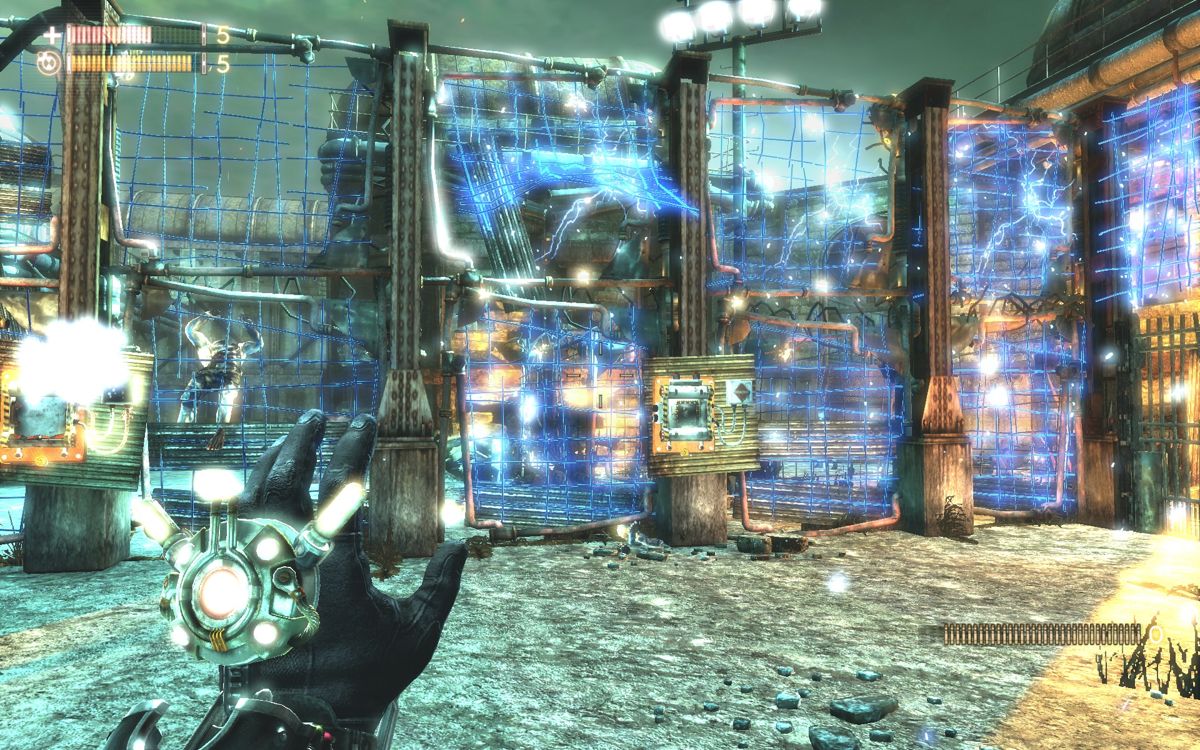
The TMD’s puzzle use is more satisfying than it initially sounds. You are not merely pressing a button on marked locks; you can break down a crate, move its remains, then restore it to force open a gate. That kind of cause-and-effect makes the device feel physical. Later upgrades and formulas deepen its options, including a time-ball that freezes what sits inside it, so the combat kit grows instead of being exhausted after its first clever trick.
Gunplay is competent, with the expected pistol and shotgun backed by oddities such as the Seeker’s player-guided E99 rounds. Weapon lockers make upgrades and resupply straightforward, while hidden technology caches give exploration a practical reward. The compromise is that this remains a linear shooter at heart. If you need every encounter to feel completely open-ended, the route through Katorga-12 can start to feel restrictive; if you enjoy finding the strongest use for a growing set of tools, it stays engaging.
The multiplayer idea is much more distinctive in Creatures vs. Soldiers than in Extermination’s standard team deathmatch. Soldiers use weapons and TMD powers while creatures bring their own disruptive abilities, and the beacon-capture structure gives the asymmetric mode a clearer purpose than simple killing. It is a worthwhile extra mode, but the single-player campaign is where the game’s best ideas are developed.
Graphics
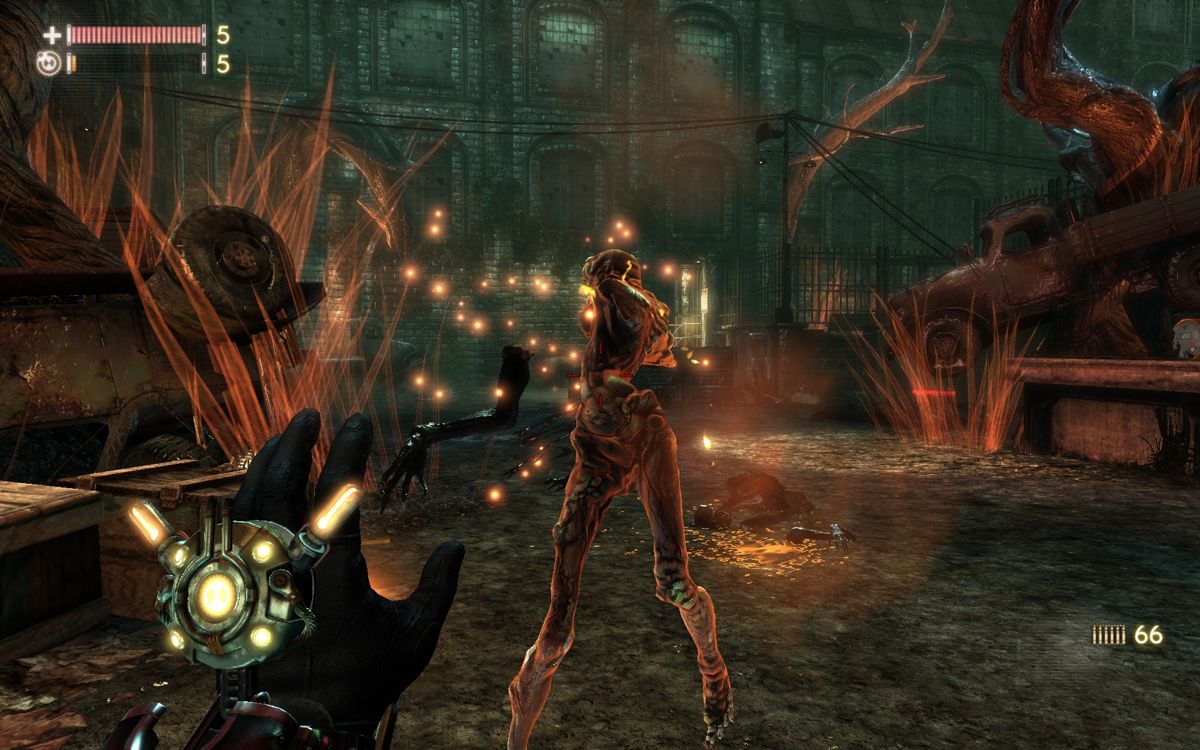
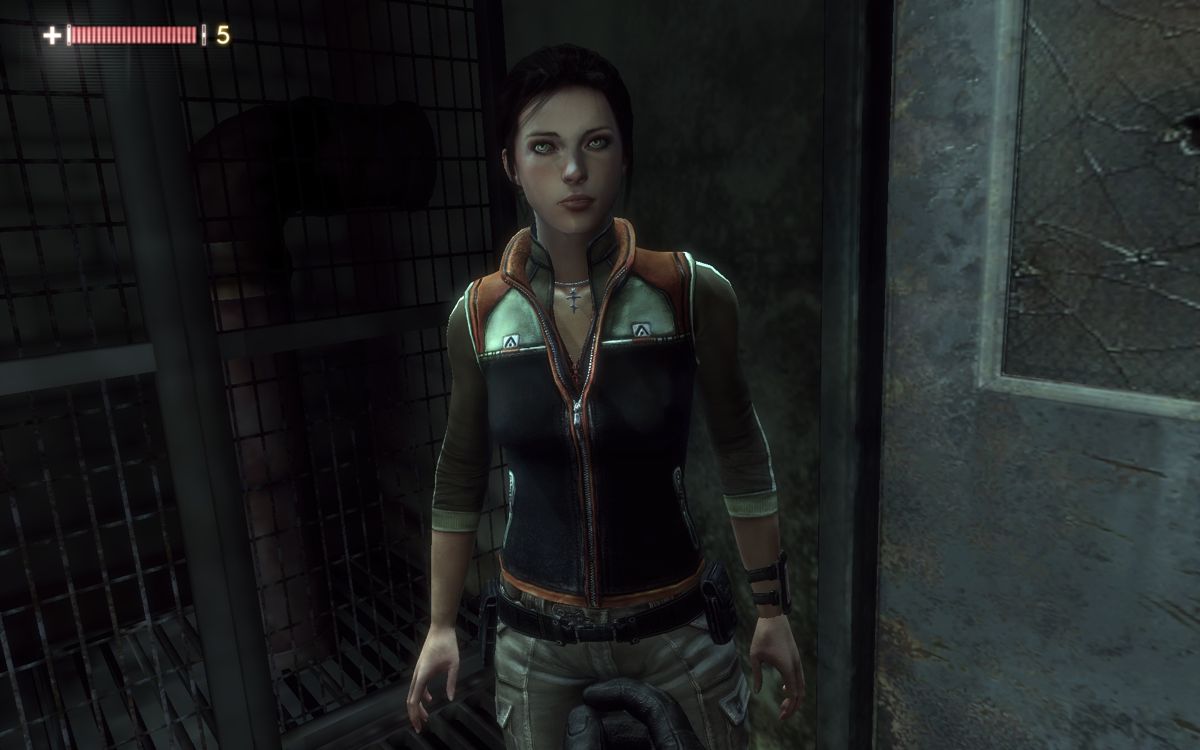
From the first-person view, Katorga-12 is a deserted Russian research island shaped by a long-buried catastrophe, populated by soldiers and former humans warped by the Singularity. The most memorable sights come from the time effects themselves: enemies can wither away under the TMD, while some mutated foes respond in more explosive ways. The game keeps its strange science-fiction imagery close to the action rather than separating it from the shooting.
Story
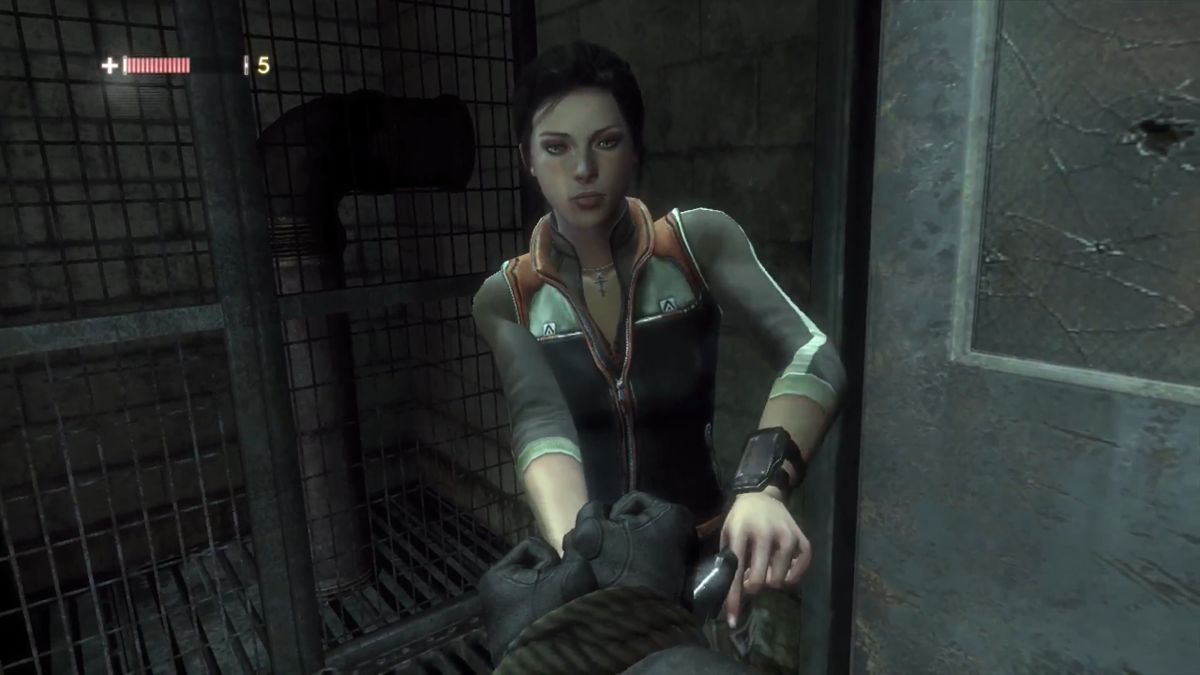
The mystery has a strong hook: an American Black Ops survivor is stranded after an electromagnetic surge brings down his team’s helicopter, and the island beneath him was once the site of Soviet E99 experiments. Stalin-era military ambition, an unexplained 1955 disaster, and renewed radiation in 2010 give the setup a pulpy Cold War science-fiction charge.
You piece much of that history together through notes and recorded messages left behind before the disaster. That approach rewards you for slowing down and reading, but it also means the story’s texture depends on your willingness to hunt through the island rather than expecting every important detail to arrive in a cutscene.
Trips back to 1955 give the plot its real momentum, since Renko is no longer just investigating consequences but altering events that led to them. The choices along those sequences are pre-defined, so do not expect a freeform time-travel story, yet the final decision does lead to three endings. The branching close is a fitting payoff for a game so interested in the consequences of changing time.
Overall Experience
Singularity succeeds because it does not leave its big idea sitting in a cutscene or a one-off gimmick. The TMD is a weapon, a puzzle tool, and the reason the game’s familiar shooter framework keeps producing fresh little problems to solve. Once upgrades begin to stack up, you are encouraged to think before firing rather than simply clearing every room in the same way.
Its limitations are easy to feel. The structure is linear, the storytelling asks you to do some archival work, and its inspiration from BioShock is apparent in the mix of isolated research facility, collectible lore, upgrades, and unusual powers. But imitation is not the whole story here. Manipulating the age of enemies and the world gives it a character that the comparison cannot erase.
Give it a chance if you miss compact single-player shooters with a focused campaign and one genuinely useful signature device. You will get more from it if you search for E99 technology and formulas instead of treating the levels as a straight sprint to the next firefight. The payoff is not a radical reinvention of the genre; it is a sturdy, often clever sci-fi shooter whose best moments come from realizing the weirdest tool in your inventory is also the most practical one.


Reviews
There are no reviews yet.