 Retro Replay Retro Gaming History, Reviews & Emulation

Game Overview
Gameplay
Odyssey feels best when you stop treating Ancient Greece like a checklist and start following whatever looks interesting over the next ridge or across the water. One minute you are stalking soldiers through a fort, the next you are riding toward a town, climbing straight up a monumental structure, or steering the Adrestia into a naval fight. That range is the game’s greatest strength. You can approach trouble as a stealthy assassin, a bow user, or a warrior who wants to meet enemies face-to-face, and the skill system lets you lean into the version that feels right.
The role-playing layer has more flexibility than the series had previously offered. Weapons and armor can be swapped, upgraded, and engraved, while skill points can be reassigned if your early choices stop working for you. Dialogue choices, including different conversational approaches and romances, help make the chosen protagonist feel like yours. Exploration mode is the better fit for anyone who wants to investigate clues and find destinations without being led directly to every goal. Guided mode is there when you would rather keep the story moving.
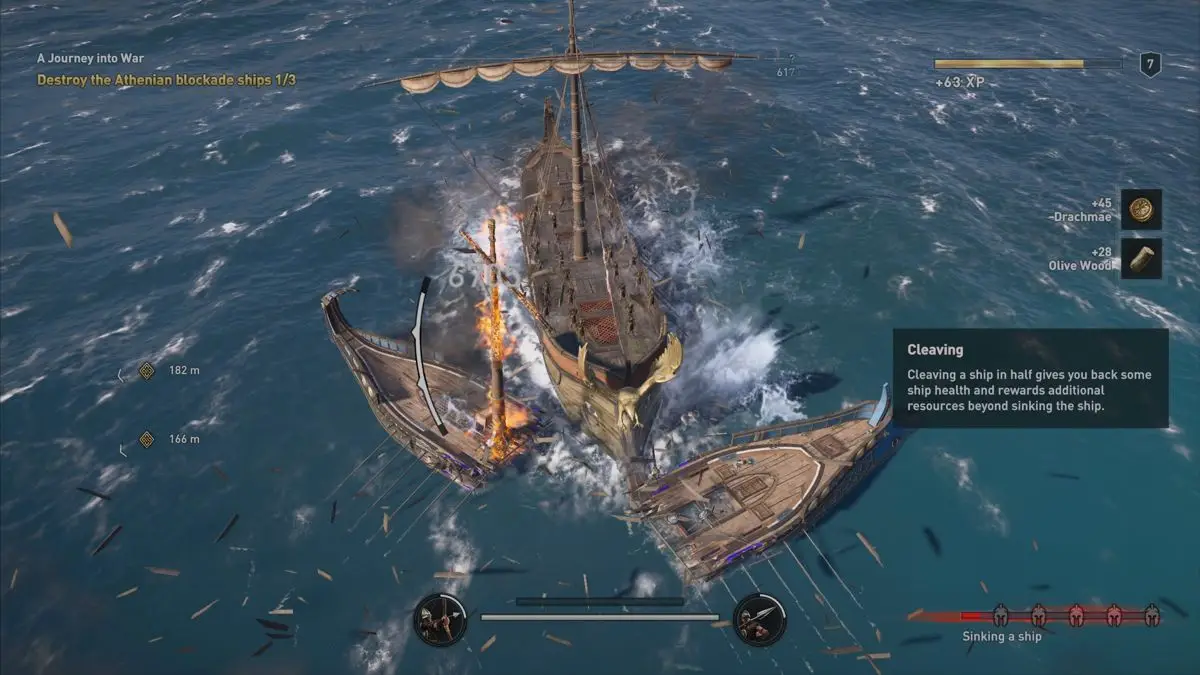
Combat has enough moving parts to stay lively, especially once you are mixing weapon types, arrows, and learned abilities. Naval combat is a particular highlight: the Adrestia trades archer fire and javelins with enemy vessels before you ram them broadside or board them for plunder. It has a satisfying sense of escalation, and upgrading the ship gives those sea excursions a purpose beyond getting from island to island. Ikaros is useful for scouting and marking dangers, though the eagle’s assistance can make an area feel more like a planned assault than a blind stumble into chaos.
The major frustration is that Odyssey rarely lets you feel decisively overpowered. Enemies level alongside you, and their equipment keeps pace as well, so upgrades improve your options without always making routine fights faster. Forts, wolves, and mercenary battles can retain their bite far into the game. The many bulletin-board bounties and contracts feed the leveling and resource economy, but they can blur together if you chase every icon. Be selective, focus on quests with characters or places that catch your interest, and the enormous map becomes far less exhausting.
Graphics
The PlayStation 4 game makes its strongest visual impression at sea. Sunlit water breaks into white spray around the Adrestia during a ram, and the crowded wooden decks give boarding fights a convincing, rough-and-ready texture. Armored warriors, shields, helmets, and spears read clearly at close range, while the third-person camera keeps the action easy to follow. The world can shift into stark, gray ruins filled with dust and broken stone, which gives those areas a much harsher look than the bright open water.

Story
The family mystery gives Odyssey more momentum than a typical mercenary tale. After the sacrifice that tears the Spartan siblings apart, the surviving protagonist leaves Kephallonia searching for answers about their parents, their lost sibling, and the Cult of Kosmos. Letting you choose Alexios or Kassandra changes who carries that search and who stands against them. It is a broad, dramatic setup, and the dialogue choices add some ownership even when the story remains centered on that fixed family conflict.

Overall Experience
Odyssey is an easy game to admire and a harder game to finish with equal enthusiasm. It is huge, generous, and constantly ready to distract you with another island, camp, contract, or ship on the horizon. When its systems overlap well, you get a terrific self-directed adventure: scout a position, sneak in, improvise when the plan breaks, collect what you need, and sail toward the next lead. Few games make simple travel feel so full of possibility.
That freedom comes with bloat. The progression loop asks for resources and experience often enough that side activities can feel obligatory, and level scaling dulls the payoff of becoming better equipped. The main story also does not give you a clean moment to step off after its central quests, since the broader adventure simply continues. If you need a concise campaign with a strong sense of finality, Odyssey may test your patience.
But if you want to inhabit a sprawling action RPG and are willing to set your own pace, it earns the commitment. Pick the protagonist you prefer, build toward the combat style you enjoy, use exploration mode if discovery matters to you, and do not feel compelled to clear every task. With that mindset, Assassin’s Creed: Odyssey is a rich, sometimes overstuffed trip through Ancient Greece whose best moments are still remarkably easy to lose yourself in.


Reviews
There are no reviews yet.