 Retro Replay Retro Gaming History, Reviews & Emulation
Retro Replay Review
Gameplay
Soulstorm is at its best when you slow down and treat each stretch of a level like a small survival problem. Abe is not just sprinting and jumping toward an exit. You are checking trash cans and lockers for supplies, pickpocketing when the opportunity is there, and turning those materials into tools or weapons that may get you through the next problem.
That scavenging economy gives the game more texture than a straightforward platformer. Finding useful pieces feels good because your choices have consequences, especially when you have Mudokons depending on you. You can take a quieter route through a situation or bring rescued followers into the plan, so a little forethought can be more satisfying than forcing your way ahead.
It can also become the source of friction. Soulstorm asks you to keep gathering, crafting, sneaking, and considering your group, which makes progress feel deliberate rather than breezy. That is rewarding when you like a game that makes you earn an escape, but it can feel like a lot of chores between the more immediately exciting platforming moments.
Graphics
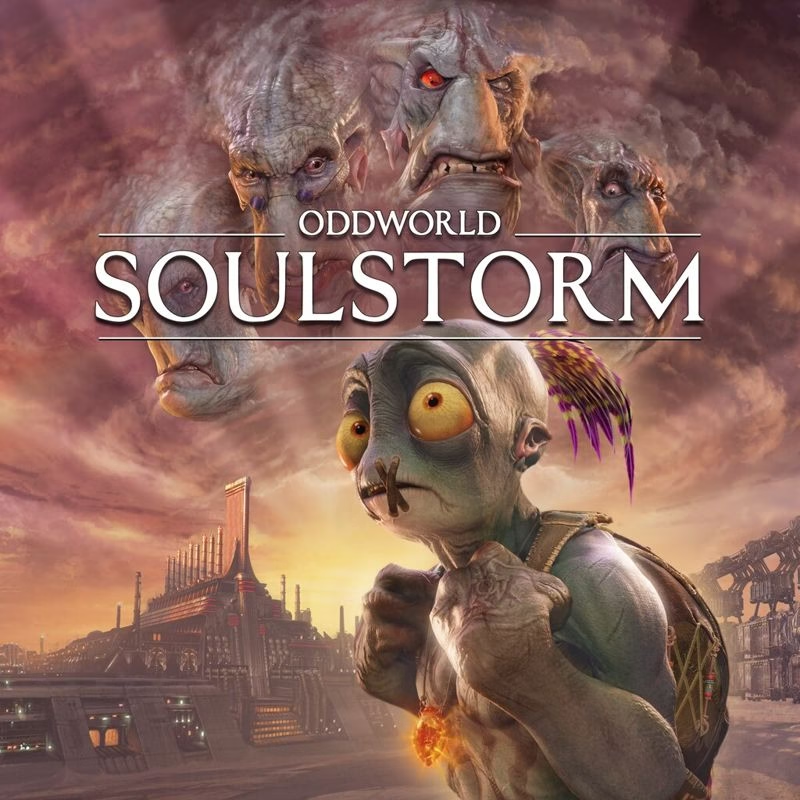
The side-view action keeps Abe, his fellow Mudokons, and the hazards around them in a clear line of sight. Its dark sci-fi setting suits the uneasy mix of industrial danger and dark humor, giving the rescue-and-escape action a harsher look than the usual colorful mascot platformer.
Story
This is a direct continuation of Abe’s story after New N Tasty, with Abe pushed into the role of reluctant hero for the Mudokons. That is familiar territory for Oddworld, but it remains a good fit for a character who would rather survive the chaos than become anyone’s grand savior.
The search for the truth behind Brew gives the journey a larger purpose beyond getting from one dangerous place to another. More importantly, the story keeps the rescued Mudokons from feeling like incidental collectibles. Their safety is tied to Abe’s growing responsibility, which gives the game’s methodical rescue focus some emotional weight.
Dark humor helps prevent the premise from becoming too solemn. Soulstorm is dealing with exploitation and danger, yet it approaches that material through Oddworld’s strange, satirical lens. If you already liked Abe’s mix of nervous energy and stubborn decency, this sequel gives him a natural next step rather than resetting his arc.
Overall Experience
Oddworld: Soulstorm has a strong central loop: explore carefully, collect what you can, improvise with crafted gear, and try to bring others through alive. The game is more satisfying when you accept that it wants you to be cautious. Rushing ahead is not the point, and the best moments come when a plan comes together under pressure.
Its biggest weakness is also its defining trait. The amount of scavenging and preparation can make the journey feel overstuffed, particularly if you came in hoping for the cleaner rhythm of a pure platformer. But for you, that same busyness may be a feature if you enjoy turning limited supplies into a workable escape plan.
Give Soulstorm a chance if you want an Oddworld sequel with more systems to manage and a stronger emphasis on rescuing others. It does not always move with effortless momentum, yet its tense problem-solving, dark comic tone, and reluctant-hero story make it a solid follow-up. For additional background on the original release, see the publisher’s Soulstorm announcement.


Reviews
There are no reviews yet.