 Retro Replay Retro Gaming History, Reviews & Emulation


Retro Replay Review
Gameplay
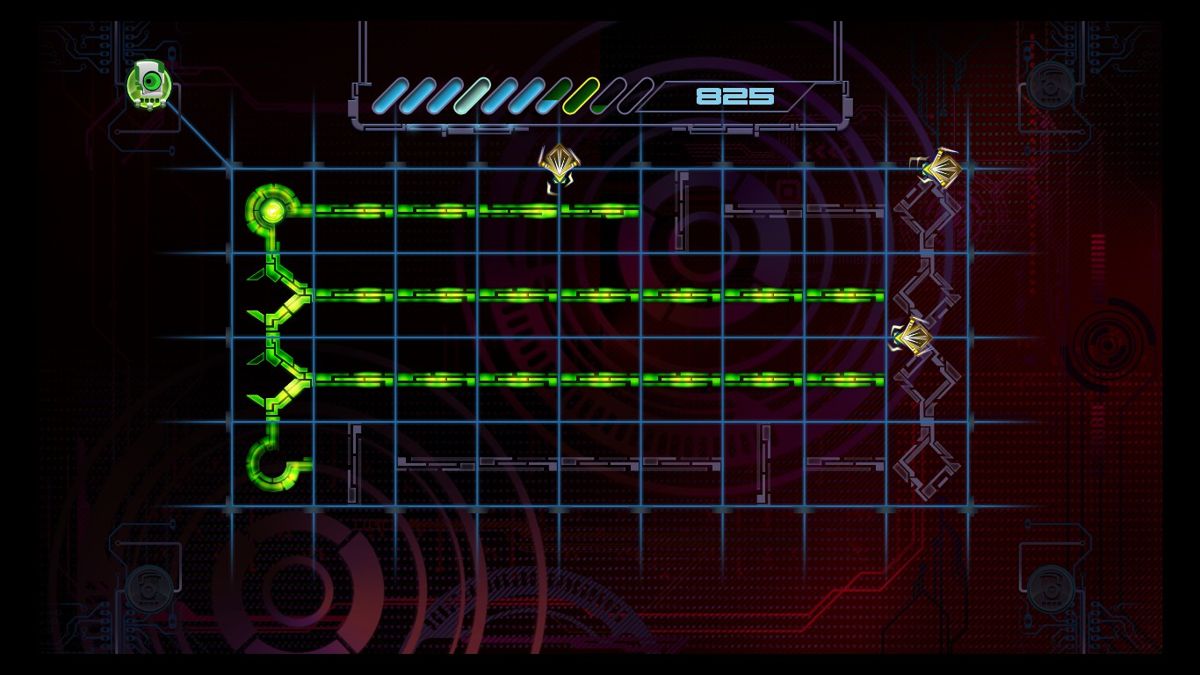
The first few boards are easy to understand and pleasantly demanding to execute. Tom moves around a circuit, rotating each section by 90 degrees as he goes, and you are trying to create a continuous route for the infection to spread across the wiring. That simple action produces a smart little loop: spot the connections you need, move quickly enough to make them, then watch the board come together—or realize one bad turn has left a disastrous gap.
The energy limit is what gives A Virus Named Tom its bite. You are not leisurely solving a static wiring puzzle; every detour costs time, and active antivirus defenses drain energy while knocking Tom into a corner of the board. That can create excellent last-second saves when you have a plan, but it also makes errors expensive. If you like puzzles that reward quick recognition and calm hands, the tension is energizing. If you want time to examine every possibility, the clock may feel more irritating than exciting.
Later upgrades give Tom more room to fight back, including the ability to steal energy from defenses, which helps the game avoid feeling locked into one trick. Encrypted levels, where you cannot see the circuit pieces, push the concept into more demanding territory. Cooperative and versus online modes are also a good match for a game built around hurried decisions: co-op can turn board management into shared chaos, while versus gives the race to complete circuits a sharper competitive edge.
Graphics
The action is viewed from above on circuit-board puzzle screens, where the individual wiring pieces and Tom’s position need to be read quickly. Antivirus threats are distinct active obstacles within that board space, and the corner placement after a hit makes the setback immediately clear.

Story
Dr. X is a suitably cartoonish mad inventor whose work for the “city of tomorrow” includes a mechanical dog that never poops, teleporters, moving walkways, and one catastrophically overzealous giant robot. After being fired by the corporation he worked for, he turns to revenge by creating Tom, a virus aimed at bringing down the city.
It is knowingly silly rather than emotionally weighty, and that is the right call. The premise gives the abstract circuit puzzles a mischievous frame: you are not fixing a network, you are helping an angry inventor’s virus crawl through it. The humor is broad, but the setup has enough personality to make the objective more memorable than another anonymous connect-the-pipes challenge.
Email-delivered upgrades also tie Tom’s growing capabilities back into the fiction without asking the story to carry more than it needs to. Do not come here for a deep sci-fi plot; come for a light comic-book excuse to turn an infection into a puzzle-game protagonist.
Overall Experience
A Virus Named Tom is at its strongest when you can read a board, commit to a route, and pull off a clean chain of rotations with only a sliver of energy left. Its core is easy to grasp but has enough moving pressure—from enemies, energy loss, and less visible layouts—to make success feel earned. The game understands that a puzzle can be about execution as much as deduction.
That same urgency is the dividing line. A mistake can snowball, and being forced away from the center of a board after meeting a defense can make recovery feel harsh. The encrypted puzzles are especially likely to test your patience, since they remove the information you normally use to plan. You need to enjoy adapting under pressure rather than treating every failed attempt as wasted time.
At 6.8, this is a solid, uneven puzzle game with a distinctive central hook rather than an essential genre classic. Give it a chance if timed spatial puzzles make you lean forward and you have friends willing to try co-op or versus. Skip it if countdown-driven puzzle play usually makes you tense in the wrong way; Tom is most fun when the scramble feels like a challenge, not a punishment.



Reviews
There are no reviews yet.