 Retro Replay Retro Gaming History, Reviews & Emulation
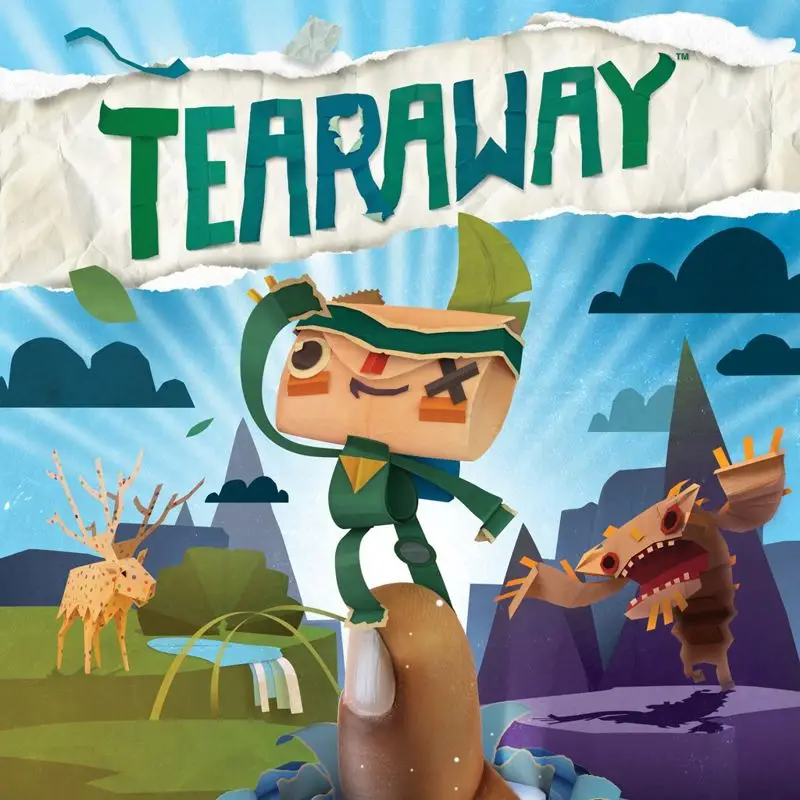


Game Overview
Gameplay
Tearaway earns its first smile with a simple idea: you are not merely steering a messenger through a paper world, you are physically poking, pulling, drumming, and blowing on that world through the Vita. Iota or Atoi still runs, jumps, explores, throws objects, and deals with enemies in recognizable platform-game fashion, so there is a solid foundation beneath the novelty. The difference is that the journey keeps asking you to reach beyond the usual controls.
The rear touchpad is the big hook. Your fingers can push up through the bottom of the game world to swat enemies, reshape terrain, move objects, open routes, and launch the messenger from drumskin platforms. It sounds like a gimmick on paper, but it works because the interactions have a clear physical logic. A marked surface tells you whether it wants a drum, tickle, pull, or peel, and the game gets satisfying mileage from translating a small hand motion into an oversized change in the level.
Not every idea is equally smooth. Using the front and rear touch surfaces, the microphone, and the gyroscope means Tearaway can interrupt a nice running-and-jumping rhythm with a task that demands more attention from your hands or surroundings. The enemy encounters are also fairly direct, relying on dodging, stomping bellies, or stunning a foe so you can pick it up and throw it. The payoff comes from variety rather than deep combat. New tools such as the Weaponized Squeezebox, ball form, and pig riding keep the game from settling into one routine.
Its creative detours are more than disposable extras. Confetti feeds messenger customization, quests ask you to make objects, and the drawing-and-cutting activity lets you create paper designs with layered colors before placing them in the world. If you like giving a game your own small stamp, these moments add real charm. If you only want the next platforming challenge, they can feel like pleasant but unnecessary pauses.
Story
The story is intentionally storybook-simple: a messenger whose envelope head is the message must reach the sun, while the Scraps darken the sky and try to stop the trip. What gives it personality is “the You,” the player’s in-game presence, shown in the sun through the Vita camera. That direct acknowledgment makes the adventure feel less like a grand fantasy epic and more like a game happily inviting you into its handmade joke.
Overall Experience
Tearaway is at its best when it makes you laugh at how naturally a strange Vita-specific request fits the situation. Blowing wind into the world or pressing through a paper floor could have been shallow demonstrations of hardware features. Instead, the game builds its identity around that contact between your hands and the messenger’s world, making familiar platforming feel unusually tactile and personal.
It is not the game to pick when you want demanding combat or a purely uninterrupted platforming run. Its pleasures are gentler: exploring each area, trying a new interaction, meeting characters with small requests, and seeing a handmade design become part of the adventure. The camera features and real-world paper-craft plans push that playful spirit even further, though they are most rewarding for anyone willing to lean into the game’s invitation to participate.
For PS Vita owners, Tearaway remains a particularly good reason to use the system’s unusual hardware rather than ignore it. The platforming alone is enjoyable, but the personal touches turn it into something more memorable. Give it a chance if you want an inventive, cheerful adventure that values curiosity and hands-on play over precision-first challenge.


Reviews
There are no reviews yet.