 Retro Replay Retro Gaming History, Reviews & Emulation
Retro Replay Review
Gameplay
Power Eleven starts as a quick, approachable top-down soccer game, then reveals its best idea once you stop treating the power button as a permanent turbo. Power mode boosts your movement and gives your shots more force, but it drains a rating that only fully refills after the match. In the first hour, you will probably burn through it trying to outrun everyone. Soon enough, the smarter rhythm clicks: save it for a breakaway, a desperate recovery run, or a shot you really need to bury.
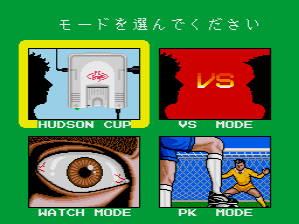
That meter gives the matches a welcome edge, particularly in the Hudson Cup. Solo play puts you through twelve national teams, with opposition growing tougher as you progress. It is a straightforward tournament climb rather than a deep season, but the escalating challenge suits a game built around extracting the most from limited bursts of power. Wins also let you substitute athletes, while different formations offer a little room to adjust how you approach the next opponent.
The control compromise is where frustration can set in. Power mode occupies a button, so there is no dedicated passing button. Shots are instead shaped by how long you hold the fire button: tap for a shorter attempt, hold for distance. That makes the game more direct and less fluid than soccer games centered on quick passing combinations. It also has no fouls or off-sides, which keeps matches moving but strips out some of the tactical texture you may expect from the sport.
Multiplayer and penalty kicks broaden the package nicely. The penalties use a view from behind a transparent goalkeeper, giving that mode a different angle from the usual top-down action. Multiplayer is the better reason to return once the cup is won, because Power Eleven’s blunt, fast decisions are easier to enjoy when another person is reacting to your reckless power bursts in real time.
Graphics
The main matches use a top-down field view built for following the ball and the positioning of your team. Penalty kicks switch to a view from behind the transparent goalkeeper, a small but memorable change that makes the shootout mode stand apart from the regular matches.
Story
There is no character-driven story here. The closest thing to a campaign is the Hudson Cup: choose from twelve national teams and work through increasingly difficult opponents on the way to the trophy.
That stripped-down structure fits the game. You are not here for rivalries, cutscenes, or a dramatic football journey; you are here to survive the next match with enough discipline left in your power gauge to make the decisive play.
The tournament’s sense of progress comes from harder opposition and the chance to make substitutions after victories. It is modest motivation, but it gives the solo mode more purpose than a string of disconnected exhibition matches.
Overall Experience
Power Eleven is a compact, slightly odd soccer game whose power system does more work than its simple rule set suggests. Managing when to sprint and when to unleash a forceful shot creates tension that a normal turbo button would never have. Once that restraint clicks, the Hudson Cup becomes a satisfying test of timing rather than just a march through opponents.
Its limits are equally clear. The lack of a dedicated pass button narrows the attacking game, and the absence of fouls and off-sides makes it a looser, more arcade-minded version of soccer. If you want a detailed simulation or a passing-heavy game, this will wear thin quickly.
Give it a chance if you enjoy early-1990s sports games with one strong, unusual rule at their center. The 6.7 score feels right: Power Eleven is not an all-time essential, but its power-management wrinkle and direct multiplayer energy make it more interesting than its basic tournament setup first suggests. For game-specific release background, see Power Eleven’s history.


Reviews
There are no reviews yet.