 Retro Replay Retro Replay gaming reviews, news, emulation, geek stuff and more!
Retro Replay Review
Gameplay
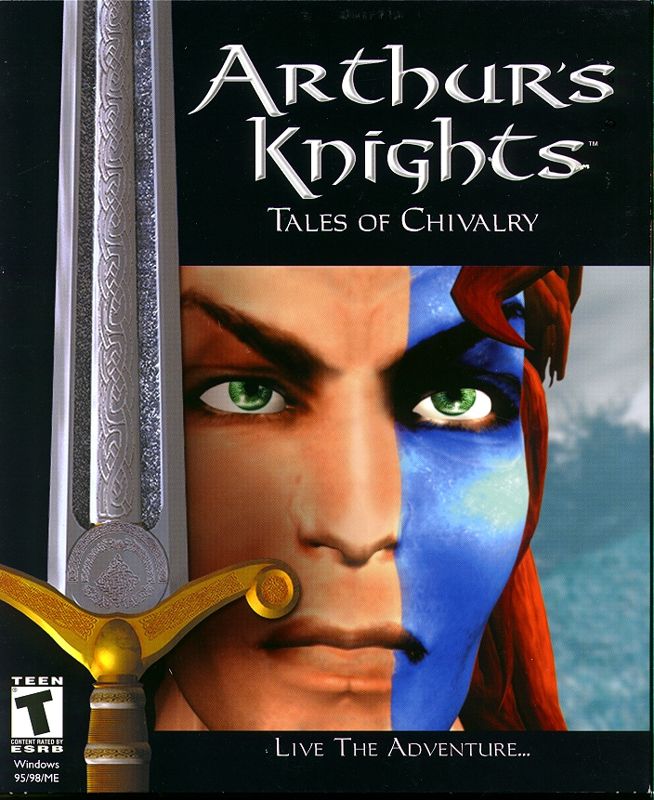
Arthur’s Knights: Tales of Chivalry offers a hands-on, choice-driven gameplay experience built around two distinct narrative paths. From the outset, you pick either the Christian route guided by Sir Lancelot or the Celtic path illuminated by Merlin and the fairies. Each story unfolds with unique quests and dialogue options, ensuring that no two playthroughs feel identical. This branching structure not only ramps up replayability but also lets you tailor Bradwen’s moral compass and alliances.
(HEY YOU!! We hope you enjoy! We try not to run ads. So basically, this is a very expensive hobby running this site. Please consider joining us for updates, forums, and more. Network w/ us to make some cash or friends while retro gaming, and you can win some free retro games for posting. Okay, carry on 👍)
Movement and interaction are handled with a hybrid control scheme: keyboard keys for Bradwen’s locomotion, pick-ups, and searching fallen foes, while the mouse manages menus and conversations. Combat is elegantly streamlined—once you’ve equipped the proper weapon, simply click the sword icon and Bradwen will engage foes automatically. However, the real challenge comes from your dialogue choices; choose to talk or fight carelessly, and you could meet an untimely demise at the hands of a would-be ally or ambusher.
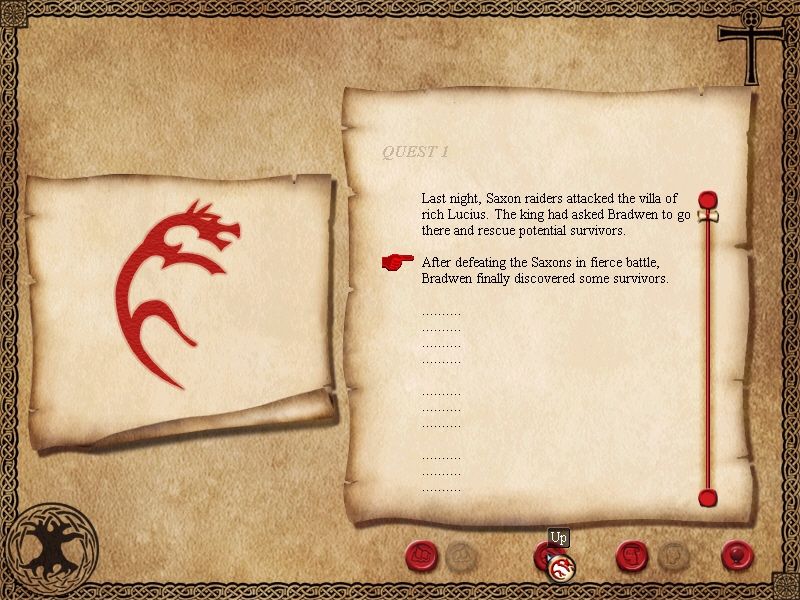
The quest structure blends free exploration with guided objectives. You’ll trek through medieval villages, dense forests, and castle courtyards, uncovering side missions and treasures along the way. Bradwen’s journal logs every new development, from major milestones to subtle hints dropped by NPCs. Meanwhile, a built-in historical database offers in-depth articles on knightly life and period history, allowing you to consult authentic background material whenever you need context or strategy guidance.
Graphics
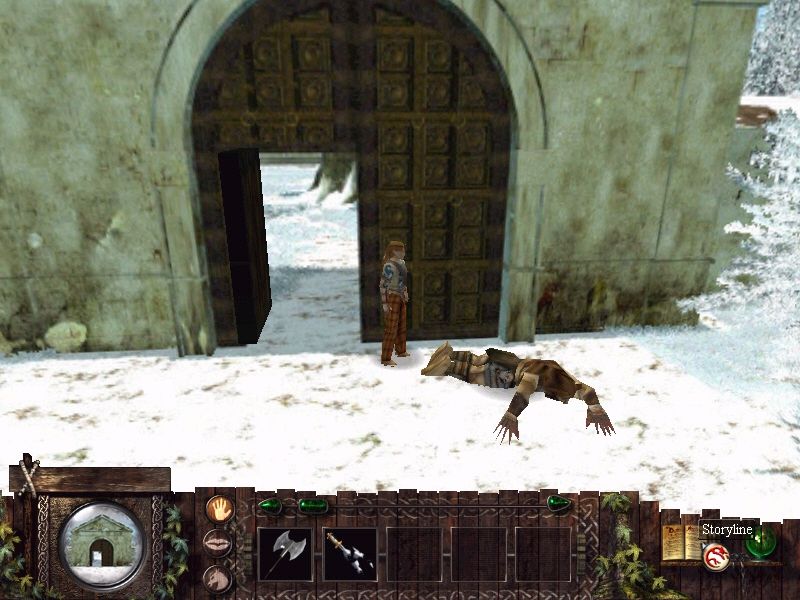
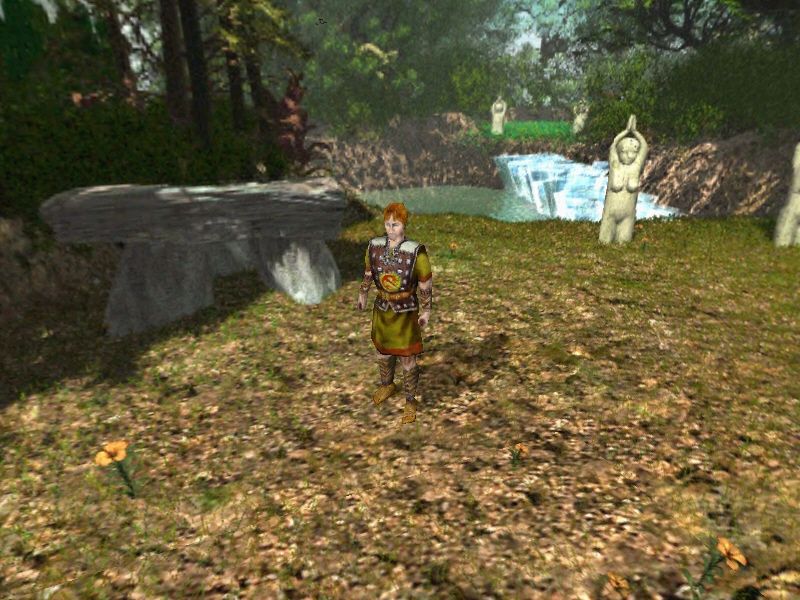
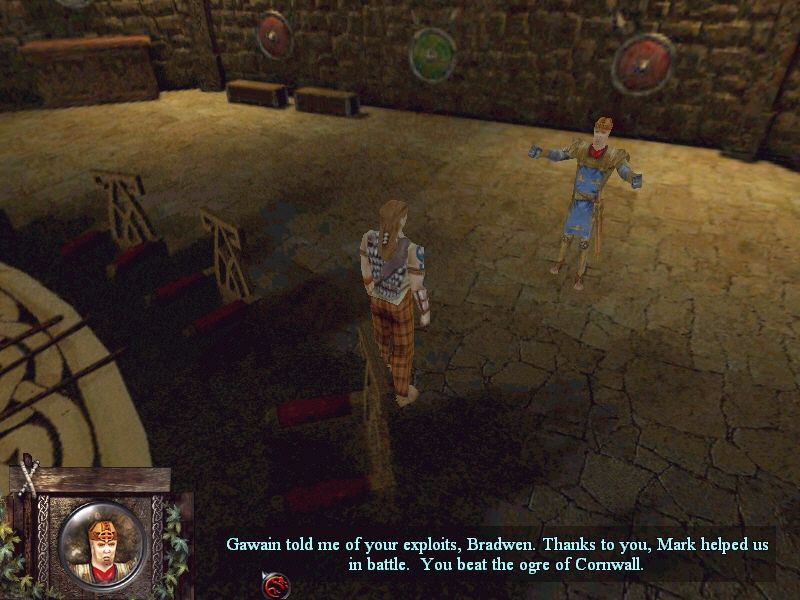
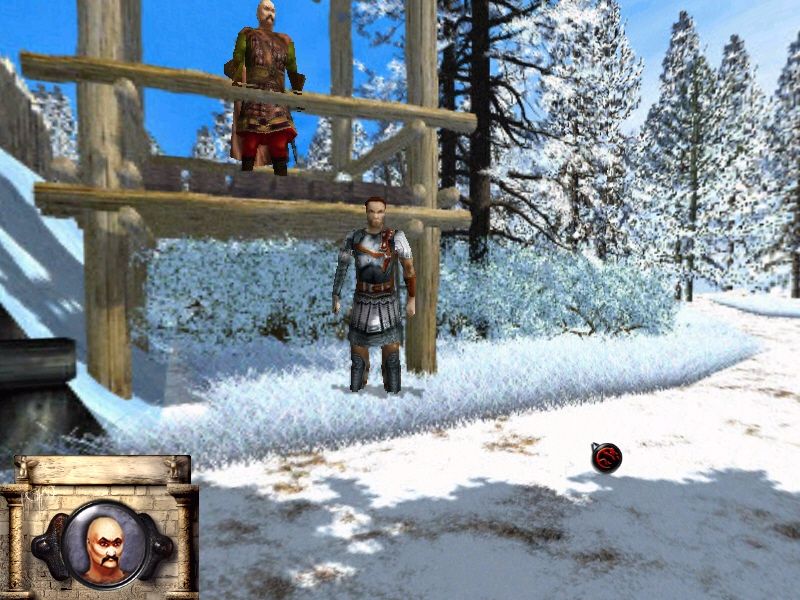
Graphically, Arthur’s Knights leans on richly detailed, pre-rendered backgrounds that evoke the stone walls of Camelot and the misty groves of Avalon. Although these environments are static, they serve as intricately painted canvases for the action that unfolds. You’ll find every turret, flame-lit corridor, and woodland clearing painstakingly crafted to transport you into a bygone age of myth and valor.
Against these still backdrops, animated 3D elements—birds flitting through treetops, wildlife rustling in the underbrush, and swinging lanterns—bring life to each scene. This combination strikes a delicate balance: you lose none of the atmospheric depth of hand-painted art, yet you still experience the dynamism of moving objects. It’s an approach that remains pleasingly immersive despite its vintage design.
The visual design extends beyond scenery into character models and armor details. Bradwen’s knightly garb gleams realistically, reflecting sunlight or torchlight as he strides forth. Enemies—from rogue outlaws to mythical creatures—bear finely sculpted features that highlight the game’s commitment to authenticity. Though newer titles may boast full 3D worlds, Arthur’s Knights wins you over with its timeless aesthetic and careful attention to medieval ornamentation.
Story
At the core of Arthur’s Knights is the saga of Bradwen, the King’s disowned son, exiled by his own half-brother and cast into a world of betrayal. Determined to reclaim his honor, lands, and rightful seat at the Round Table, Bradwen’s odyssey unfolds as a stirring blend of familial drama and legendary myth. Every cutscene, dialogue option, and journal entry drives home the weight of his quest.
From the moment you choose between the red and white books, your perspective shifts dramatically. The Christian story path immerses you in courtly alliances, ecclesiastical intrigue, and the stoic guidance of Sir Lancelot. Conversely, the Celtic route embraces mysticism—Merlin’s cryptic advice, fairy-tale quests, and a deeper communion with nature’s spirits. Each narrative thread offers unique characters, branching quests, and even separate save-game files, emphasizing the game’s commitment to dual-track storytelling.
The in-game journal keeps a running chronicle of Bradwen’s trials and revelations. As new entries appear, you gain not only direction but also deeper insight into the political machinations of Camelot and the spiritual forces at play. Meanwhile, the historical database acts as a supportive companion, filling in the broader context of knighthood and 5th-century Britain. This layered narrative approach transforms a simple exile tale into an epic journey steeped in legend and authenticity.
Overall Experience
Arthur’s Knights: Tales of Chivalry shines as a retro-inspired role-playing epic that places player choice at its heart. Its dual narratives and branching quests keep you invested far beyond the first playthrough, while the seamless integration of the journal and historical database ensures you’re never lost in its medieval world. Whether you favor chivalric oaths or druidic rites, each path feels robust and thoughtfully crafted.
The game’s technical presentation may feel dated compared to modern open-world titles, yet its hand-painted backdrops and animated 3D accents possess a unique charm that many contemporary releases lack. The atmospheric soundtrack and sound effects further enhance immersion, from clashing swords echoing in castle halls to the whisper of wind through enchanted forests.
Despite a few rough edges—such as occasional pixel-hunt searches and a control scheme that requires some acclimation—the journey of Bradwen remains deeply rewarding. Players seeking a story-driven RPG with historical flavor, moral choices, and a sense of mythic adventure will find Arthur’s Knights a compelling addition to their library. In an age of sprawling 3D worlds, its measured pace and narrative depth remind us that great storytelling can transcend graphical bells and whistles.


Reviews
There are no reviews yet.