 Retro Replay Retro Gaming History, Reviews & Emulation
Retro Replay Review
Gameplay
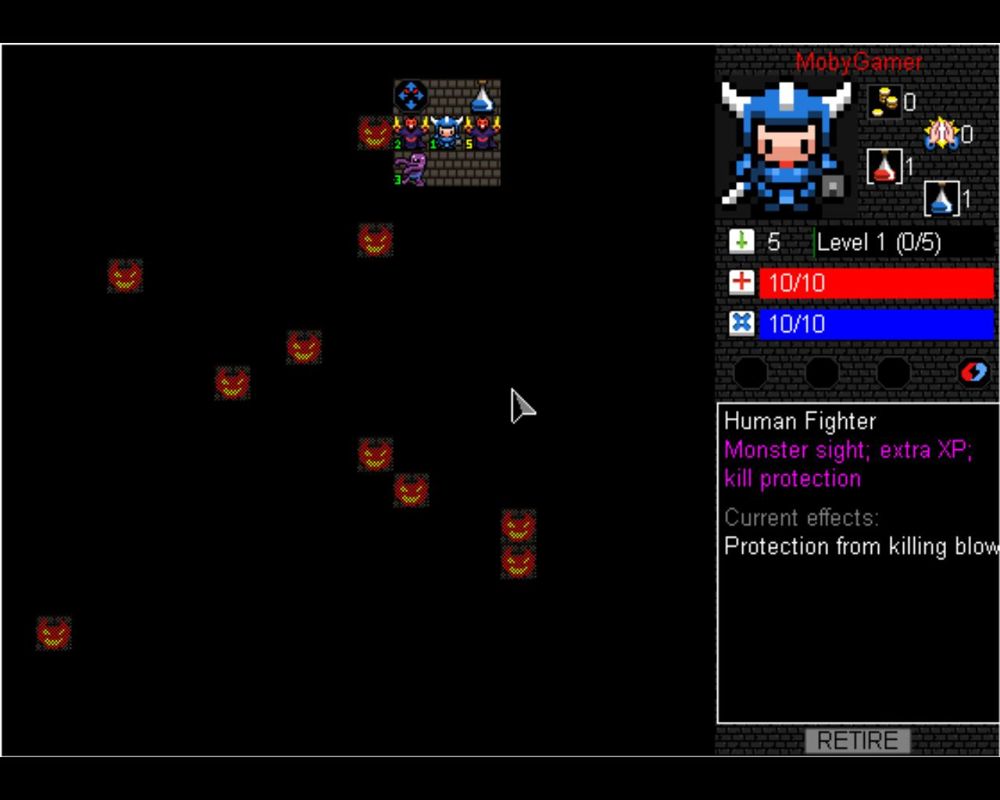
Desktop Dungeons grabs you by making the first few rooms matter more than they do in most dungeon crawlers. You choose a race and class, step into a randomly generated scenario, and immediately start budgeting the fog of war. Revealing tiles restores health and mana, which turns unexplored ground into a finite healing supply. That single rule gives every fight a useful tension: you are not merely asking whether you can beat a monster now, but whether doing so will leave enough recovery to beat the boss later.
Combat is deliberately plain on the surface. You bump into an enemy, see the health loss on both sides, and choose whether to continue or retreat. Since enemies do not move or attack until you initiate combat, the game shifts the pressure away from reflexes and toward calculation. Visible enemy experience and levels make the information readable, but they do not make the choice automatic. Taking down manageable enemies to level up before challenging stronger targets becomes the central rhythm, and a bad sequence can leave a run with too little health, mana, or map left to recover.
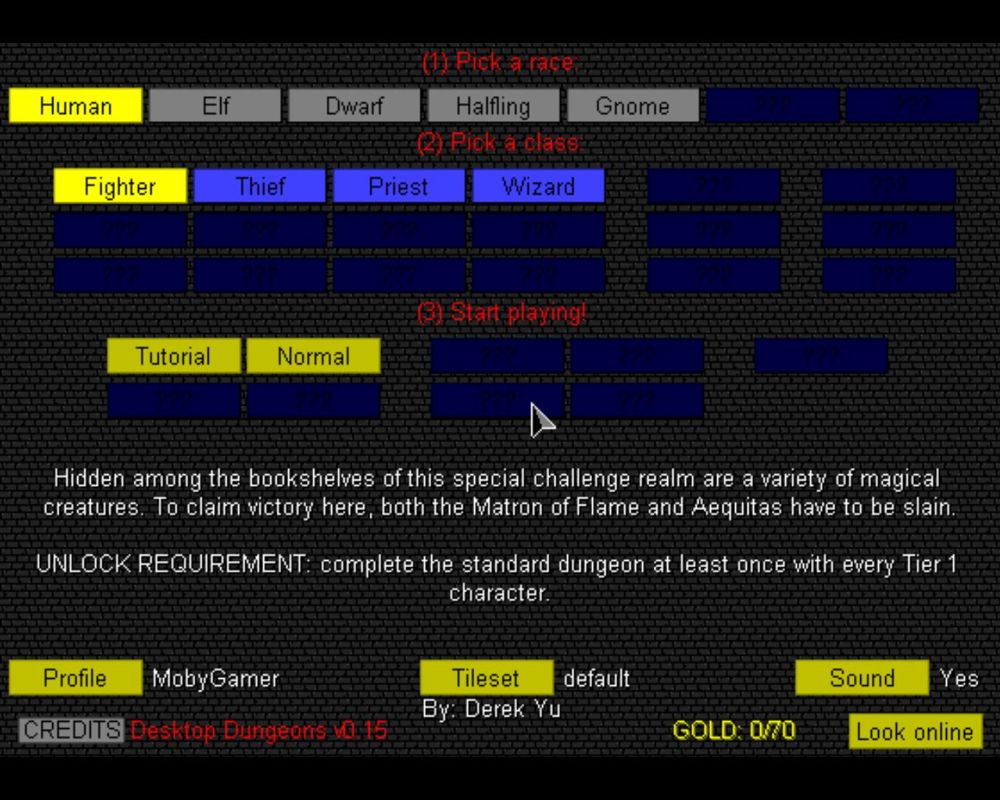
The race, class, and glyph choices keep that basic rhythm from going stale. Humans can convert glyphs toward attack bonuses, while other races feed different attributes; fighters, thieves, priests, and wizards begin with their own trade-offs. Glyphs are randomly placed, so you have to adapt your magical options to the dungeon in front of you rather than follow one fixed script. Later unlocks add more races, classes, scenarios, monsters, and bonuses, giving successful runs a tangible reason to keep going.
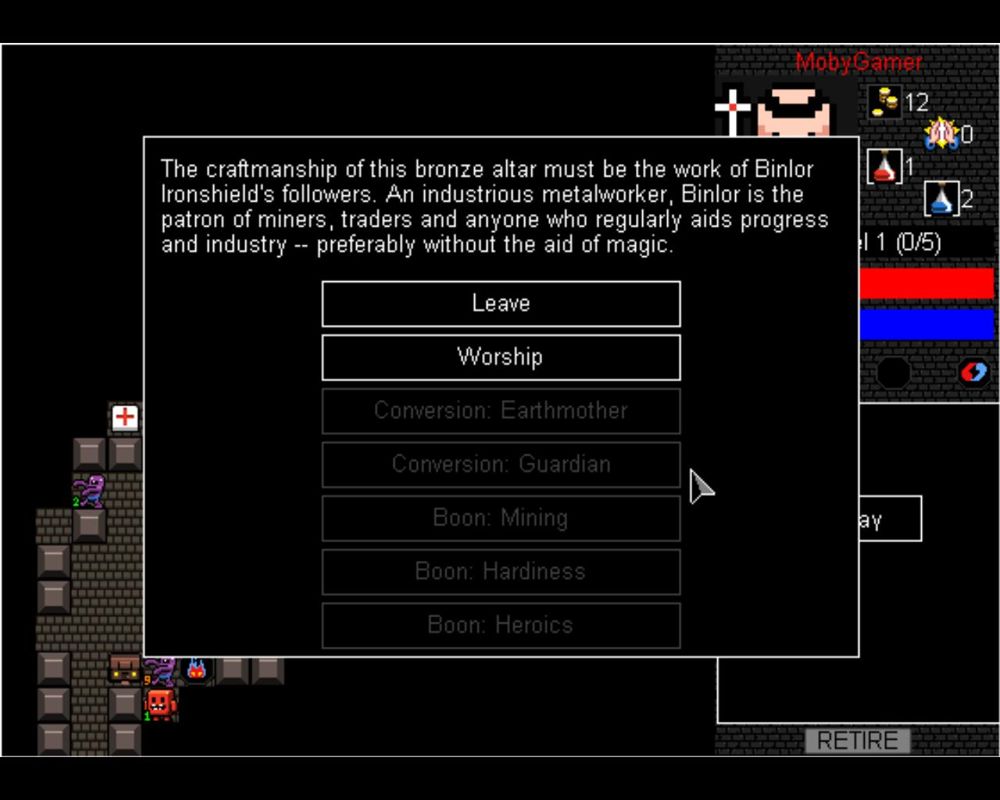
Deities add another layer for gamers who enjoy rules with consequences. Finding a shrine lets you worship for bonuses, earned through piety, but each god can punish actions it dislikes and negative piety can bring celestial wrath. The fact that worship is optional is important: you can leave that risk alone while learning the fundamentals, then start engaging with its benefits and penalties when you want another demanding decision to manage.
Graphics
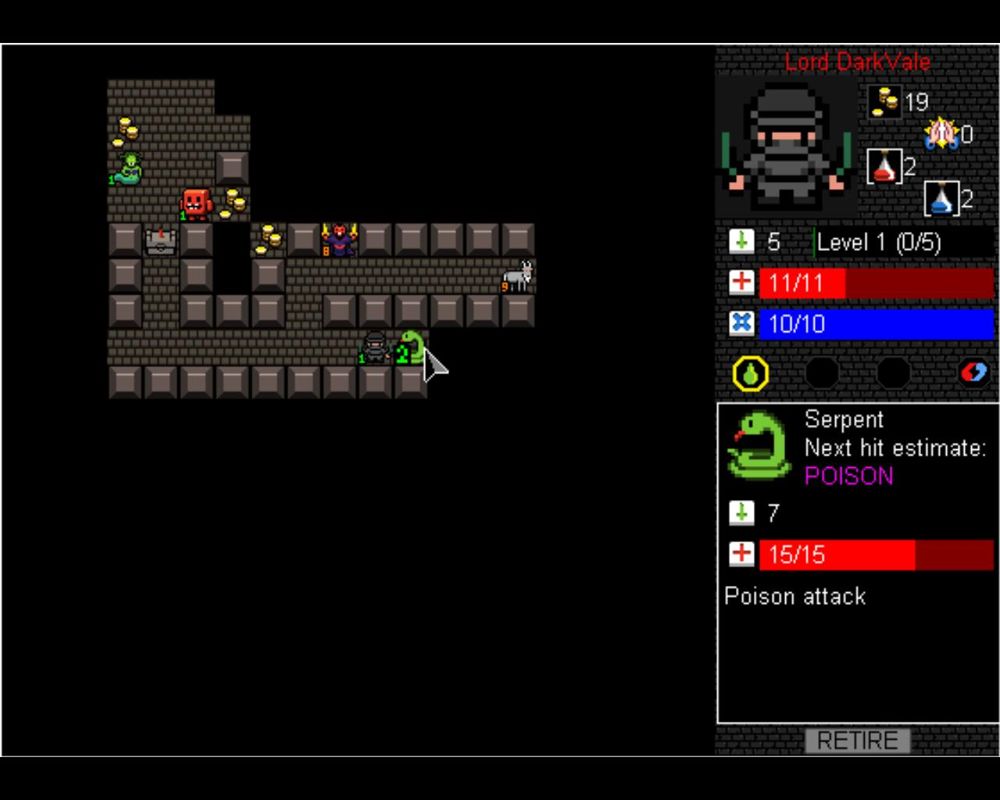
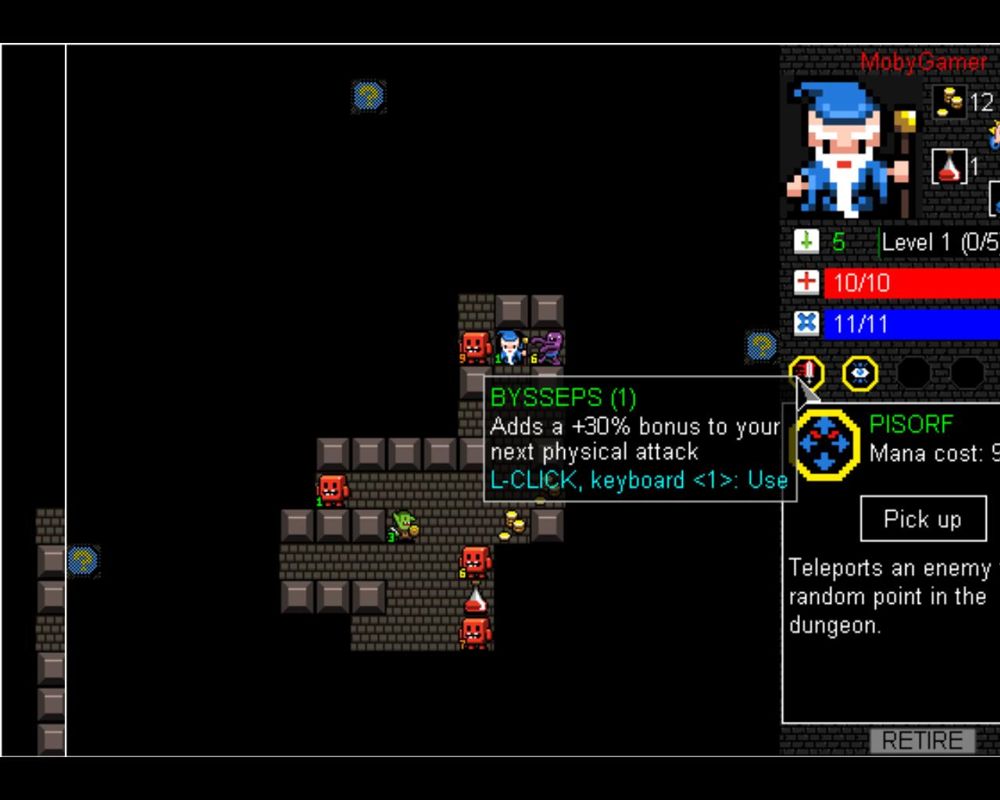
Desktop Dungeons uses full 2D graphics in a top-down dungeon format. The important visual information is clear: fogged areas sit apart from explored space, and the game shows enemy experience and combat damage so you can judge fights before committing. It is a functional look suited to a game built around reading a small map and making careful turns.
Story
This is not a story-heavy fantasy adventure. Each scenario gives you a clean goal—defeat its boss or die trying—and that directness fits the game’s puzzle-like structure. The dungeon itself supplies the drama: an enemy you need for experience, a glyph that changes your options, or a dwindling strip of unexplored map can become the turning point of a run.
The medieval fantasy framing comes through in familiar but useful ingredients: races, classes, magical runes, monsters, shrines, and gods willing to trade power for devotion. None of that needs elaborate narrative dressing because the interesting part is how those pieces collide with your plan.
Scenario completion unlocks further content, so progression has a sense of forward movement even when individual runs end in failure. If you want character arcs and lengthy plot scenes, this will feel spare. If you like making your own war stories out of narrowly won boss fights and costly mistakes, its minimal setup leaves room for that.
Overall Experience
Desktop Dungeons is a sharp, compact roguelike for anyone who likes turn-based combat when it asks for planning instead of patience. Its best quality is how much meaning it pulls from a small set of actions. Explore, recover, fight, level, spend glyphs, and preserve enough of the dungeon to survive the next problem—each step feeds the next one.
Frustration can set in when a run goes sour because the game makes mistakes expensive. Random placement of monsters, items, and glyphs means you cannot count on the same solution twice, while the limited recovery tied to exploration makes wasteful fights hard to erase. Yet that is also why victories should feel earned: success comes from recognizing the order in which to spend your resources, not simply grinding through enemies.
Give it a chance if you enjoy dense decision-making, visible numbers, and roguelike runs that reward careful enemy selection. Skip it if you want freeform exploration or action-driven combat. For its focused boss scenarios and unusually clever use of fog-of-war healing, Desktop Dungeons earns an editorial 8.0/10.



Reviews
There are no reviews yet.