 Retro Replay Retro Replay gaming reviews, news, emulation, geek stuff and more!


Retro Replay Review
Gameplay
Diamonds in the Rough delivers a classic third-person, point-and-click adventure experience built with the Adventure Game Studio (AGS) engine. You control Jason Hart through a series of interconnected scenes, clicking your way across laboratories, offices, and shadowy alleyways as you gather clues and interact with intriguing characters. The interface is intuitive, with a custom cursor that switches between “look,” “use,” “talk,” and “inventory,” ensuring that even newcomers to the genre can jump right in without a steep learning curve.
(HEY YOU!! We hope you enjoy! We try not to run ads. So basically, this is a very expensive hobby running this site. Please consider joining us for updates, forums, and more. Network w/ us to make some cash or friends while retro gaming, and you can win some free retro games for posting. Okay, carry on 👍)
At its core, the game’s puzzle design revolves around inventory combinations and dialogue trees. Items you collect—from old keycards to mysterious artifacts—can be examined, combined, or exchanged with other characters to reveal new information. The dialogue system also doubles as a puzzle mechanism: choosing the right questions at the right time can open up alternative solutions or new story branches, rewarding players who pay close attention to character nuances and environmental hints.
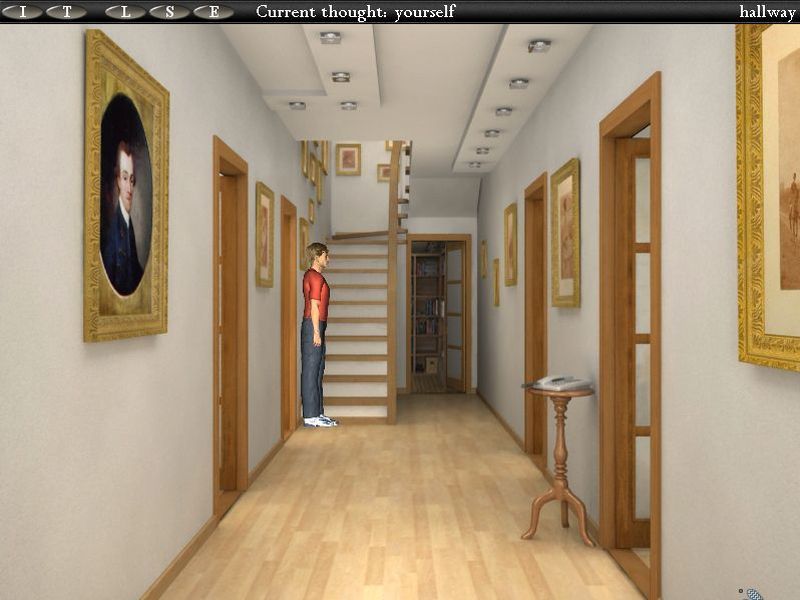
One of Diamonds in the Rough’s standout features is the “Thought Inventory.” Throughout the game, Jason’s inner monologue is accessible as a distinct inventory category. You can literally drag and drop his fleeting suspicions, fears, or theories into the active scene to test them against people or objects. This meta-mechanic not only deepens immersion but also encourages unconventional problem-solving, as you might combine a stray thought with a physical item to unlock a hidden dialogue option or secret door.
Graphics
Visually, Diamonds in the Rough embraces a richly detailed pixel-art aesthetic that feels both nostalgic and fresh. Character sprites are expressive, featuring subtle animations—eye movements, gestures, and posture shifts—that bring NPCs to life. Backgrounds are hand-painted with meticulous attention to lighting and color, from the flickering fluorescents of a secret lab to the moonlit rooftops of a quiet town.
The use of shadow and contrast plays a significant role in setting the game’s eerie atmosphere. Dark corridors are punctuated by pools of light, and unexpected visual cues—a half-open door, a cryptic symbol on the wall—often hint at hidden puzzles or narrative threads. These carefully crafted environments invite players to explore every pixel, rewarding curiosity with small but satisfying details.
While Diamonds in the Rough doesn’t push modern hardware to its limits, it doesn’t need to. Its retro-style animations run smoothly on modest systems, and the soundtrack—subtle ambient tracks punctuated by tense crescendos—complements the visuals perfectly. The result is a cohesive presentation that captures the spirit of classic adventure games while maintaining a distinct, contemporary flair.
Story
You step into the shoes of Jason Hart, a twenty-year-old with no special talents—until he’s recruited by a clandestine group known as Diamonds in the Rough. From the opening scene, the narrative hooks you: a cryptic invitation, an unmarked building, and a lineup of enigmatic figures waiting to assess Jason’s hidden potential. As you progress, you uncover layers of intrigue about paranormal research, ethically questionable experiments, and power struggles within the organization.
The writing balances character-driven moments with overarching mystery. NPCs—from the aloof research supervisor to a conspiratorial janitor—have distinct personalities, motivations, and secrets. Dialogue is sharp, often laced with dry humor or philosophical musings on the nature of mind and matter. Branching conversations can lead to new puzzle paths or uncover juicy tidbits about the organization’s true aims, making each playthrough feel slightly different.
Plot twists arrive at well-timed intervals, keeping tension high without feeling contrived. As Jason’s trust in Diamonds in the Rough alternately strengthens and erodes, players are invited to question their own assumptions. Is the organization benevolent, malevolent, or something in between? The ending leaves some threads tantalizingly open, hinting at potential sequels while providing satisfying closure to the central mystery.
Overall Experience
Diamonds in the Rough offers a polished, deeply engaging adventure that will appeal to fans of classic point-and-click titles and modern narrative puzzles alike. Its unique Thought Inventory mechanic sets it apart from other AGS games, encouraging players to think outside the box and engage with Jason’s inner life as a gameplay element. Puzzle difficulty is well-balanced, offering moments of genuine “aha!” without venturing into frustrating dead ends.
The game’s pacing flows naturally: quieter investigation phases build atmosphere, while more intense set pieces—whether a chase through dimly lit corridors or a tense standoff with a scientist—provide bursts of adrenaline. Load times are minimal, and the save-anywhere system ensures you can experiment freely without fear of losing progress. Voiceovers are limited to key cutscenes but are used judiciously to heighten emotional impact.
Overall, Diamonds in the Rough is a testament to the enduring appeal of handcrafted adventure games. It blends evocative pixel art, immersive storytelling, and inventive mechanics into a cohesive package that will hold your attention for hours. Whether you’re unraveling the conspiracy behind the organization or simply enjoying Jason’s witty inner commentary, this game offers a memorable journey through the unknown—one you won’t soon forget.



Reviews
There are no reviews yet.