 Retro Replay Retro Replay gaming reviews, news, emulation, geek stuff and more!
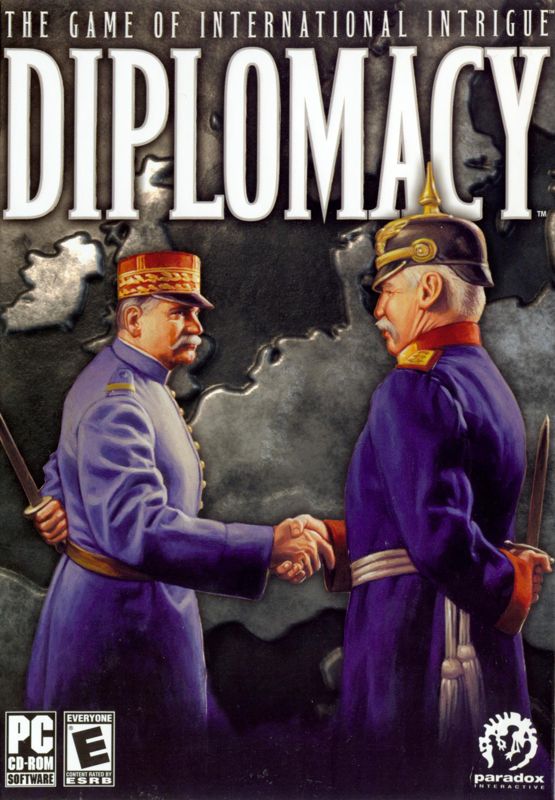

Retro Replay Review
Gameplay
At its core, Diplomacy faithfully translates the classic Avalon Hill board game into a digital, turn-based strategy experience. On a political map of Europe and the Middle East set in Spring 1901, you select one of seven great powers—Austria, England, France, Germany, Italy, Russia, or Turkey—and compete against human or AI opponents. Each turn, you issue orders to infantry and naval units, deciding whether to hold your ground, support an ally’s offensive, or launch an all-out assault on a rival’s province.
(HEY YOU!! We hope you enjoy! We try not to run ads. So basically, this is a very expensive hobby running this site. Please consider joining us for updates, forums, and more. Network w/ us to make some cash or friends while retro gaming, and you can win some free retro games for posting. Okay, carry on 👍)
The most compelling twist lies not in brute force but in negotiation. Players draft and exchange proposals for support moves, convoys, alliances, or de-militarized zones. These diplomatic overtures appear directly on the map, so you can sketch out exactly how your opponent’s units might support yours next turn. Accepted deals must be honored in the following phase—or broken at the risk of reputational fallout—leading to suspenseful bluffing and backstabbing that inject real human drama into each session.
Adding a layer of logistical planning, certain provinces sport supply depots that increase your build capacity. After winter maneuvers, you gain new units based on the number of depots you control, forcing you to strike the right balance between territorial expansion and consolidation. A lone unit attacking a defended province results in stalemate, so coordinating multi-front offensives and securing support from allies becomes critical.
Whether you’re negotiating a convoy of troops across the Mediterranean or secretly plotting a two-front assault on an unsuspecting neighbor, the game’s clear order-entry interface makes complex maneuvers intuitive. The absence of hidden information means every move is on full display, heightening the tension as each player tries to predict friend or foe. Frequent standoffs and shifting allegiances ensure no two games ever feel the same.
Graphics
Diplomacy’s presentation embraces a clean, functional aesthetic that harks back to its board‐game roots. The static 2D map uses subdued earth tones to differentiate regions, while infantry and naval units appear as distinct, easily readable icons. Supply depots are marked with a small star, allowing you to assess strategic hotspots at a glance. The result is a user-friendly layout free from unnecessary clutter.
Animations are minimal, limited to simple highlights when you select or move units. This restraint benefits playability by keeping the focus on strategy, though players seeking flashy visual effects may find it lacking. Zoom levels and unit overlays strike a balance between map detail and overall readability, ensuring orders remain clear even on smaller screens.
Menus and dialogs follow a straightforward Windows-style design, with contextual tooltips explaining unit abilities, supply counts, and diplomatic options. The drag-and-drop order system is responsive, and confirmation prompts help prevent misclicks. While there’s no high-definition texture work or cinematic cutscenes, every element serves a purpose, reinforcing the game’s emphasis on thoughtful decision-making over spectacle.
For enthusiasts worried about dated visuals, the charm lies in the clarity. By forgoing elaborate graphics, Diplomacy keeps the spotlight on the strategic push and pull between players. The result is a timeless look that remains approachable decades after its release.
Story
Diplomacy lacks a scripted narrative or linear campaign, but it offers something arguably more exciting: emergent stories born from player interaction. Each session unfolds like an improvised political thriller, where alliances form in one turn and dissolve the next. You might begin as steadfast allies with Russia, only to find yourself battling on two fronts when ambition outpaces loyalty.
The absence of a predefined storyline liberates you to create your own historical fable. Will England broker an anti-French coalition? Can Turkey and Austria share the Balkans peacefully? Every negotiation, every betrayal, weaves a unique tapestry of intrigue that no developer could have scripted in full. The story you tell becomes a personal testament to your cunning (or ruthlessness) at the table.
Even in single-player mode, where AI opponents mimic diplomatic behavior, you’ll witness dramatic shifts in power—one moment celebrating a major territorial gain, the next scrambling to patch over a broken pact. Despite the lack of voice acting or cutscenes, the game’s strategic depth fuels your imagination, ensuring you remain invested in the fates of your chosen nation.
Ultimately, the narrative power of Diplomacy comes from its players. Whether you log on to settle a grudge with friends or tackle AI rivals, the political drama that unfolds offers a storytelling richness seldom seen in conventional strategy titles.
Overall Experience
Diplomacy stands out as a masterclass in strategic negotiation. Its faithful adaptation of Avalon Hill’s board game mechanics produces a tense, cerebral experience that rewards careful planning and psychological insight. The AI provides a decent challenge for solo players, but the game truly shines in multiplayer, where human unpredictability injects real excitement into every turn.
The learning curve can be steep for newcomers unfamiliar with supply centers, convoy rules, or support orders. However, the built-in tutorials and contextual help menus do a solid job of guiding you through the basics. As you grow more comfortable plotting multi-phase offensives and tacitly coordinating with allies, the game reveals layers of nuance that keep you coming back for more.
While the graphics won’t dazzle today’s strategy gamers, the clear, no-frills presentation ensures that you never lose sight of your objectives. Menu navigation is intuitive, order entry is reliable, and turn resolutions feel swift, even in large games with seven participants. For players seeking deep, negotiation-driven warfare, Diplomacy remains an exemplary digital board game.
If you relish the armchair diplomacy of high-stakes backroom deals and the thrill of unexpected betrayals, this title delivers. It may lack cinematic flash, but the sense of achievement when you outmaneuver a coalition of foes is unparalleled. In a genre often dominated by resource micromanagement or grand campaigns, Diplomacy’s focus on human interaction and tactical finesse ensures a refreshing and enduring strategic experience.


Reviews
There are no reviews yet.