 Retro Replay Retro Gaming History, Reviews & Emulation

Retro Replay Review
Gameplay
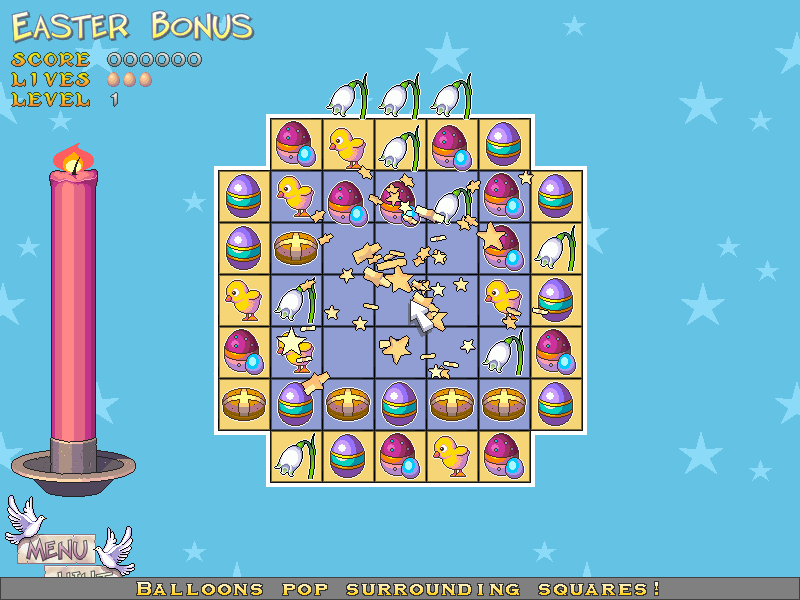
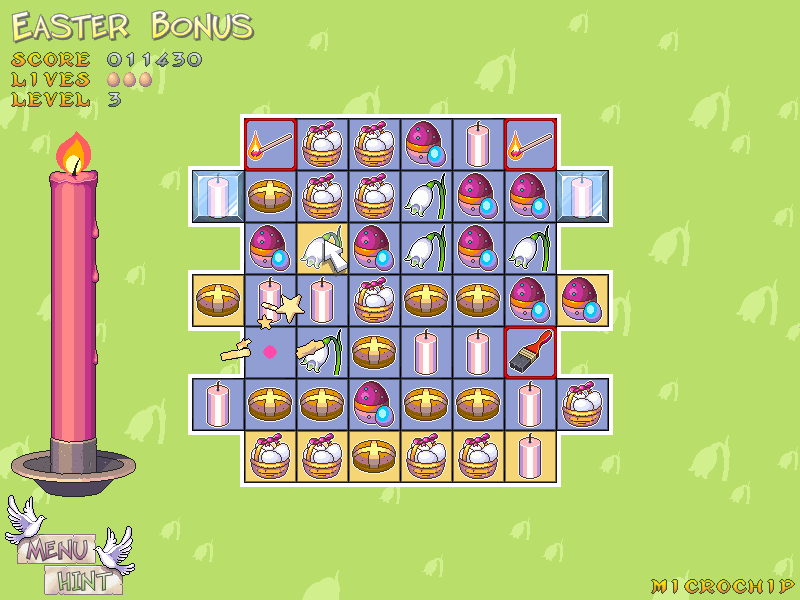
The first few boards pull you in because the objective is immediately more interesting than raw score chasing. You are not merely lining up three matching items; you are trying to paint every square gold before the candle burns down. That turns placement into the point. A match in an irrelevant corner may clear space, but a match over an untouched square actually moves you toward the finish.
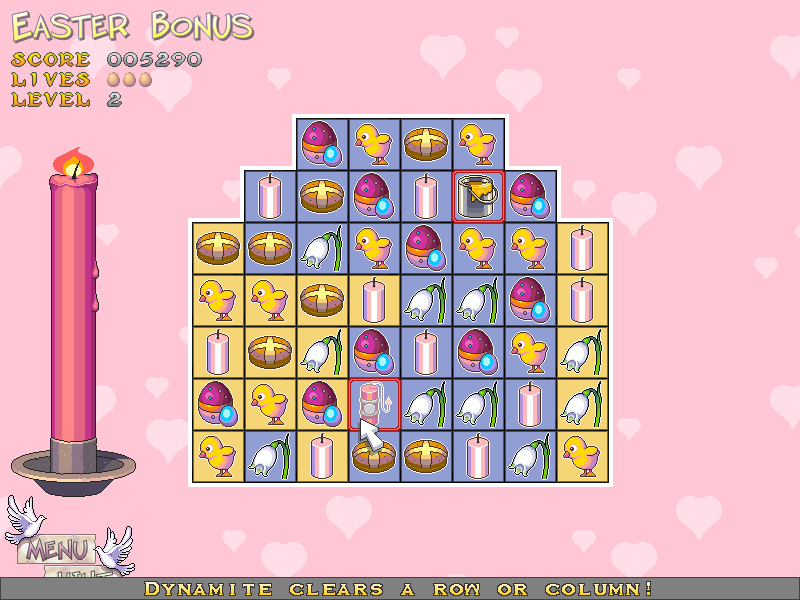
The bonus items give you a useful set of emergency answers rather than one catch-all power-up. Balloons clear neighboring items or ice, dynamite sweeps a full row or column, and stars deal with a single troublesome square. The paint brush and paint can work differently: they gold non-iced squares without changing the items sitting on them. Once that distinction clicks, you stop firing bonuses just because they are available and start saving them for the exact obstruction that is slowing the board down.
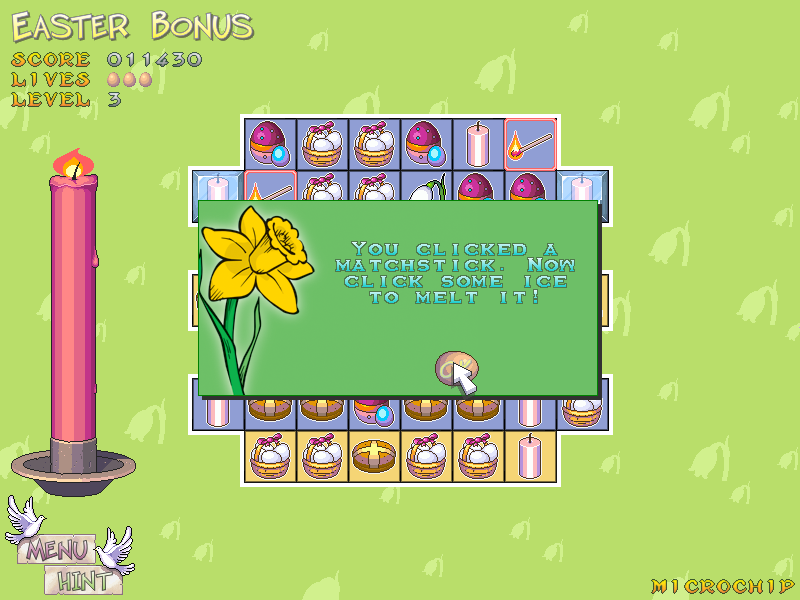
Ice is where the game earns its tension. A trapped item cannot move, and an iced square cannot become gold until you melt it, so one bad patch can turn a straightforward board into a short planning exercise. Matching the trapped item is satisfying when the board cooperates; using a match, star, balloon, or dynamite when it does not feels like a practical recovery rather than a random bailout. The candle timer can be frustrating if you prefer leisurely experimentation, but it gives the otherwise familiar matching action urgency.
This is a good fit if you enjoy working out priorities under time pressure. Do not treat every bonus as a shortcut. Dynamite and balloons remove obstacles but do not paint squares gold, while paint items cannot solve ice. That simple rule is the heart of the game, and success comes from recognizing which part of the board needs attention first.
Graphics
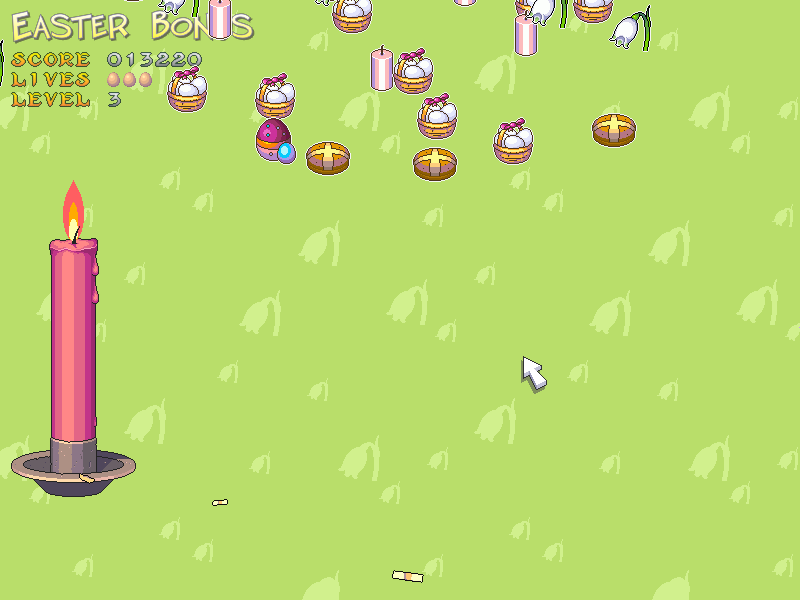
The Easter theme frames the puzzle boards, with item-filled squares that shift between ordinary, gold, and ice-coated states. The gold goal and frozen blockers are easy to distinguish during play, which matters when the candle is running down and you need to pick a move quickly.
Story
There is no narrative journey here; the Easter theme is used as a light wrapper for a sequence of timed puzzle boards. That is appropriate for the game’s scale. You sit down to solve boards, not to follow characters or plot turns.
The lack of story keeps attention on the changing board conditions. Gold squares represent progress, ice marks the immediate problem, and the candle supplies the deadline. It is direct and functional, which suits a match-three game built around quick decisions.
If you want a puzzle game with narrative rewards between levels, this will feel thin. If a seasonal theme and a clear objective are enough, the game stays out of its own way.
Overall Experience
Easter Bonus succeeds by making a modest change to match-three priorities and sticking with it. Turning squares gold is a better target than mindlessly clearing the board, because it forces you to look at where every match happens. Ice then complicates that goal in a way that is easy to understand but not always easy to solve under a timer.
The strongest moments come when a board looks clogged, then a carefully chosen bonus clears the route to the last few unpainted squares. The weakest moments are likely to be failed runs where the candle expires before a plan has room to develop. Still, the bonuses are varied enough that the game asks for judgment instead of pure speed.
Give it a chance if you want a compact, old-school match-three challenge with a clear win condition and real pressure. It will not suit you if a ticking timer turns puzzle solving into stress, but patient players who learn the separate jobs of ice-clearing and gold-painting tools will find a pleasantly tactical Easter diversion.


Reviews
There are no reviews yet.