 Retro Replay Retro Gaming History, Reviews & Emulation

Retro Replay Review
Gameplay
The first few boards pull you in through a simple promise: make matches and uncover the yellow brick road. That objective matters more than it sounds. A match that looks good on the surface can be a waste if it does nothing for the road tiles you need to clear, so you quickly start scanning for moves that work near the bottom of the board or beside a stubborn obstruction.
Locks and vines are where the game gains some welcome friction. A locked gem cannot move until you match it or spend a bonus item, while vines let gems move freely but still block progress on the bricks below. That distinction makes you assess the board rather than blindly chase every available three-of-a-kind. Vines can become especially irritating when they sit over the tiles you most need to reach, but they give the clearing objective a little more bite.
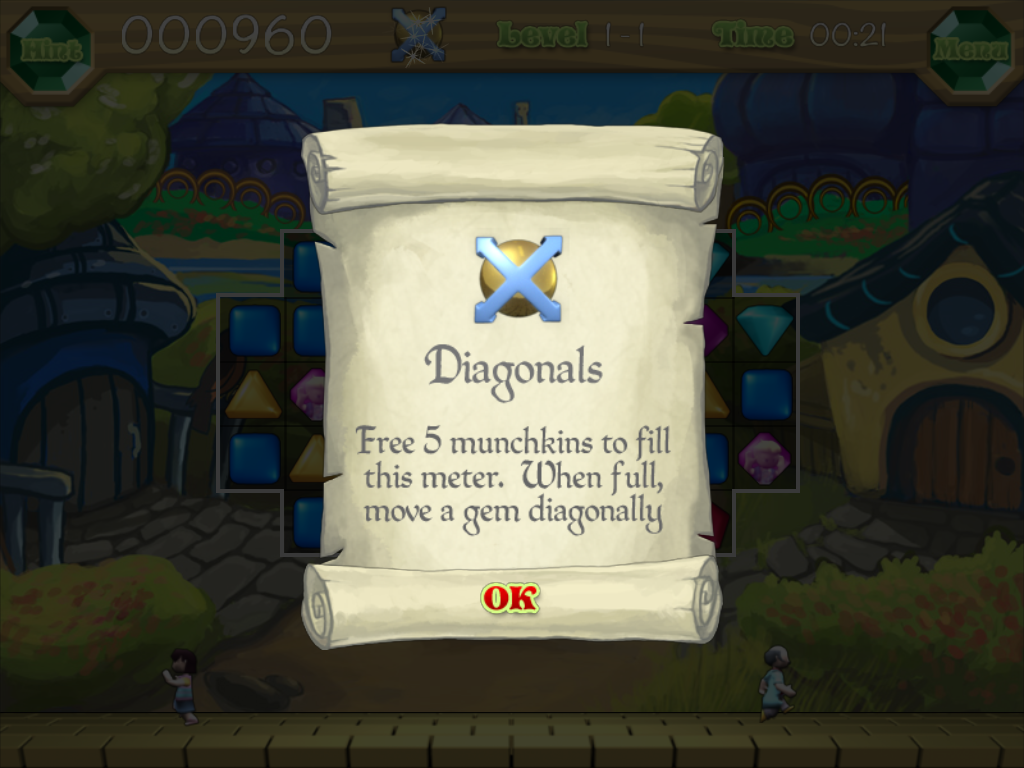
Freeing five trapped Munchkins earns a diagonal swap, which is a smart reward because it opens lines ordinary swapping cannot. The stronger tools are even more direct: the Lion hits neighboring squares, fireballs clear a horizontal row, tornadoes clear a vertical one, and the axes target brick tiles. Save these for a knot of locks, vines, or road pieces instead of firing them off at the first opening. The star is the emergency button, able to erase a gem and its associated obstruction in one square.
This is not a reinvention of match-three, and it does not need to be. Its challenge comes from picking the move that advances the road rather than simply producing the largest-looking match. If that focused, board-by-board problem solving is what you want, the core loop holds up well.
Graphics
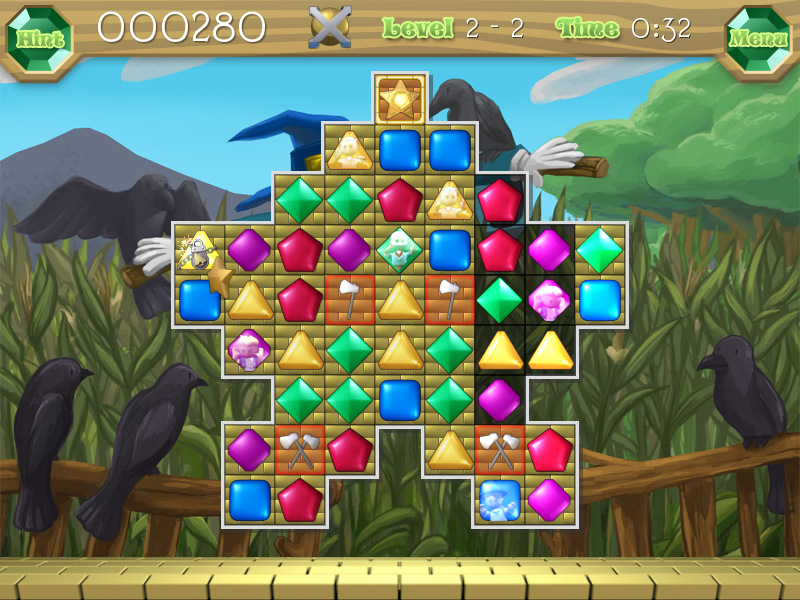
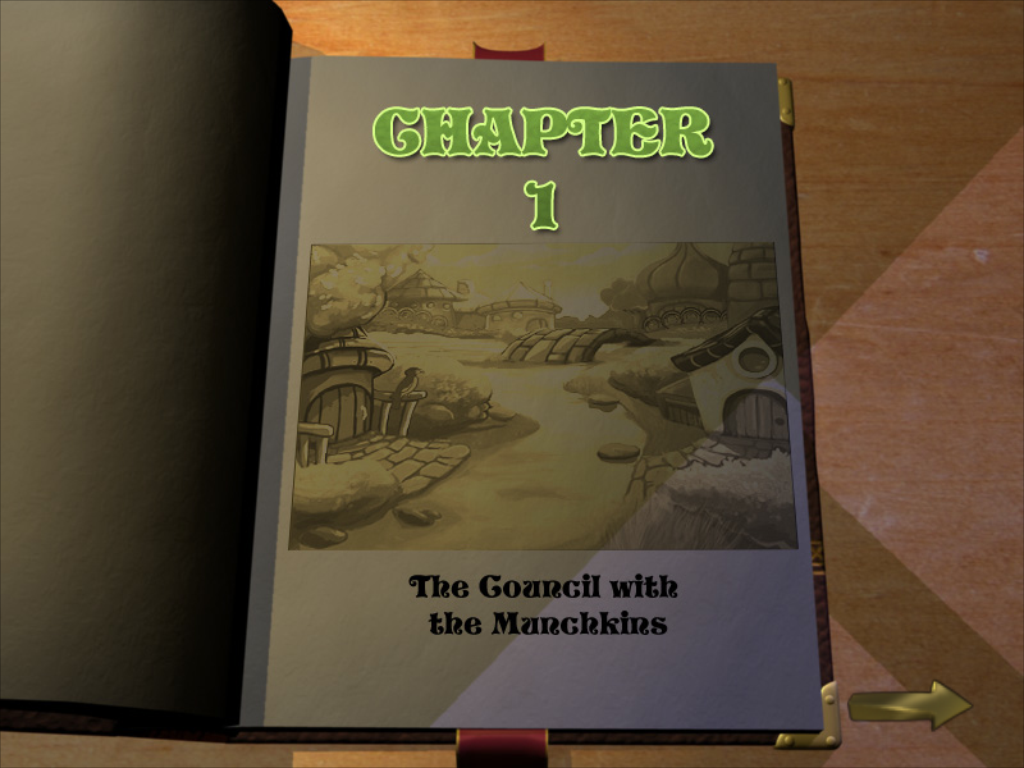
The boards put gems over pieces of yellow brick road, with locks, vines, and trapped Munchkins clearly tied to the squares they affect. The themed bonus items—the Lion, Tin axe, tornado, fireball, and star—make it easy to understand what tool you are holding and where it might help.
Story
Oz is used as a frame for the puzzle action rather than a reason to stop playing and absorb a long narrative. The yellow brick road gives every board a fitting target, and the trapped Munchkins turn a familiar bit of the setting into a practical goal.
That light touch is actually a decent match for the genre. You can sit down for a board without needing to remember plot details, yet the road, Munchkins, Lion, and tornadoes keep the puzzle pieces from feeling completely interchangeable.
Do not come here expecting a deep retelling of The Wonderful Wizard of Oz. Come for a recognizable theme that gives the objectives and power-ups a little personality. It is enough to make the clearing game feel more specific than an untitled pile of gems.
Overall Experience
The Wonderful Wizard of Oz succeeds because it understands the small pleasures of match-three: spotting a useful swap, opening a route toward buried targets, and finally breaking through an annoying cluster of obstacles. The yellow-brick objective keeps the action pointed in a way that score-only boards often are not.
Frustration can set in when locks and vines slow access to the exact tiles you need, particularly if your obvious matches are happening somewhere less useful. Still, the growing collection of tools gives you answers. Diagonal swaps and well-timed row, column, and tile-clearing bonuses can turn a board from cramped to manageable in a hurry.
Give it a chance if you enjoy traditional mouse-driven gem swapping and prefer puzzles with concrete clearing goals. Veterans of the genre will recognize the formula immediately, but the Oz theme and road-clearing focus make for a pleasant, purposeful variation. It is a modest game, yet a satisfying one when you want familiar puzzle play with just enough obstruction management to demand attention.



Reviews
There are no reviews yet.