 Retro Replay Retro Gaming History, Reviews & Emulation
Retro Replay Review
Gameplay
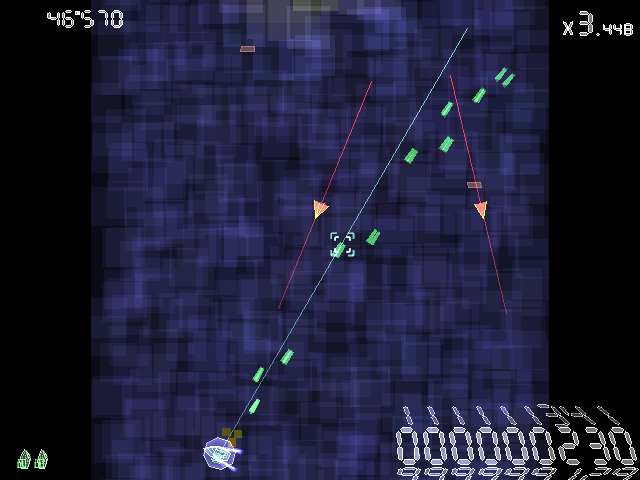
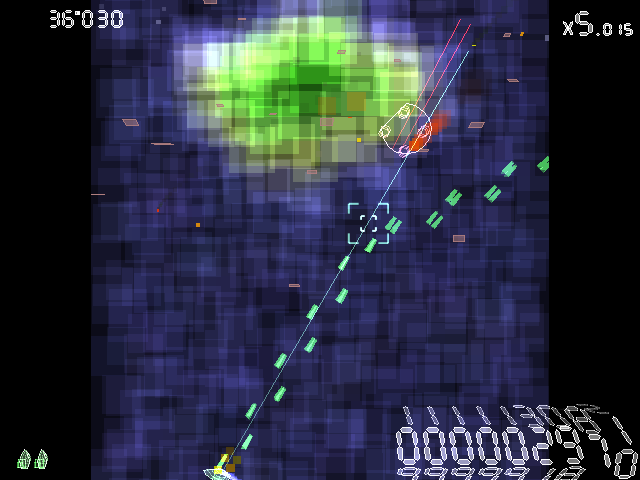
Gunroar starts with the kind of arcade clarity that is easy to underestimate. You steer a top-down craft that resembles a jetboat, hold the fire button, and immediately have to weave around enemy projectiles while returning a relentless stream of your own. There is no long runway before the game asks you to perform. Within minutes, the joy comes from keeping your ship moving smoothly through danger rather than treating every threat as something to be stopped dead in your tracks.
The two-weapon setup is where the game earns more attention than a simple hold-to-fire shooter. Your main gun keeps firing while you hold the button, but missiles require individual trigger presses. That turns missile use into a deliberate habit: you are steering, maintaining your primary fire, and deciding when to tap out another missile instead of merely pinning down one command. It is a modest distinction on paper, yet it gives the combat a livelier hand feel.
The upper-left countdown is an excellent pressure device. It tells you that the next large boss is coming, which puts a clock over every stretch of enemy fire and keeps the action from settling into a flat routine. If you like shooters where movement discipline matters as much as offensive output, that forward pull lands immediately. Frustration will set in if you want a leisurely power fantasy; the whole point is deft survival under continuous pressure.
Graphics
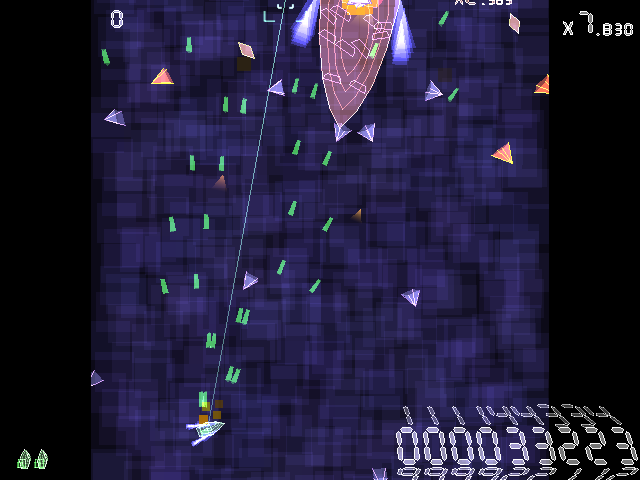
The abstract vector graphics keep the screen focused on ships, bullets, and enemy patterns. From the overhead view, the jetboat-like player craft and incoming projectiles are the images that matter, and the stripped-back look suits a game built around rapid dodging.
Story
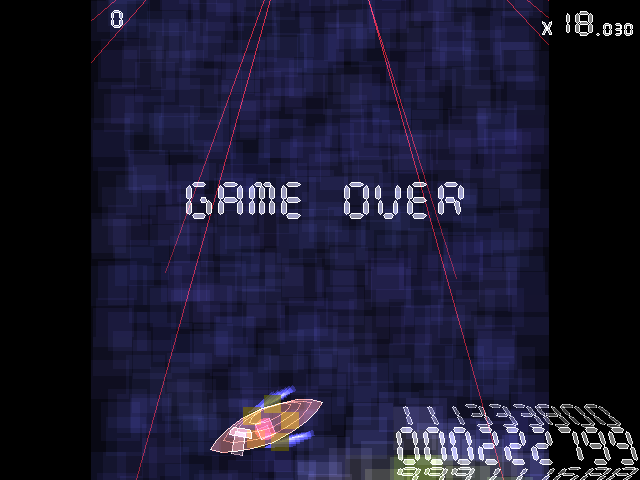
Gunroar is not trying to win you over with a plot. Its drama comes from the immediate situation: a small craft under fire, enemies crowding the screen, and a visible timer warning that a boss encounter is approaching. That is enough framing for an arcade shooter whose momentum is meant to carry the experience.
Rather than asking you to invest in characters or narrative turns, it gives each run a simple rising tension. Survive the present bullet pattern, keep firing, and prepare for the next major threat. The result is direct and functional, with no detour from the action.
That lack of narrative baggage is a strength if you want to jump in for concentrated shooting sessions. If story is what keeps you invested, though, the game’s motivation remains entirely mechanical: play more cleanly, dodge more confidently, and last longer against the next wave.
Overall Experience
Gunroar succeeds because it understands how much momentum a vertical shooter can get from a few well-chosen pressures. Constant primary fire means you can stay focused on positioning, the tap-fired missiles keep your hands engaged, and the boss timer makes every ordinary encounter feel like it is leading somewhere. It is compact arcade design with very little wasted motion.
The tradeoff is that its appeal rests almost completely on whether you enjoy threading a ship through projectile fire. There is no reason to linger if that fundamental loop leaves you cold. But if dodging patterns, maintaining fire, and chasing a cleaner run sounds relaxing rather than exhausting, the game’s spare setup gives you exactly what you came for.
Give it a chance when you want an old-school shooter that gets to work immediately. The first hour is likely to be a cycle of quick restarts, small improvements, and the satisfying realization that you can read the chaos better than you could a few minutes ago. Its payoff is not a grand finale of ideas; it is the earned confidence of moving through a crowded screen without panicking.



Reviews
There are no reviews yet.