 Retro Replay Retro Gaming History, Reviews & Emulation
Retro Replay Review
Gameplay
The first few minutes of Invader Attack invite you in with a simple promise: pilot your ship around one screen and shoot the invaders before they overwhelm you. That simplicity is a strength. There is no long runway before the action starts, and the top-down angle gives you room to weave around threats rather than merely dodge side to side.
What separates it from a rote Space Invaders imitation is that the battlefield has some physical messiness. Enemies can collide with each other and with your ship, so spacing matters in a more immediate way than it does in a rigid formation shooter. You are not only tracking bullets; you are watching movement patterns, anticipating traffic jams, and figuring out when an enemy’s path is more dangerous than its fire.
Different enemies demand different answers, and that learning process is the game’s best idea. Some opponents work together and become more threatening as their attacks develop, while bosses and power-ups keep the stage-to-stage routine from settling into one solution. Expect to lose while decoding what a new enemy is trying to do. If that sounds irritating, the challenge curve may wear you down; if you like arcade games that make each run a lesson, it is exactly the right kind of frustration.
The increasing difficulty gives the online high-score chase real purpose. This is a game built for “one more try” sessions, where shaving off a mistake or surviving one more wave can matter more than seeing a lot of new scenery. Its best moments come when your understanding catches up to the clutter and a screen that looked impossible suddenly becomes manageable.
Graphics
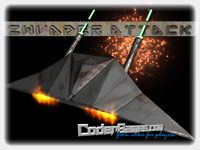
The game uses a 3D, top-view view of a single-screen battlefield. That camera angle makes ships, enemy movement, and collisions easy to keep in view when the action gets crowded, and it suits a shooter where reading the immediate arena matters more than sightseeing.
Story
Invader Attack works with the clean arcade premise of a lone player ship facing waves of invaders. It does not ask you to carry a complicated plot in your head between rounds; the tension is created right on the battlefield, as the enemy pressure builds.
That stripped-back framing fits the game’s focus on behavior. An enemy type tells its own small story through the way it approaches, collides, or cooperates with other enemies. You learn its character by surviving it, which is more useful here than exposition would be.
The bosses give the conflict a natural sense of escalation, while each new level pushes the invasion forward through tougher opposition. It is a functional arcade setup, but it keeps your attention where it belongs: on the next dangerous pattern and the next chance to turn the screen back in your favor.
Overall Experience
Invader Attack is at its strongest when it turns a recognizable old-school shooter setup into a moving problem. The collision behavior and enemy cooperation add enough uncertainty that you cannot simply memorize a formation and coast. You have to stay alert, and the game rewards that attention with a satisfying sense of improvement.
It is not a relaxing shooter. As the difficulty rises, the one-screen arena can become a demanding knot of hostile movement, especially while you are still learning the best response to each enemy. The payoff is worthwhile if you enjoy being tested, but it is a better fit for gamers who welcome repeat attempts than for anyone wanting an easy victory lap.
Give it a chance if a focused arcade score chase sounds more appealing than a long campaign. The online leaderboard adds a reason to refine your play, but the core pleasure is more basic: noticing how the enemies behave, finding the safe route through the mess, and surviving a screen that seemed ready to swallow your ship whole.


Reviews
There are no reviews yet.