 Retro Replay Retro Replay gaming reviews, news, emulation, geek stuff and more!
Retro Replay Review
Gameplay
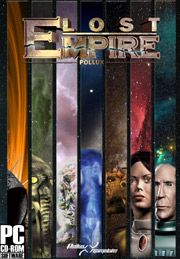
Lost Empire unfolds as a classic 4X space strategy experience, challenging players to explore, expand, exploit, and exterminate across a richly detailed galaxy. You begin by selecting one of seven distinct races—Humans, the Horde, Alkiths, Crystal Spirits, Chi Lung, and two others—each offering a unique playstyle and strategic flavor. Humans serve as the versatile all-rounders, while the Horde overwhelms opponents with sheer numbers. The stealth-oriented Alkiths and crystalline denizens of the Crystal Spirits introduce alternative tactics, and the dragonlike Chi Lung wield ancient power in both ground and space combat.
(HEY YOU!! We hope you enjoy! We try not to run ads. So basically, this is a very expensive hobby running this site. Please consider joining us for updates, forums, and more. Network w/ us to make some cash or friends while retro gaming, and you can win some free retro games for posting. Okay, carry on 👍)
Resource management in Lost Empire hinges on three core commodities: food, minerals, and population. Balancing these resources compels players to prioritize expansion versus consolidation. Food sustains your growing population, minerals drive the construction of ships and infrastructure, and population itself powers research efforts. A misstep in any of these areas can quickly hamstring your empire, especially as rival factions vie for scarce planets and strategic trade routes.
Research and technology acquisition propel the game forward, unlocking better hulls, advanced weaponry, stealth generators, and upgrades for ground forces, economy, and culture. Unique “Path of Enais” planets offer an immediate technological boost, rewarding exploration and risk-taking. Diplomacy is guided by a Goodwill system that accumulates each turn, determining which actions—alliances, trade pacts, or declarations of war—are available. It’s a delicate balance between forging alliances and preparing for inevitable conflicts.
Combat in Lost Empire is resolved automatically, offering players the choice to watch a brief cinematic of space engagements or skip directly to the outcome. While this system accelerates late-game warfare and frees you from tedious micromanagement, it does remove the finer tactical decisions found in manual combat. Ground battles follow a similar hands-off approach, focusing attention instead on the grand strategic picture rather than individual skirmishes.
Overall, Lost Empire’s gameplay loop is deeply rewarding for fans of the genre. It encourages thoughtful long-term planning, adapts to a variety of playstyles via its diverse races, and offers a steady stream of decisions that balance risk and reward. Although it occasionally requires patience to see long-term strategies pay off, the feeling of forging a sprawling interstellar empire remains compelling from the first colony ship to the final star system.
Graphics
For its era, Lost Empire delivers a visually appealing galactic canvas. Its star maps are clear and informative, with distinct color-coded borders and icons that make empire management intuitive. Planetary views showcase terrain differences—rocky, desert, jungle—though close-up detail can sometimes feel simplistic by modern standards.
Ship and unit designs lean into classic sci-fi aesthetics, from sleek human cruisers to the jagged, crystalline hulls of the Crystal Spirits. Animations during the brief battle cutscenes add a theatrical flair and reinforce each race’s identity: human lasers beam with precision, Horde vessels swarm en masse, and Chi Lung warships carve arcs of flame through space.
Interface elements are functional and straightforward, albeit somewhat dated. Tooltips provide essential information but lack the depth found in more recent titles. Menus for research trees, diplomatic negotiation panels, and resource overviews are logically arranged, allowing players to access vital data without wading through unnecessary submenus.
Sound design complements the visuals with an atmospheric score and solid effects. Explosions, weapon discharges, and ambient space hums immerse you in the galaxy’s grandeur. Voice snippets during key events—colonization, first contact, or technological breakthroughs—add personality to otherwise text-heavy notifications.
While not revolutionary, Lost Empire’s graphics and audiovisual presentation serve the gameplay well, creating an engaging backdrop for strategic decision-making. They strike a balance between clarity and style, ensuring that even extended play sessions remain visually coherent and thematically consistent.
Story
The narrative foundation of Lost Empire centers on the intervention of the deity Enais, who shattered a once-unified alliance of alien races. In their hubris, the alliance had grown complacent until humans burst onto the galactic stage, toppling ancient powers and reshaping the cosmic balance. Enais’s wrath forced every race back to its homeworld, resetting the board and sowing the seeds for a new era of conflict.
Each race carries its own cultural legacy and motivations. Humans seek to cement their newfound dominion, while the Alkiths nurse grudges over lost secrets. The Crystal Spirits, whose existence is intertwined with mineral-rich planets, reclaim territory once shared, and the Chi Lung dragons remember ancient treaties broken in the wake of human expansion. These backstories enrich diplomatic encounters and fuel rivalries, offering players a tapestry of motivations beyond simple land grabs.
Though Lost Empire’s storyline is not told through cinematic sequences, its lore is woven into in-game events and technology descriptions. Researching advanced weapons or discovering a “Path of Enais” world comes with narrative context that reinforces the galaxy’s mythos. Reading through these entries helps players appreciate the stakes behind each technological leap and diplomatic move.
Random encounters—derelict fleets, alien artifacts, and cosmic storms—inject additional narrative flavor. They serve as both mechanical challenges and storytelling devices, reminding players that the galaxy is alive with mystery and danger. Discovering a graveyard of ancient cruisers or stumbling upon a hidden Alkith research station can turn the tide of your campaign and deepen your connection to the unfolding saga.
While the primary draw remains strategic gameplay, the underlying story gives Lost Empire its soul. The interplay between divine intervention, technological progress, and interspecies rivalry creates a backdrop that transcends mere resource management, offering a compelling narrative tapestry for players to explore.
Overall Experience
Lost Empire shines as a robust entry in the 4X space strategy genre. Its blend of deep resource management, varied racial abilities, and emergent storytelling provides hours of tactical and strategic enjoyment. While certain mechanics—automatic combat resolution and dated interface elements—may not appeal to purists seeking granular control, they streamline the experience for those who prefer a broader focus.
Replay value is high, thanks to the asymmetric races and randomized galaxy layouts. Each playthrough demands a fresh approach, whether you’re sneaking through enemy lines as the Alkiths or overwhelming defenses with Horde numbers. The research tree’s branching paths and the chance encounters scattered across star systems ensure that no two games feel identical.
Multiplayer options extend the game’s lifespan, fostering alliances and rivalries among friends and rivals. Diplomacy becomes richer when human minds negotiate in real time, leveraging Goodwill to broker deals or bluff their way to supremacy. Although the multiplayer interface echoes the single-player’s dated design, the competitive and cooperative dynamics it enables remain compelling.
For newcomers to 4X or veterans seeking a streamlined yet substantial space strategy title, Lost Empire offers a satisfying midpoint. It balances depth with accessibility, providing enough complexity to reward strategic thinking without overwhelming players with micromanagement.
In sum, Lost Empire stands as a worthy first installment in its series. It lays a solid foundation of mechanics, lore, and replayability that will appeal to a broad audience of strategy enthusiasts. Whether you’re charting unknown star lanes, forging fragile coalitions, or unleashing fleets in the name of conquest, the game delivers a memorable voyage through the stars.


Reviews
There are no reviews yet.