 Retro Replay Retro Gaming History, Reviews & Emulation
Retro Replay Review
Gameplay
Order of War wastes little time asking you to build an economy from scratch. You arrive with a battlefield to take, key positions to secure, and enough enemy pressure to make hesitation costly. That immediate push is its strongest first impression. Bridges and intersections are more than scenery: capturing them expands your resource flow, and that flow determines how quickly reinforcements can join the fight.
The result is an RTS built around keeping momentum. Victory comes from owning every control point or eliminating the opposition, so you are constantly weighing an advance against the risk of leaving a newly taken position exposed. Tanks, infantry, and artillery cover the familiar World War II toolkit, while unlimited ammunition cuts out much of the fussy resupply management. You spend more time deciding where the battle should move next than babysitting inventories.
That streamlining has a cost. The game does not offer a deep bag of special tactics, and the absence of classical base building will disappoint anyone who enjoys constructing an elaborate war machine before committing to an attack. Order of War works better when you accept its terms: it wants fast, crowded engagements and decisive map control, not a long economic chess match.
Graphics
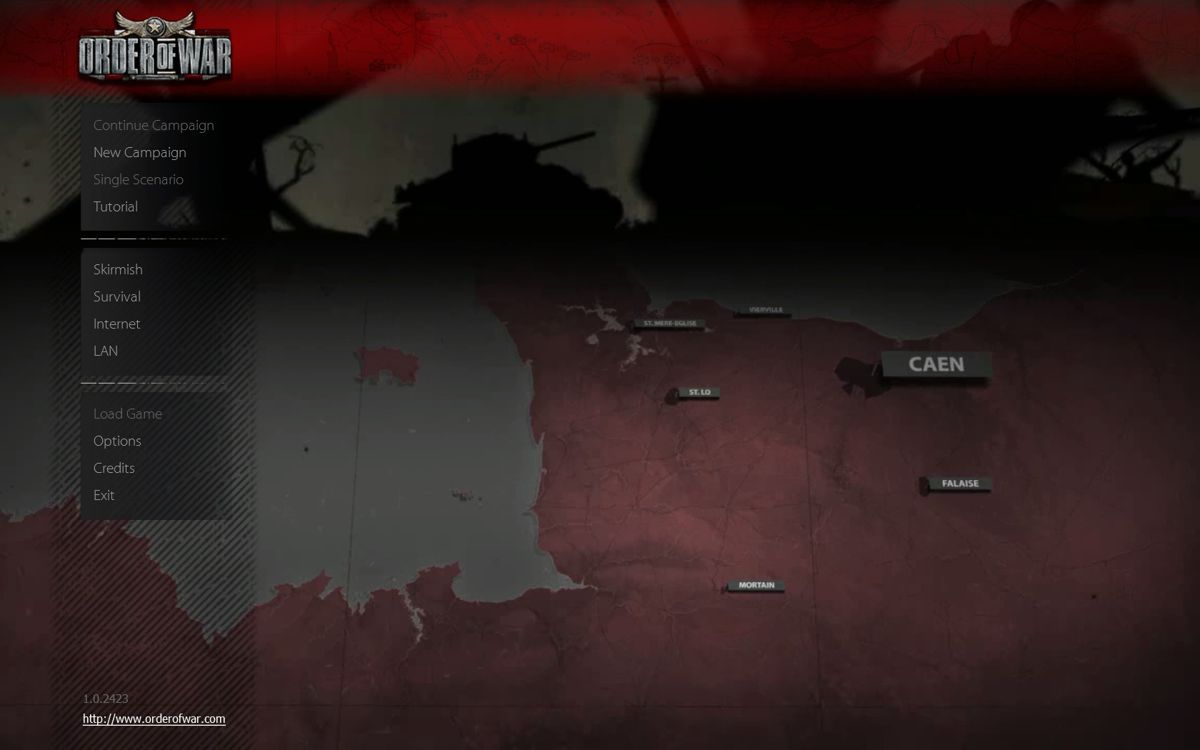
The optional cinematic camera is the visual feature that gives Order of War some personality. Switch it on and it automatically moves between active clashes, inviting you to watch the conflict as a series of battlefield snapshots rather than permanently from the standard command view. In a game with a lot of units on the field, that can make a successful push feel more immediate.
More importantly, the camera is optional. You can let it add spectacle when the front is stable, then concentrate on the broader tactical view when several control points demand attention at once. That flexibility matters because the game’s pace does not leave much room for losing track of a flank.
Do not come expecting the presentation to carry the whole experience on its own. Its visual identity is tied closely to the function of the battlefield: units collide, territory changes hands, and the camera helps you appreciate the scale of the fighting. The clearest visual payoff comes from seeing a plan turn into a large, moving front line.
Story
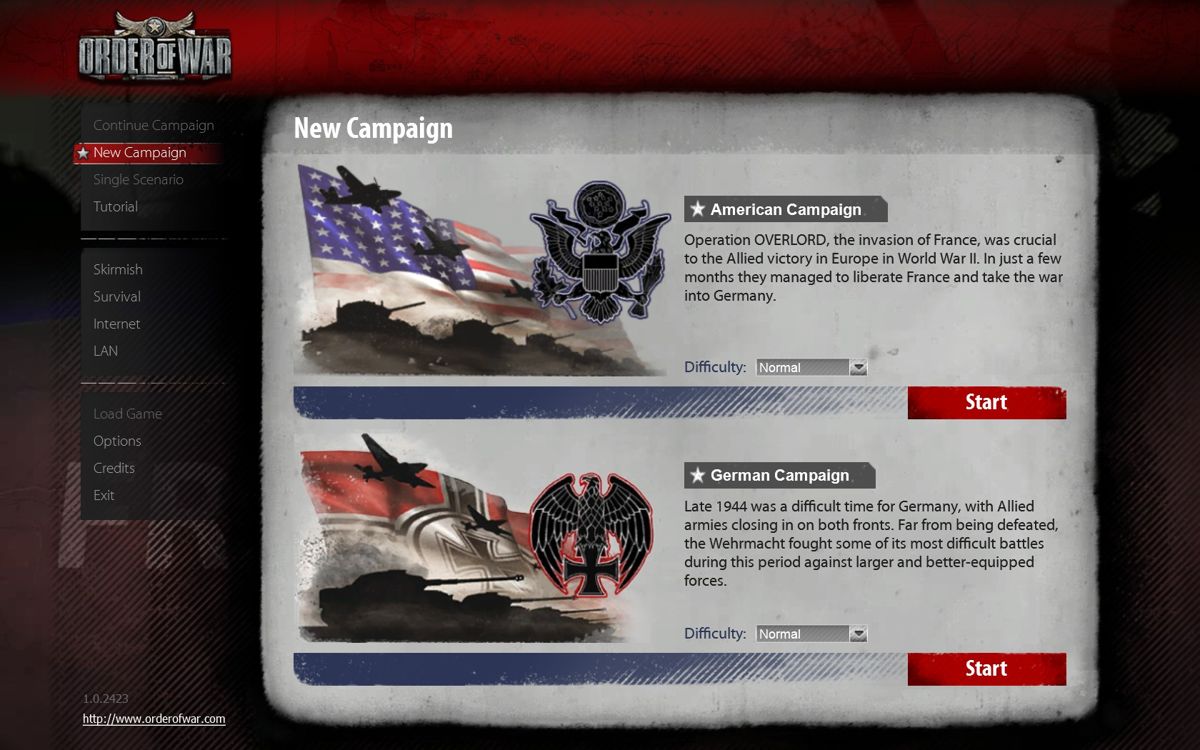
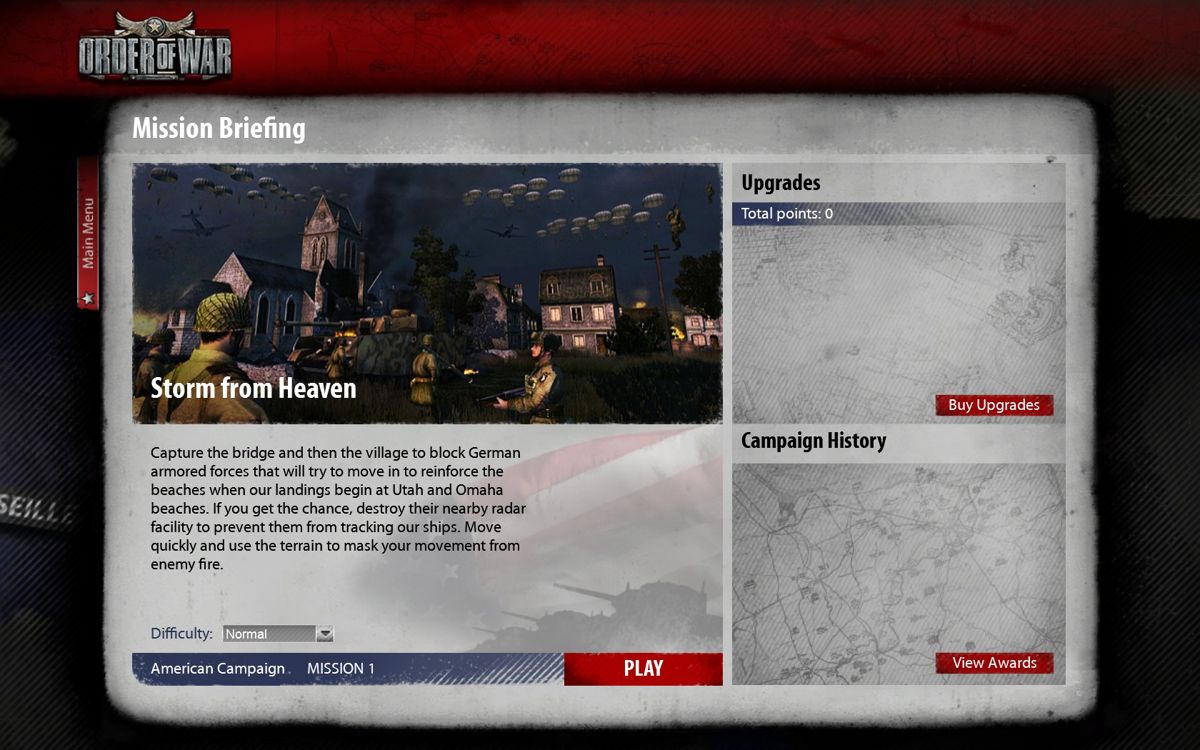
Order of War frames its action around the final phase of World War II in 1944. Its two campaigns put you on opposite sides of the conflict: Germany attempting to halt the Russians on the Eastern Front, and the Allies advancing from the west. That structure gives the game a useful sense of scope without pulling focus away from the battles.
With 18 campaign missions and six individual missions, there is a substantial amount of warfare to work through. The setting is familiar, but it serves the game’s real priority: presenting a succession of contested battlefields where ground must be seized and held. This is a military framework for RTS action, rather than a story-first war drama.
That makes the game easier to recommend to someone who wants the historical backdrop without needing a heavily authored narrative payoff. If your main reason for choosing a World War II game is to command forces through sustained operations, the campaign split does its job. If you need character-focused storytelling, the premise alone will not supply it.
Overall Experience
The progression system gives solid play a practical reward. Performance points can be reinvested into upgrades such as armor, accuracy, and sight range, and those improvements apply automatically to every relevant unit. Since surviving forces do not carry from mission to mission, this broader upgrade approach makes sense: you are improving your army’s baseline rather than becoming overly precious about keeping one veteran squad alive.
That same design choice defines both the game’s freedom and its limitation. Heavy casualties are part of the flow, reinforcements are meant to replace losses, and each mission is its own hard-fought engagement. You get fewer opportunities for the slow-burn satisfaction of nurturing survivors across an entire campaign, but you also avoid being crippled by one ugly battle.
Order of War is a good fit if you want a direct, energetic RTS with World War II flavor and a strong emphasis on territorial pressure. Its 7.1 score feels fair: the streamlined battles, reinforcement economy, and upgrade loop are satisfying, while the narrow tactical range and lack of traditional base building keep it from becoming essential for every strategy fan. Give it a chance when you want to command the fight, not spend half an hour preparing for it.


Reviews
There are no reviews yet.