 Retro Replay Retro Replay gaming reviews, news, emulation, geek stuff and more!


Retro Replay Review
Gameplay
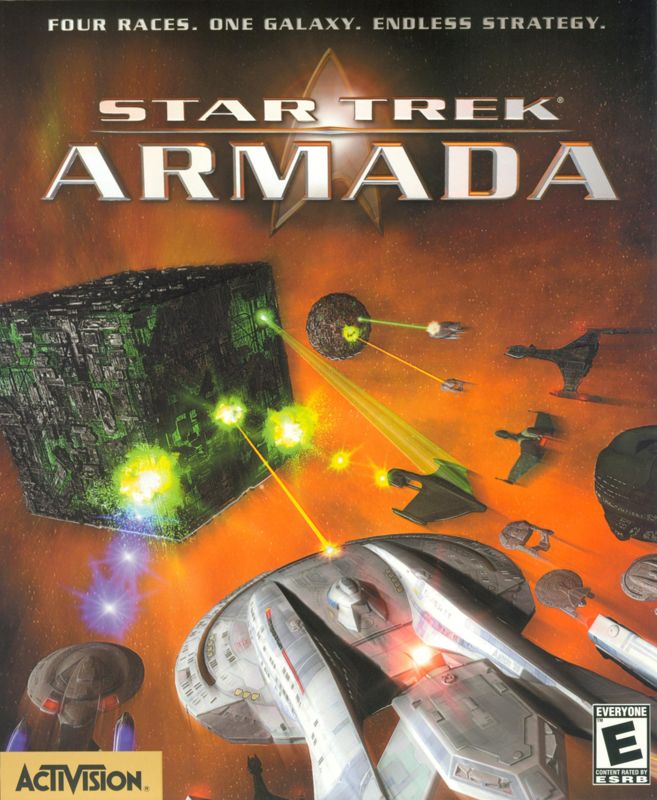
Star Trek: Armada delivers a rich real-time strategy experience that captures the grand scale of space warfare in the late 24th century. Players command one of four major factions—the Federation, Klingon Empire, Romulan Star Empire, or Borg Collective—each with its own strategic strengths, special abilities, and superweapon assets. The Federation balances offense and defense with versatile cruisers and a time-freezing superweapon station, while the chivalrous Klingons field hardy, cloaked attack ships and a suicide shockwave vessel. Romulans emphasize stealth and disruption, cloaking every combatant ship and unleashing secretive ripples in space-time, and the Borg boast massive, resilient vessels that assimilate foes and deploy temporary transwarp gates.
(HEY YOU!! We hope you enjoy! We try not to run ads. So basically, this is a very expensive hobby running this site. Please consider joining us for updates, forums, and more. Network w/ us to make some cash or friends while retro gaming, and you can win some free retro games for posting. Okay, carry on 👍)
What sets Armada apart is its multi-layered ship health system and crew mechanics. Vessels and stations feature both shields and hull integrity, and once shields fall, boarding parties can teleport to hostile craft or outposts to capture them outright. Crew levels directly impact repair rates and weapon firepower, and derelict ships drift helplessly until re-crewed or destroyed—often scooped up by opportunistic Ferengi marauders. This interplay of shields, hull, crew, and system damage (shields, engines, life support, sensors, weapons) creates a dynamic battlefield where tactical boarding actions and targeted system strikes can turn the tide in unexpected ways.
Resource management revolves around dilithium mining, crew capacity limited by officers, and strategic placement of starbases or nexi. Asteroids, nebulae, black holes, and wormholes not only add visual variety but influence movement and combat—certain nebulas buff or debuff passing fleets, while black holes threaten to swallow unwary ships. A robust single-player campaign spans 20 missions across five arcs, weaving Picard’s warning of a Borg onslaught with Klingon civil strife and Tal Shiar intrigue. On top of this, multiplayer and skirmish modes offer extensive customisation, from shared tech trees to a “director’s cut” cinematic flight style, ensuring nearly infinite replayability.
Graphics
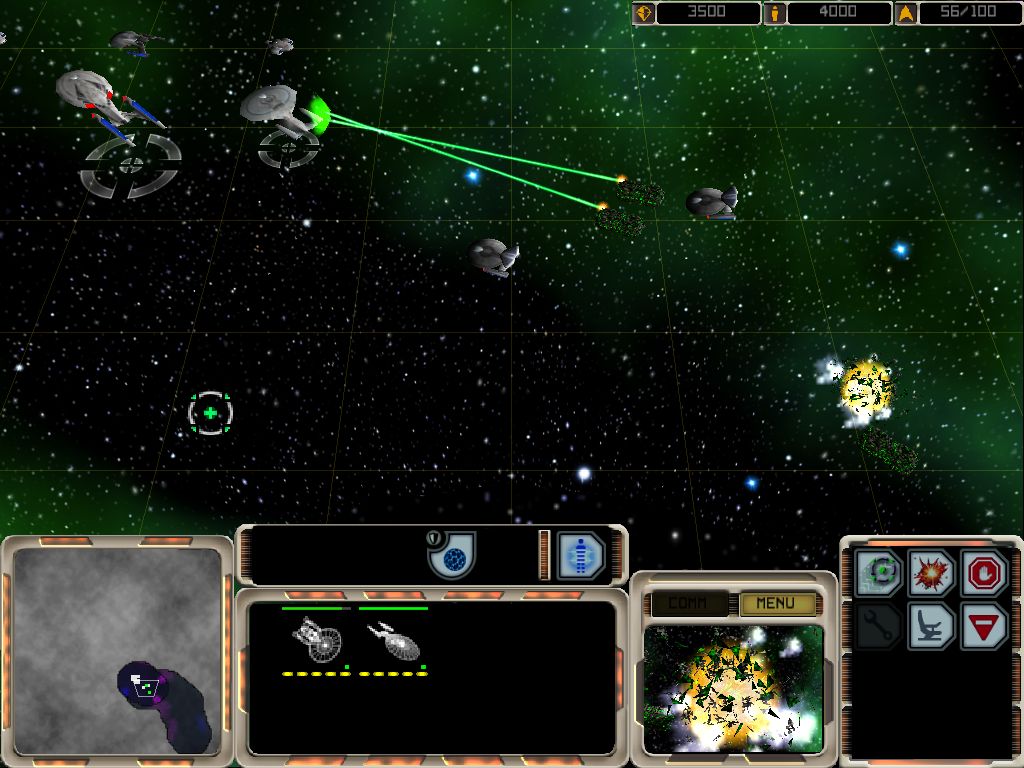
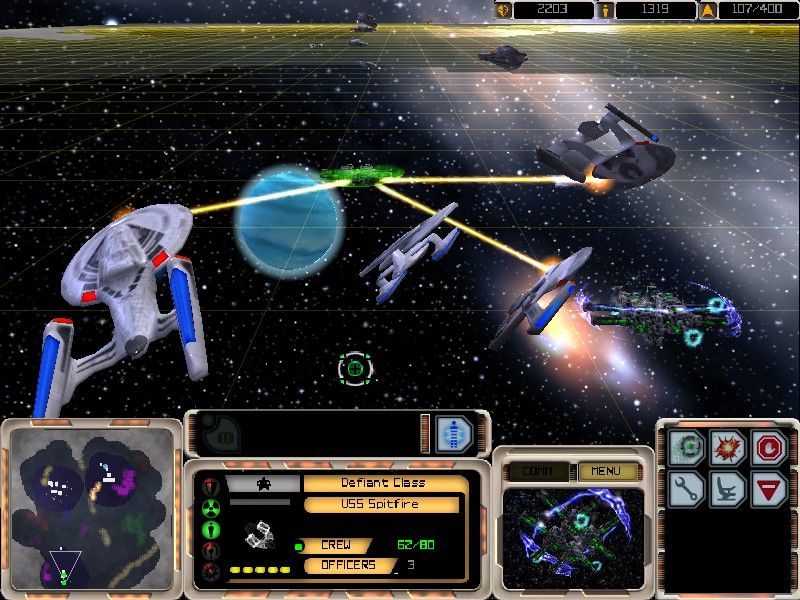
Though released when 3D engines were still in their infancy, Star Trek: Armada’s visuals remain impressively clear and functional. Ship models are distinct and faithful to their screen counterparts, from the sleek saucer section of the USS Enterprise-E to the jagged geometry of Borg cubes. Each faction’s color palette and design language are instantly recognizable, and superweapon effects—time freezes, transwarp vortices, shockwave blasts—unfold with satisfying flair. The UI overlays are crisply rendered, providing essential tactical information without obscuring the action.
Environmental details breathe life into every map. Fields of drifting asteroids cast realistic shadows, distant nebulae glow with vibrant hues, and wormhole ripples shimmer as fleets enter and exit. Combat animations feel weighty: phaser beams streak convincingly, torpedoes leave trails of light, and exploding hulls flake away in chunks. Though textures lack the high resolution of modern titles, the overall presentation remains immersive—especially when the lower-right cinematic window toggles on, following the hottest point of action like a director’s camera.
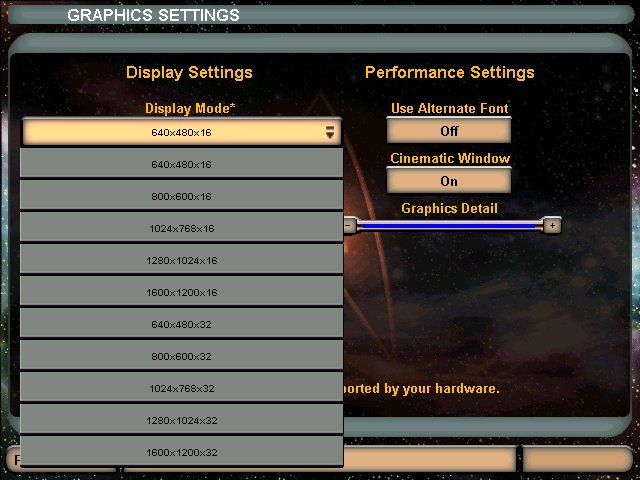
The game’s minimal system requirements serve as a boon for those playing on older hardware or modest machines. You can scale down effects and unit detail to maintain steady performance during massive fleet engagements, yet still appreciate key visual elements. Cutscenes featuring the actual voices of Star Trek actors lend authenticity to pivotal moments, and mission briefings are accompanied by polished starfield backdrops. While Armada’s graphics will not rival today’s standards, they retain a nostalgic charm that complements the gameplay beautifully.
Story
Set shortly after the Dominion War, Star Trek: Armada weaves an ambitious narrative spanning four interlocking campaigns plus a hidden epilogue. Captain Jean-Luc Picard of the Enterprise-E stumbles upon a time-travelling Federation vessel bearing dire tidings of an imminent Borg incursion. From there, players witness Klingon noble houses vying for supremacy, the secret machinations of the Romulan Tal Shiar, and the relentless expansion of the Borg Collective. Each faction’s campaign missions are laced with cutscenes and voiceovers that echo the atmosphere of the series.
The pacing across the 20 missions is well judged, balancing base-building, exploration, and large-scale battles. Federation levels often emphasize containment and defense tactics—holding choke points while slowly eroding Borg forces—whereas Klingon missions reward aggressive strikes and daring boarding actions. Romulan missions challenge players to rely on subterfuge and electronic warfare, and Borg scenarios revolve around overwhelming raw power and assimilation. The hidden epilogue campaign ties together loose threads and delivers a satisfying denouement for fans invested in these storylines.
Armada’s adherence to Star Trek lore shows in its mission objectives and dialogue. Bases orbiting strategic planets grant crew bonuses just as diplomatic outposts would, and rogue Dominion remnants still linger in remote systems. The inclusion of hero ships—flagships piloted by marquee characters with superior stats—imbues key battles with cinematic tension. Although the writing occasionally resorts to familiar RTS tropes, the authenticity of the universe and faithful character portrayals elevate the narrative above generic sci-fi fare.
Overall Experience
Star Trek: Armada stands as a hallmark of licensed real-time strategy, blending deep mechanics with an authentic Trek atmosphere. Its learning curve is approachable for newcomers, yet the layered systems—crew management, system-specific damage, environment hazards—offer depth that keeps veterans engaged. The variety of races and customizable skirmish settings allow players to craft tailored scenarios, while a built-in map editor opens the door to community creations that extend the game’s lifespan.
Multiplayer battles, though now supported unofficially via fan networks, remain a highlight for competitive and casual players alike. Configurable rulesets—from shared tech trees to director’s cut ship motion—provide unique twists that keep each match fresh. The inclusion of the game’s map editor files on the disc underscores the developers’ commitment to replay and creativity, encouraging fans to build their own starfields, asteroid belts, and strategic chokepoints.
Ultimately, Armada captures the spirit of Star Trek and the thrill of commanding vast fleets in a constantly shifting battlefield. Its dated visuals are offset by tight controls, satisfying combat feedback, and an evocative soundtrack. For devoted fans of the franchise or RTS enthusiasts seeking a classic space war simulation, Star Trek: Armada offers countless hours of strategic challenge and interstellar drama. It remains a testament to how to translate a beloved universe into an engaging, replayable gaming experience.


Reviews
There are no reviews yet.