 Retro Replay Retro Replay gaming reviews, news, emulation, geek stuff and more!



Retro Replay Review
Gameplay
The Infinity String embraces the classic point-and-click adventure formula, offering a familiar yet refined gameplay loop. Players guide Yerik Elnar through a variety of environments—from the icy ruins of Antarctica to lush jungles and eerie alien spacecraft—using the mouse as their sole interface. Right-clicking to examine objects and environments reveals crucial clues, while left-clicking allows you to pick up items, interact with characters, and trigger events.
(HEY YOU!! We hope you enjoy! We try not to run ads. So basically, this is a very expensive hobby running this site. Please consider joining us for updates, forums, and more. Network w/ us to make some cash or friends while retro gaming, and you can win some free retro games for posting. Okay, carry on 👍)
Inventory-based puzzles are the core of the experience, with a healthy mix of logical and observational challenges. Some puzzles demand patience as you combine or use items in the correct order, while others require close attention to dialogue and environmental details. Near the end of the game, you’ll face a fork in the storyline, leading to two distinct paths with their own puzzles and resolutions—adding both replay value and a sense of agency seldom seen in freeware titles.
Exploration is richly rewarded. Every room and corridor hides interactive hotspots that can yield background lore or necessary items, encouraging thorough investigation. Conversations with humans and alien creatures can unlock side puzzles or provide essential hints, giving the game a dynamic feel and a sense of discovery. Be prepared to take notes or refer to your inventory frequently; some solutions are delightfully obscure, calling back to the golden age of adventure gaming.
Despite its complexity, the game maintains a steady challenge level. You can die from missteps—such as neglecting to disable hazards—though deaths usually occur in moments of extreme risk, reinforcing careful play rather than punishing trial-and-error. Overall, The Infinity String’s gameplay captures the spirit of classics like The Dig and Indiana Jones and the Fate of Atlantis, while adding enough original twists to stand on its own.
Graphics
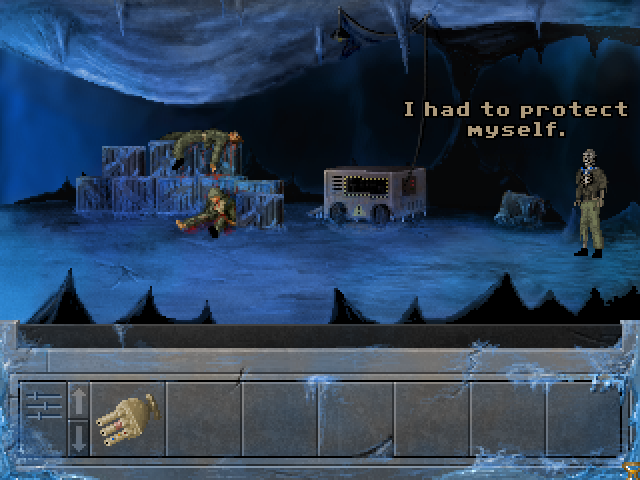
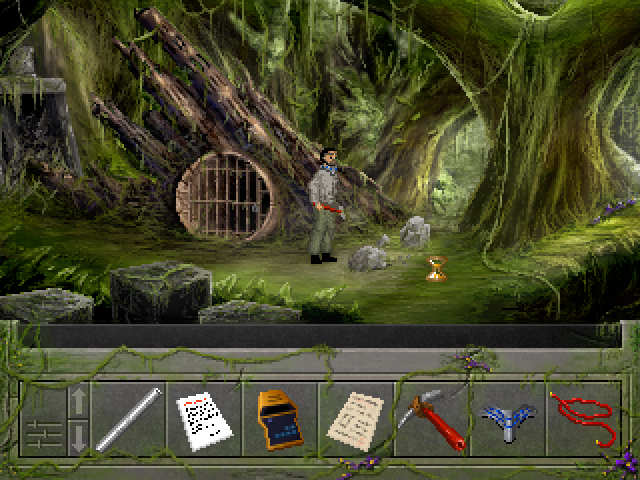
The art style of The Infinity String pays homage to mid-1990s point-and-click adventures, featuring hand-drawn pixel backgrounds that brim with color and detail. Antarctic research stations are rendered in frosty whites and grays, while jungle scenes burst with vibrant greens and shadowy vignettes. Spaceship interiors blend sleek metallic panels with mysterious alien glyphs, creating a consistent visual language across diverse settings.
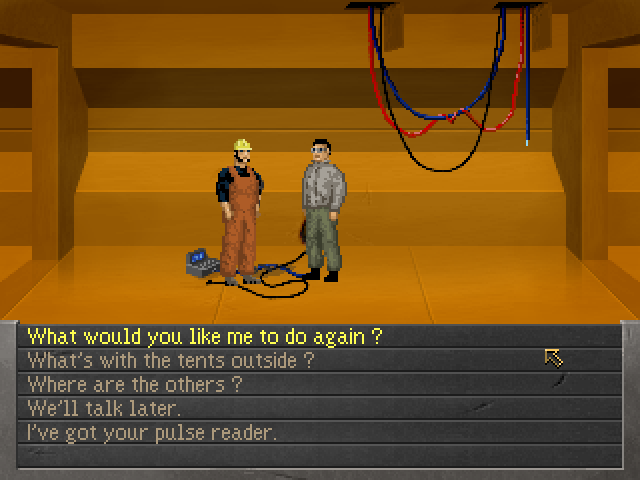
Character sprites move fluidly and expressively, even in their pixelated form. Yerik’s confident stride and occasional idle animations convey personality, while NPCs—both human and extraterrestrial—display subtle gestures that bring conversations to life. Cutscenes are sparingly used but effective, often emphasizing key plot twists with carefully framed close-ups and dramatic lighting.
The user interface is clean and unobtrusive: a simple cursor, an inventory bar at the bottom of the screen, and context-sensitive icons that change when you hover over interactive elements. This minimal HUD keeps the player immersed, avoiding the clutter that can sometimes plague modern adventure games. Tooltips and dialogue boxes are well-positioned and easy to read, ensuring that important details are never lost.
While high-definition graphics may be absent, the game’s artistic cohesion and attention to detail more than compensate. Every screen feels handcrafted, with Easter eggs and hidden details that reward patient exploration. For a freeware title, the visual ambition rivals many commercial releases from the ’90s, making The Infinity String a visual treat for fans of retro aesthetics.
Story
At the heart of The Infinity String lies a rich, multi-layered narrative. Over a thousand years ago, the Delegians harnessed the Strings—ethereal tendrils of energy that bind the universe—to craft a powerful necklace. Unable to tame its power and facing annihilation, they dispersed their knowledge across distant outposts. Their world vanished, leaving only a handful of survivors scattered among the stars.
In 2011, Russian explorers unearthing strange ruins in Antarctica stumble upon the first clue of Delegian legacy. You assume the role of Yerik Elnar, a devoted scientist dispatched to investigate these remnants. As you delve deeper into the frosty labyrinth, the story unfolds through flashbacks, journal entries, and haunting visions, weaving a tapestry of ancient betrayal, cosmic power, and human resilience.
The narrative pacing strikes a fine balance between slow-burn mystery and sudden revelations. Dialogue exchanges with researchers and alien entities provide both exposition and subtle foreshadowing. As layers of Delegian history are peeled back, you find yourself immersed in moral dilemmas about the use of ultimate power—and whether some knowledge is better left buried.
The two distinct endings add weight to your decisions near the climax, offering narrative closure that reflects the path you’ve chosen. Whether you pursue one branch or replay the game to unlock the alternate conclusion, The Infinity String’s story remains compelling and thought-provoking, inviting reflection long after the credits roll.
Overall Experience
The Infinity String shines as a labor of love in the freeware adventure space, delivering hours of engrossing gameplay without asking for a single cent. Its robust puzzle design, branching narrative, and meticulously crafted environments evoke the timeless appeal of The Dig and Indiana Jones and the Fate of Atlantis, while offering fresh ideas that keep the experience from feeling derivative.
While some puzzles may challenge players with a touch of old-school difficulty—and the occasional pixel-hunt—most will find that patience and keen observation pay off handsomely. A hint system or updated control remapping could benefit newcomers, but these are minor quibbles in an otherwise polished package. The possibility of character death also adds stakes, encouraging a methodical approach rather than click-wild antics.
As a freeware release, The Infinity String stands out for its depth, length, and production values. It is highly recommended for fans of classic graphic adventures and anyone seeking a richly woven sci-fi mystery. The branching paths and hidden lore ensure that subsequent playthroughs reveal new facets of the Delegian saga, making this game a rewarding replayable experience.
In sum, The Infinity String is a testament to what indie and freeware developers can achieve when they pour passion into every pixel and puzzle. It delivers a captivating adventure that honors its influences while carving out its own identity—an unmissable journey for any adventure aficionado looking for a free dive into cosmic intrigue.



Reviews
There are no reviews yet.