 Retro Replay Retro Gaming History, Reviews & Emulation
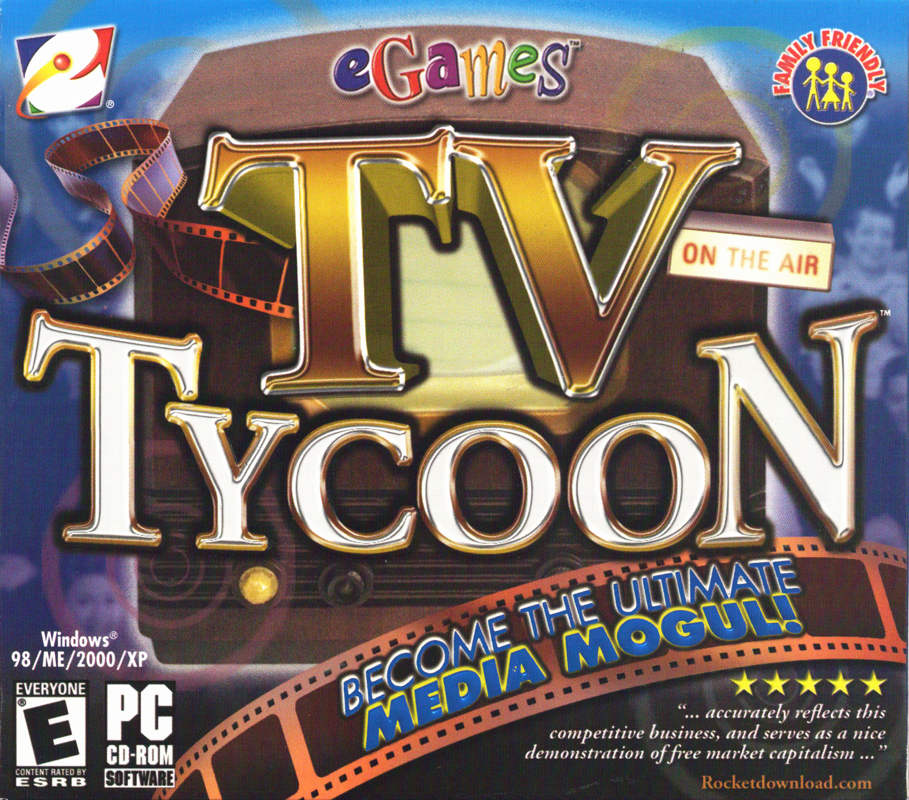
Retro Replay Review
Gameplay
TV Manager starts with a clean, immediately understandable problem: your inherited television station is nearly broke, and tomorrow’s schedule still needs filling. You buy news, television programs, and movies for each day’s timeslots, then attach ads in the hope that the audience will turn your expenditure into a profit. That basic loop has a pleasingly sharp edge because content is never just content; it is a cost, a potential audience draw, and an opportunity to charge more for advertising.
What makes the management work more interesting than simply buying the priciest programs is the demographic angle. An ad aimed at a particular group pays better when it runs alongside the right kind of show, so you are encouraged to think about fit rather than treating every slot as interchangeable. Expensive programming can attract a larger audience and support more lucrative ads, but it also asks you to commit money before you know whether the return will justify it. That is where the game’s tension lives.
When viewer numbers lag, you can spend on newspaper ads, fliers, and television ads of your own to build the station’s audience. It is a sensible extra lever, though it also gives a struggling run another expense to weigh. The best moments come when a schedule, its audience, and its advertising line up into a healthy day; the frustrating ones come when you have paid for content and promotion without getting enough viewers back. If you enjoy financial juggling, that pressure is more motivating than punishing.
Graphics
TV Manager keeps the focus on the business of broadcasting: program slots, advertisements, audience size, and demographic decisions are the heart of what you are managing.
Story
The setup is brief and practical. Your granduncle has died and left you a nearly-bankrupt TV station, putting you in charge of turning a family inheritance into a successful media business.
That premise works because it gives the financial struggle a personal starting point without distracting from the management game. You are not being asked to follow a sprawling drama; you are being asked to make the station viable and then expand its influence.
There is no need for more narrative weight than that. The real story is the one you create through the station’s recovery: whether you stabilize the daily schedule, grow the audience, and eventually earn the right to call yourself a TV tycoon.
Overall Experience
TV Manager understands that television management is most satisfying when every decision connects to the next one. Better programming can mean more viewers; more viewers can justify stronger ads; better-matched ads can fund the next programming gamble. You can see the intended business chain clearly, and that makes a good day feel earned.
Its limitations are tied to that narrow focus. If you want a broad simulation with a lot of unrelated systems to explore, the repeated work of scheduling content, monitoring audience appeal, and buying promotion may feel too concentrated. But if the idea of tuning one business engine until it runs efficiently sounds relaxing, there is a solid reason to stick with it.
Give TV Manager a chance if you like management games where money is tight, small decisions compound, and success comes from reading the market rather than chasing spectacle. It is a straightforward station-management concept, but the combination of programming costs, demographics, ad revenue, and audience growth gives it enough bite to make a turnaround satisfying.


Reviews
There are no reviews yet.