 Retro Replay Retro Gaming History, Reviews & Emulation
Retro Replay Review
Gameplay
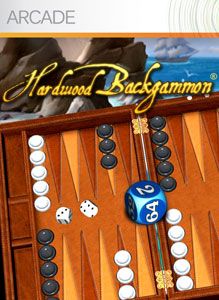
Hardwood Backgammon understands that a board-game conversion lives or dies by how quickly it lets you start thinking about the board. Press a button to roll, cycle through available moves, and drop a checker into place. That is a clean rhythm, especially during the first hour while you are getting used to the flow of blocking points, advancing pieces, and choosing when safety matters more than speed.
The move assistance is useful without turning the game into autopilot. Dots show where a checker can land, which removes some of the friction of playing backgammon with a controller. The catch is that these indicators do not show destinations reached by combining the dice. Experienced backgammon players will recognize those options on their own, but newcomers can hit a frustrating moment where the game seems less helpful precisely when a two-die move matters.
There is enough rule flexibility to make the board fit your group. You can set the match length all the way up to 129 points or switch off the doubling cube if you would rather focus on the basic race and blocking game. Three solo difficulty levels give you a place to practice, while local and online multiplayer make the stronger case for returning after the tutorials have done their job.
Graphics
This is a top-down board-game view built around following checkers and available landing spots. The useful visual touch is the move-dot system: it makes individual legal destinations easier to pick out when you are playing with a controller.
Story
There is no authored campaign or character drama here. The only story is the one that naturally comes from a backgammon match: an early lead, a blocked route, a risky attempt to run a checker home, and the slow realization that the board has turned against you.
That is not a weakness for a faithful board-game conversion. Backgammon earns its tension through changing odds and stubborn positions, and Hardwood Backgammon wisely keeps the focus on those decisions instead of dressing them up with an unnecessary wrapper.
The included tutorials provide the closest thing to progression. They give new players a route into the rules before they face the sharper decisions of a real match, though the incomplete combined-dice indicators mean you will eventually need to learn to read the board for yourself.
Overall Experience
Hardwood Backgammon is a solid digital board for a game that has endured because every roll creates a small argument about risk. Its best moments come when you stop seeing checkers as pieces to push forward and start seeing the whole board as a set of threats, escapes, and chances to strand the other side.
It does not fully smooth over the learning curve. Cycling moves is convenient, but the lack of combined-dice landing indicators can leave beginners unsure whether they have found every option. If you are teaching yourself, take the tutorials seriously and do not assume the highlighted moves tell the complete tactical story.
Still, the fundamentals are in the right place: adjustable match rules, solo opponents, and both local and online play give the game more life than a one-off novelty. Give it a chance if you want faithful, controller-friendly backgammon and can tolerate doing a little board reading yourself. Veterans will likely appreciate the directness more than newcomers looking for exhaustive guidance.


Reviews
There are no reviews yet.