 Retro Replay Retro Gaming History, Reviews & Emulation
Game Overview
Gameplay
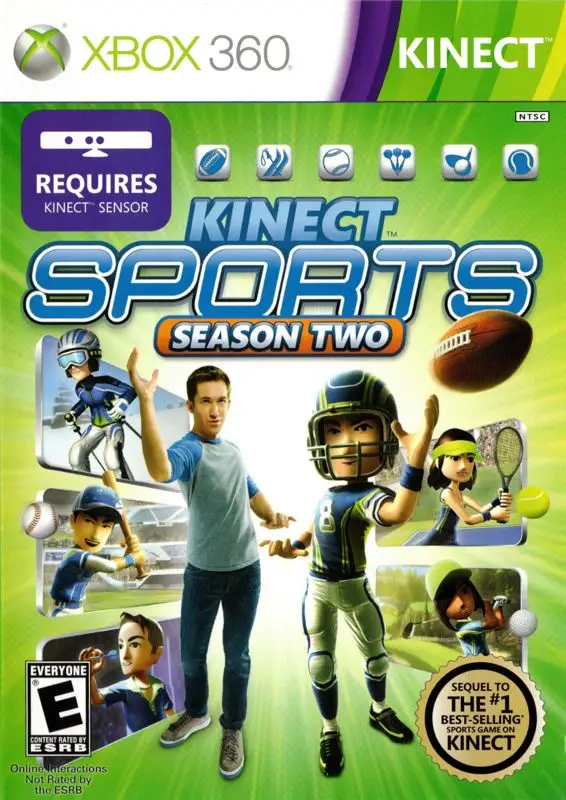
Kinect Sports: Season Two understands the basic fantasy that made Kinect tempting in the first place: you stand up, make a recognizable sports motion, and get a quick result without learning a controller layout. The variety helps. A tennis serve, golf swing, baseball pitch, dart throw, and skiing lean ask different things of you, so a session can stay lively longer than a one-sport motion game. The mini-games also matter because they give you a lighter alternative when a full match starts to feel like too much commitment.
Not every sport is equally suited to motion tracking. Skiing has a clean, intuitive hook as you lean left and right through slalom gates and jump, while darts can turn a simple throw into a more playful challenge through Pop Darts and its rotating balloon target. Baseball covers batting, catching, pitching, and sliding, offering the most complete sport simulation in the package. That breadth is good for a party, but it also means you will probably settle on a few favorite events instead of finding every discipline equally satisfying.
American football is the most ambitious of the group, asking you to choose a strategy before throwing to receivers and then dodge as the quarterback. It sounds like the event most likely to deliver a living-room highlight, but it also puts more pressure on Kinect to interpret your movements cleanly. When motion input feels natural, the game is breezy and social. When it does not, the gap between what you did and what the game thinks you did can turn a competitive round into an argument.
Single-player gives you three opponent difficulty levels, although only rookie is open at the beginning. Earning fans to build your profile gives repeated play a little direction, but this is not a sports game built around deep mastery. It is built around getting people moving. Offline multiplayer is the clearest reason to own it, while online play is a welcome option when you cannot fill a room. Voice commands are a notable extra, with roughly 300 supported, though they feel more like convenience and novelty than the reason to return.
Story
There is no narrative campaign pulling the sports together. Your progress comes from earning fans, unlocking tougher opponents, and improving your standing across the events. That is enough structure for a game aimed at quick sessions, but it will not create much momentum if you prefer a strong single-player journey.
Overall Experience
This is a better social game than a solo sports game. Put it on with family or friends, rotate through events, and the physical nature of the play creates the kind of easygoing competition that conventional sports games rarely match. You do not need everyone to know baseball or football strategy to enjoy taking a swing, making a throw, or trying to lean through a ski course without overcorrecting.
Playing alone exposes the limitations sooner. The unlock path begins cautiously, the fan-based progression is modest, and motion-controlled sports can only be as satisfying as the tracking is consistent. You may find yourself wanting a controller’s precision once a match gets tense, particularly in events that demand quick, exact reactions. The game works best when a missed read is something everyone can laugh off rather than a ruined attempt at serious competition.
For Xbox 360 owners who still have Kinect set up, Kinect Sports: Season Two earns a recommendation as a lively group activity with enough sport and mini-game variety to avoid becoming a one-evening novelty. Give it a chance if you want casual competition that gets people off the couch. Skip it if you want tight simulation, reliable precision, or a substantial solo campaign. Its payoff is the room reacting together, not the satisfaction of mastering a demanding sports system.


Reviews
There are no reviews yet.