 Retro Replay Retro Gaming History, Reviews & Emulation
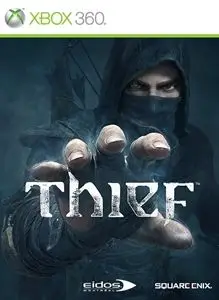
Game Overview
Gameplay
Thief is strongest when you slow down and treat every guarded room like a little burglary puzzle. You watch a patrol, judge how much shadow you have, slip behind someone for a blackjack takedown, then drag the body somewhere safer before the next guard rounds the corner. That rhythm is simple, tense, and satisfying when it works. Garrett is badly outmatched in a crowd, so reckless fighting quickly reminds you that stealth is not just the preferred approach, it is usually the sensible one.
There is a nice tactile streak to the thieving. Loose valuables feed directly into your spending money, while hidden special loot rewards you for checking bookshelves, paintings, and suspicious corners. Finding the right spot to expose a switch, crack a safe, or pick a lock asks for a bit more attention than just pressing an interact button. Searching nearby documents for a safe combination is particularly welcome because it makes the environment feel worth reading rather than merely looting.
Money has a practical purpose, too. Arrows, healing food, smoke bombs, equipment tools, and upgrades give you reasons to keep stealing instead of treating loot as a score chase. Water arrows can remove a light source, ordinary arrows can create distractions, and purchases such as a razor or wrench open up more opportunities in the environment. Swoop is useful for quickly closing distance, while Focus can slow time and make several tasks easier. Focus can also flatten tension if you lean on it too hard, but the extensive difficulty options let you turn it off and build a stricter stealth run around your own rules.
The problem is that the game rarely gives that freedom enough room to breathe. The city hub and its districts offer side jobs and extra loot between missions, but the main missions are built from comparatively modular chunks. A room may allow a few routes or tactics, then funnel you through a point of no return into the next section. Contextual jumping and limited rope-arrow spots add to that boxed-in feeling. You can still enjoy the individual stealth problems, but the constant sense that a level is steering you toward its next narrow exit makes the whole thing less adventurous than it should be.
Story
Garrett begins on a job with Erin, only for a strange ritual to end in disaster and leave him unconscious for a year. He wakes to a city under a fascist regime, with ordinary people suffering from an unexplained disease and a conspiracy waiting at the center. It is a functional excuse to push him through mansions, streets, and guarded spaces, but the story does not have the personality or depth to match the stronger moments of theft and infiltration.
Overall Experience
This is a decent stealth game caught between two instincts. It wants you to savor a cautious, self-directed burglary, and it often succeeds in the small: a perfectly timed takedown, an overlooked stash, or a light extinguished at just the right moment can feel great. Then a restrictive transition, contextual movement limit, or overly guided route interrupts the fantasy. The good ideas are real, but they do not always connect into a world that feels truly open to your schemes.
The customizable difficulty is one of the reboot’s smartest decisions. You can impose tougher costs, disable Focus, ban kills or knockouts, remove quicksaves, or even choose permadeath when starting over. That makes a second run much more appealing if the standard experience feels too forgiving, and it gives committed stealth players a way to pursue the tense, clean approach the game only sometimes demands on its own. The challenge modes offer another score-driven excuse to revisit familiar spaces, though they are more of a side dish than a replacement for richer mission design.
Give Thief a chance if you want a mid-sized stealth campaign with worthwhile looting, strong moment-to-moment sneaking, and plenty of options for making the rules harsher. You should pass if what you want most is broad sandbox infiltration or a story with memorable stakes. At its best, this reboot lets you feel clever, patient, and invisible. Too often, it also lets you feel the walls closing in around that fantasy.


Reviews
There are no reviews yet.