 Retro Replay Retro Gaming History, Reviews & Emulation
Retro Replay Review
Gameplay
Onirike starts from a strong, simple hook: Prieto can become invisible. That power gives the adventure a stealthy edge without turning it into a straight combat game. You explore a large, intricate world, avoid dream devourers, solve puzzles, and use gypsophila plants as part of your progress. It is the sort of game that rewards stopping to look around rather than charging toward the next obvious waypoint.
The best part is how its ingredients point in the same direction. Exploration, platforming, and stealth all serve the feeling of moving through a place that is not eager to explain itself. Invisibility sounds like a minor trick at first, then becomes the natural answer to threats you are better off avoiding. Growing plants strategically also gives the game a more deliberate rhythm than a basic collect-and-jump platformer.
That deliberate rhythm will be the dividing line. Onirike does not sound built for players who want constant action, clean linear escalation, or every solution placed plainly in front of them. The open structure can be intriguing when you are in the mood to experiment, but it can also turn uncertainty into friction. Give it a chance if you enjoy working through a strange space at your own pace and do not mind a little wandering before the path becomes clear.
Graphics
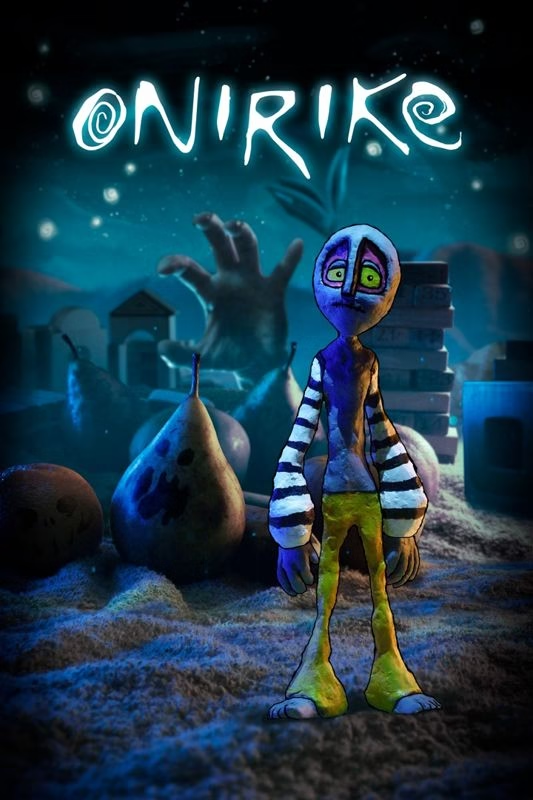
The game leans into a deliberately peculiar dream-world look centered on Prieto and the orb he inhabits. Rather than chasing realism, its artwork aims for an off-kilter fantasy mood that suits a world shaped by unrealized dreams. The official Onirike site is a useful place to get a sense of that unusual artistic direction.
Story
Onirike frames its world around a good question: what happens to dreams that never come true? Prieto does not know his own nature, and uncovering both his identity and the mystery of the orb gives the journey more weight than a string of isolated platforming challenges.
The narrative is non-linear, which fits the premise. You are not simply being marched through a fixed tale about dreams. Instead, discovery is tied to exploration, so the sense of mystery depends partly on your willingness to poke into the world and connect its clues. That can make revelations feel personal, because you found the next piece rather than merely being handed it.
It is a story setup with more atmosphere than immediate certainty. If you like surreal fantasy that leaves room for interpretation, Prieto’s search should pull you along. If you need a fast, direct plot with firm answers from the opening hour, its hazier approach may test your patience.
Overall Experience
Onirike is admirable because it commits to its own odd little lane. It combines a mysterious fantasy premise with platforming, puzzle-solving, stealth, and open-ended exploration, then lets Prieto’s invisibility hold that mix together. There is real charm in a game willing to make curiosity, caution, and uncertainty part of the experience.
Its shortcomings are mostly the risks built into that same approach. A non-linear world is not automatically satisfying just because it is open, and the slower, exploratory structure can feel aimless when you want a stronger sense of momentum. You need to meet it halfway, accept some ambiguity, and enjoy the process of finding your bearings.
For the right gamer, that investment is worthwhile. Onirike is worth trying if a compact, surreal adventure with stealthy exploration sounds more refreshing than another checklist-driven open world. It may not win over everyone, but its focus on dreams, invisibility, and strange discovery gives it a personality that is hard to confuse with anything else.


Reviews
There are no reviews yet.