 Retro Replay Retro Gaming History, Reviews & Emulation
Game Overview
Gameplay
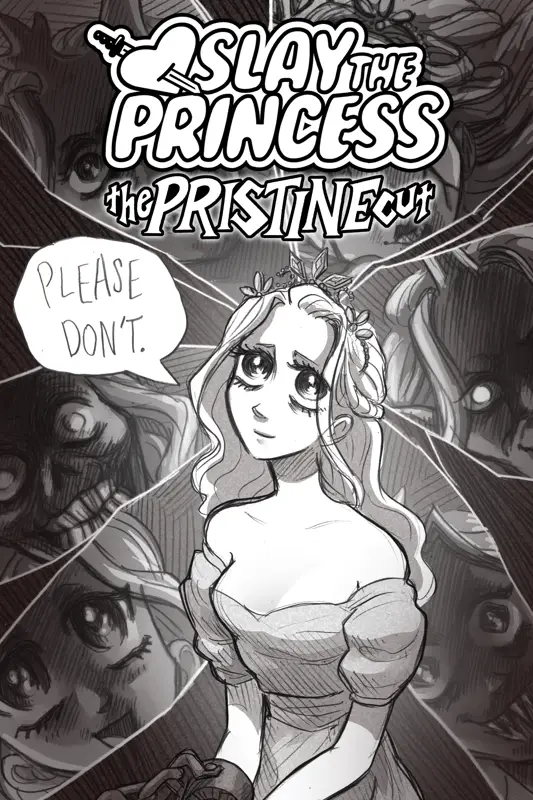
Slay the Princess makes its strongest move immediately: it gives you a clear command, then makes following it feel suspect. You move through illustrated story scenes and select dialogue responses, but the choices do not feel like harmless flavor text. Asking another question, refusing an order, showing mercy, or committing to violence can send the encounter somewhere dramatically different. The lack of combat systems, character statistics, or inventory management is a benefit here. Nothing distracts from the uneasy business of deciding whom to believe.
The repeated structure is where the game starts to click. Endings can arrive abruptly, including death, and you return to the forest with fragmented memory of what came before. Rather than treating a restart as a simple failure state, the game uses it to make each new approach feel loaded. You are not merely hunting for a better ending. You are testing the assumptions that led you to the last one, while the protagonist’s outlook and relationships shift around those decisions.
That focus comes with a clear tradeoff. This is a visual novel first, and much of your time is spent reading, listening, and choosing a line of dialogue. There is no action-based release valve when a confrontation turns ugly. If you need mechanical challenge or a clean route toward a definitive win, the looping uncertainty may frustrate you. If you like stories that make a seemingly obvious moral choice feel less stable each time you revisit it, the concentration on dialogue gives every exchange real bite.
Story
The cabin in the woods setup is a sharp hook, but Slay the Princess does not leave it at a simple rescue-or-murder dilemma. The narrator and the Princess constantly undermine each other’s version of reality, and the story grows through contradiction, doubt, and the consequences of the beliefs you carry from one loop into another. Its psychological horror works because it asks you to sit with uncertainty instead of offering an easy answer about who is right.
Overall Experience
What begins as a compact dark-fantasy scenario steadily becomes a broader, stranger examination of trust, control, and responsibility. The best routes feel personal because they emerge from your own willingness to obey, resist, bargain, or surrender. Even when the story pulls into more metaphysical territory, it remains anchored by that first uncomfortable question: what do you owe someone when you cannot be sure they are telling the truth?
Its branching structure gives it genuine replay value, not just a stack of alternate endings to check off. Different decisions can reshape the tone and stakes of later encounters, so returning to the cabin with a new attitude is more rewarding than simply selecting the opposite answer. You will get the most from it by accepting that a bad outcome can still be a meaningful discovery and by resisting the urge to treat every choice as a puzzle with one correct solution.
Slay the Princess is an easy recommendation for anyone who wants horror that gets under your skin through language and moral pressure rather than action. It will not convert gamers who dislike text-heavy adventures, and its deliberately unsettled structure can feel demanding. For everyone else, it is a clever, unsettling narrative game that earns its repetitions by making each return to the woods feel like a new argument with yourself.

Reviews
There are no reviews yet.