 Retro Replay Retro Replay gaming reviews, news, emulation, geek stuff and more!
Retro Replay Review
Gameplay
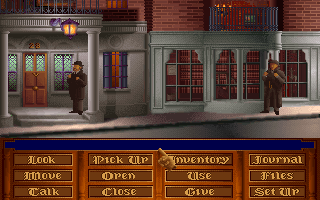
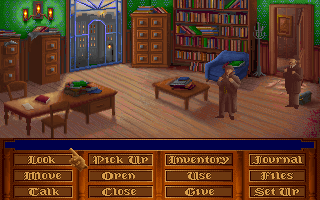
The Lost Files of Sherlock Holmes: The Case of the Serrated Scalpel employs a classic verb-based point-and-click interface that will feel familiar to veteran adventure gamers. Players select actions such as “Look,” “Pick up,” or “Talk to” from an on-screen verb bar, then click on objects or characters in richly detailed environments. Instead of a modern streamlined menu, this interface encourages methodical exploration: you may need to sequentially examine every inch of a crime scene before moving forward, which pays homage to Holmes’s meticulous nature.
(HEY YOU!! We hope you enjoy! We try not to run ads. So basically, this is a very expensive hobby running this site. Please consider joining us for updates, forums, and more. Network w/ us to make some cash or friends while retro gaming, and you can win some free retro games for posting. Okay, carry on 👍)
Interrogations and dialogue are central to your investigation. When speaking with witnesses or suspects, you choose from several conversation prompts, each designed to tease out a different piece of the puzzle. Dr. Watson’s occasional commentary—recorded in a searchable journal—serves as both narrative flavor and a handy way to retrace your line of questioning. This dual-protagonist approach not only reinforces Holmes’s brilliance but also reminds the player that even the greatest detective relies on a reliable partner.
Puzzles range from traditional inventory challenges, such as combining clues to unlock a hidden compartment, to logic-driven deductions, where you must connect the serrated scalpel found at the scene to other evidence scattered around London. The game strikes a careful balance: most puzzles are solvable without resorting to trial and error, but some chain puzzles can feel opaque. Fortunately, Holmes’s inner monologue often offers subtle hints for players willing to listen closely.
Exploration unfolds across an expanding city map, unlocking new districts—from foggy alleyways to grand theaters—as you piece together the timeline of the murder. Although the navigation can become cumbersome (fast travel only opens later in the game), it reinforces the period setting and gives weight to each new location. Overall, the gameplay immerses you in the detective’s role, rewarding patience, observation, and a keen mind for detail.
Graphics
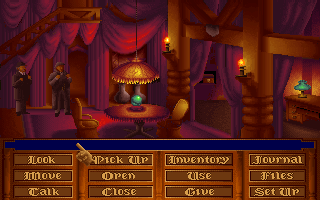
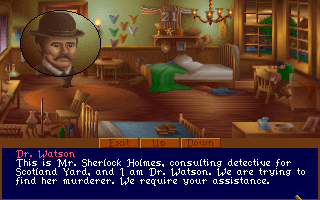
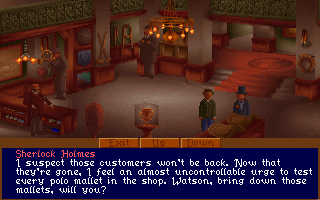
Visually, The Lost Files of Sherlock Holmes embraces the early 1990s adventure style with hand-painted backgrounds and pixel-art characters. Every scene—from the dimly lit alley where the young actress met her fate to the opulent stage curtains of the theatre—features finely crafted details that evoke Victorian London. Though the resolution feels dated by modern standards, the textures and color palette convey a sense of age and atmosphere that few contemporary titles capture as organically.
Character sprites are modestly animated, with simple gestures and facial expressions. While close-ups during conversations are limited to a handful of frames, they effectively highlight emotional shifts—Watson’s furrowed brow conveying concern, or Holmes’s steady gaze during a moment of insight. The interface itself is unobtrusive, allowing the visuals to take center stage without cluttering the screen.
Cutscenes are sparse but impactful, leveraging digitized speech and music to heighten tension. The fully voiced introduction and occasional dramatic flourishes (such as a blood-curdling scream in the alley) add layers of immersion. Even when the audio quality dips into lo-fi territory, it underscores the game’s commitment to storytelling and period authenticity.
Minor visual conveniences—like highlighting hotspots when you hover over them—guide players without feeling patronizing. Although it lacks the dynamic lighting and fluid animations of modern point-and-click adventures, the artistic direction remains charming and functional, drawing you into Holmes’s world with every click.
Story
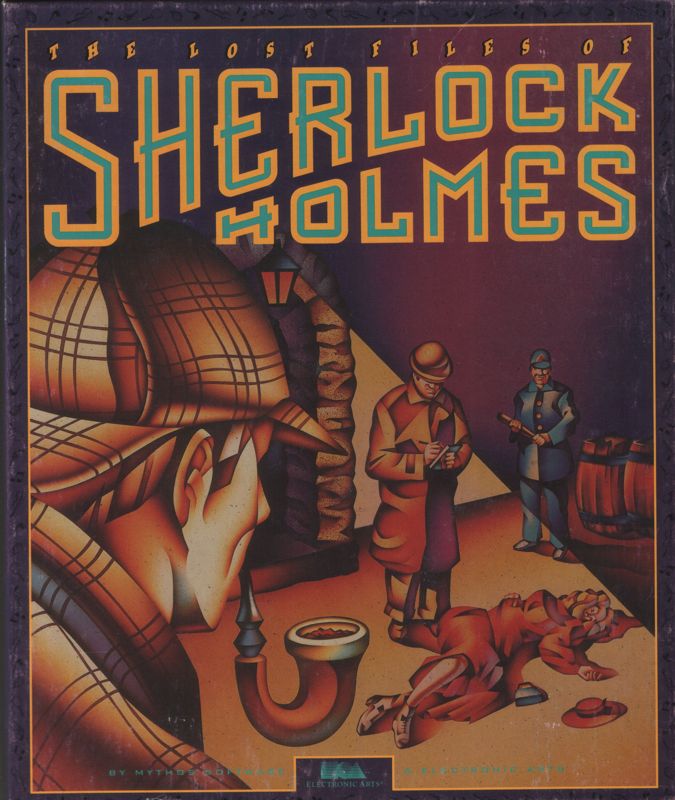
The narrative thrust of The Case of the Serrated Scalpel captures the essence of a classical Sherlock Holmes mystery. A young actress lies murdered behind her theatre, Scotland Yard is stumped, and the specter of Jack the Ripper looms over foggy streets. As Holmes, you sift through misleading clues and rampant speculation to determine whether this killing is Ripper work or an entirely different—and more devious—crime.
The story unfolds through carefully staged scenes and well-paced dialogue. You’ll encounter familiar faces from Conan Doyle’s universe—Inspector Lestrade, Madame Hudson, and even the hound Toby—each delivering tidbits of information that may hold vital significance. The soundtrack and ambient noises (horse-drawn carriages, distant church bells) further enrich the storytelling, making London itself feel like a living character in the drama.
Twists and red herrings abound: secret passages beneath the theatre, anonymous telegrams, and cryptic journal entries challenge you to connect disparate threads. While some modern players might find the pace deliberate, this measured rhythm mirrors the patient unraveling of a real investigation. True to Holmesian tradition, deductions are built upon layer after layer of circumstantial evidence, rewarding players who pay close attention to Watson’s notes.
The ending tied together each plot strand satisfactorily, though the final revelations hinge on a single crucial deduction—so missing one clue can leave you scratching your head. That said, the epilogue’s dramatized wrap-up, complete with haunting narration, offers closure and cements the narrative as a high point of early graphic adventures.
Overall Experience
The Lost Files of Sherlock Holmes: The Case of the Serrated Scalpel stands as a testament to classic adventure design. It demands patience, close reading of dialogue, and meticulous investigation—traits befitting Holmes himself. While the interface shows its age compared to modern point-and-click titles, its deliberate pacing and authentic Victorian atmosphere remain deeply engaging for fans of the genre.
Newcomers may balk at some clunky navigation or the occasional obscure puzzle, but the game’s rich narrative and faithful homage to Conan Doyle’s world offer ample compensation. You’ll find yourself lingering over every journal entry, retracing footsteps through London’s narrow streets, and savoring each “Aha!” moment when two seemingly unrelated clues snap together into a revelation.
Featuring digitized speech, evocative backgrounds, and an engrossing storyline, this adventure provides a rewarding experience for mystery enthusiasts and literary fans alike. Whether you’re revisiting an old favorite or donning Holmes’s deerstalker for the first time, The Lost Files of Sherlock Holmes delivers a meticulously crafted investigation that stands the test of time.
For those seeking a thoughtfully designed detective adventure steeped in period detail and cerebral puzzle-solving, this case remains one of the genre’s crowning achievements. Prepare your magnifying glass and sharpen your wits—London’s streets await your scrutiny.



Reviews
There are no reviews yet.