 Retro Replay Retro Replay gaming reviews, news, emulation, geek stuff and more!



Retro Replay Review
Gameplay
F-117A Nighthawk Stealth Fighter 2.0 builds on the foundation laid by its predecessor, F-19 Stealth Fighter, delivering a diverse range of mission types that keeps the action fresh from start to finish. Pilots can choose between air-to-air engagements, precision ground strikes, electronic warfare assignments, and reconnaissance flights. Each mission area—from the tense skies over the Persian Gulf to the jungle canopies of Vietnam—offers unique challenges, requiring careful planning and split-second decision-making.
(HEY YOU!! We hope you enjoy! We try not to run ads. So basically, this is a very expensive hobby running this site. Please consider joining us for updates, forums, and more. Network w/ us to make some cash or friends while retro gaming, and you can win some free retro games for posting. Okay, carry on 👍)
One of the most compelling features is the dual flight-mode system. In “authentic” mode, you fly with two internal weapon bays and reap the benefits of a superior stealth rating, making it easier to slip past radar coverage. Conversely, the “theoretical” mode unlocks four weapon bays, reminiscent of the original F-19, but at the expense of reduced stealth. This choice forces players to weigh firepower against detectability, effectively tailoring each sortie to their preferred style of play.
Progression is equally engaging: successful mission completions, medal awards, and rank promotions all feed into a tangible sense of growth. As your rank rises, you unlock more challenging scenarios, from tense Cold War patrols to full-scale conflicts in hostile territories. This continual feedback loop of risk, reward, and recognition keeps players invested in every sortie, whether it’s neutralizing a surface-to-air missile battery or intercepting hostile fighters before they can strike friendly assets.
Graphics
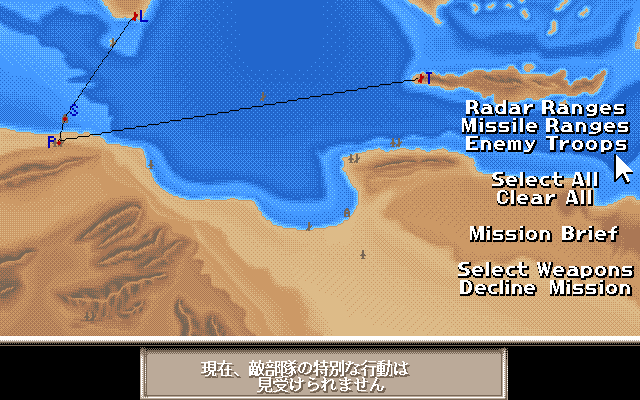
Given its early ’90s heritage, F-117A Nighthawk Stealth Fighter 2.0 strikes a solid balance between functional clarity and atmospheric detail. Terrain maps are rendered in crisp, low-polygon wireframes that clearly delineate coastlines, mountain ridges, and runway layouts. Although these visuals might feel dated by modern standards, they remain highly readable, ensuring that critical information is never lost in the heat of combat.
The cockpit view is where the game’s graphical design really shines. Instrument panels glow with color-coded indicators for speed, altitude, weapons status, and radar contacts. These HUD elements are both intuitive and immersive, aiding situational awareness without overwhelming the player. Subtle touches—like the flicker of the radar screen or the shifting horizon during high-G maneuvers—add a tangible sense of realism.
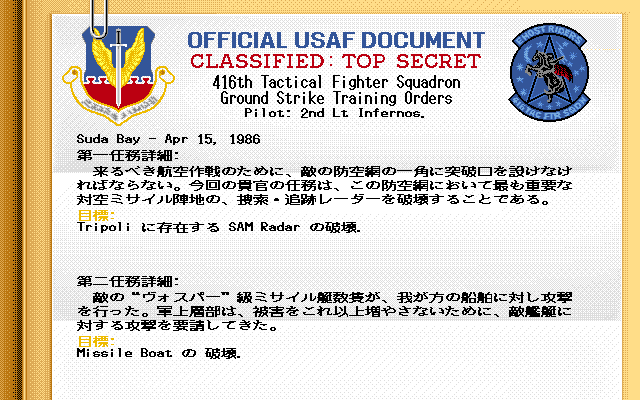
Mission briefings and debriefings employ simple but effective static images and text overlays, featuring schematic diagrams of enemy installations and detailed maps. While these segments aren’t cinematic in the modern sense, they convey essential tactical data with clarity and reinforce the game’s military-simulation identity. Overall, the graphics serve gameplay above all, ensuring you can focus on strategy rather than squinting at convoluted visuals.
Story
F-117A Nighthawk Stealth Fighter 2.0 doesn’t rely on a sprawling narrative, but it weaves an engaging geopolitical backdrop through its mission selection. The game’s theaters of operation—Persian Gulf, Cuba, and Vietnam—are steeped in real-world tension, from Cold War brinkmanship to hypothetical full-scale confrontations. This approach lets players feel like modern-day fighter pilots responding to global hotspots, even if there isn’t a continuous story arc tying every mission together.
Each campaign is framed by concise mission briefs that outline objectives, threat assessments, and rules of engagement. Whether you’re tasked with disabling enemy radar arrays in the Gulf or providing close air support during a hypothetical resurgence in Vietnam, the context is always clear. Medal awards and rank promotions add an extra layer of narrative progression, as you literally climb the ladder of aerial combat prestige.
Although there are no voiced cutscenes or character-driven subplots, the sense of purpose remains strong. The game’s text-driven storytelling imparts enough detail to keep you invested in your assignments, and the consistent feedback loop of mission success and medal ceremonies creates its own dramatic ebb and flow. For players seeking a story-rich experience, the drama emerges organically from each high-stakes mission.
Overall Experience
F-117A Nighthawk Stealth Fighter 2.0 stands out as a deeply rewarding flight simulation that prioritizes strategic depth over flashy visuals. Its two-mode weapon-stealth tradeoff, varied theaters of operation, and rank progression system ensure high replay value. Every sortie feels consequential, and the learning curve rewards patience, planning, and precision.
Multiplayer options, though rudimentary by today’s standards, allow for head-to-head dogfights and cooperative missions, extending the lifespan well beyond the solo campaigns. Even on its own, the single-player experience offers dozens of hours of engaging content, with mission replayability boosted by the choice of flight modes and target sets.
For enthusiasts of military flight sims and stealth aviation, this sequel refines the genre’s core mechanics while honoring the legacy of its predecessor. The balance between accessible controls and simulation fidelity makes it suitable for both newcomers and veteran virtual pilots. In short, F-117A Nighthawk Stealth Fighter 2.0 is a compelling package that remains a benchmark for stealth-focused flight simulations.



Reviews
There are no reviews yet.