 Retro Replay Retro Gaming History, Reviews & Emulation

Retro Replay Review
Gameplay
Genius gets its hook into you through the clean tension between guessing and proving. You are shown a network of cubes and must determine the colours on their surfaces. Each submitted choice earns feedback on how close you came, so the next move is not supposed to be random: you compare results, eliminate possibilities, and narrow the solution down through logic.
That simple loop has real staying power when you are in the right headspace. Early on, it is easy to make a few broad guesses and enjoy the feeling of the answer coming into focus. Before long, though, you need to slow down and actually track what each result has ruled in or out. If you like puzzles that reward note-taking, concentration, and a willingness to revise your assumptions, Genius has a pleasantly stubborn pull.
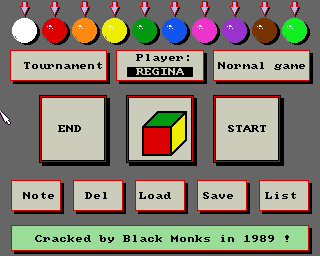
The adjustable rules are where it earns its name rather than settling for a straight Mastermind imitation. More cubes mean more possibilities to untangle, while time limits and restricted attempts turn a relaxed deduction exercise into a pressure test. Pick the gentler settings first if you want to learn the feedback rhythm; jumping straight into tight limits risks making a logical puzzle feel like a rushed guessing game.
The advanced option that changes cube positions between attempts is the real divider. It adds a further complication to information you thought you understood, and that can be exciting if you have mastered the standard puzzle. It can also be the point where frustration sets in, since the comfort of steadily locking down the solution is deliberately disrupted. That mode is for the gamer who wants the puzzle to push back.
Graphics
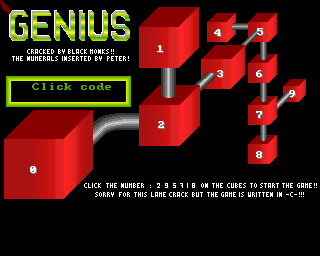
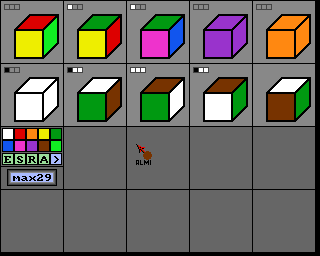
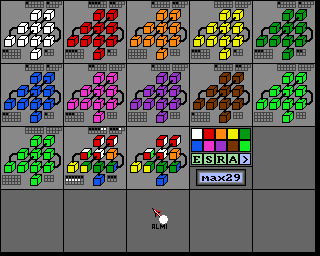
The game is built around an isometric cube network, with coloured cube surfaces serving as the important visual information. That perspective gives the puzzle a more physical look than a row of abstract pegs, and the changing positions of advanced cubes can make the board feel less settled from one attempt to the next.
Story
Genius finds its drama in the solve rather than a conventional narrative. Each round begins with incomplete information, and the small story is the path from an uncertain first guess to a combination you can finally justify.
That makes the feedback after every attempt do more than mark success or failure. A result can overturn your current theory, force you to reconsider an earlier choice, or give you the confirmation needed to commit to the next deduction. The tension comes from whether you have interpreted the clues correctly.
There is a satisfying arc to a strong round: confidence gives way to doubt, a pattern begins to emerge, and the final answer lands because you worked it out rather than stumbled into it. Gamers looking for characters or plot should look elsewhere, but puzzle fans may find that self-contained little mystery is enough.
Overall Experience
Genius is a compact, thoughtful puzzle game with a concept you understand quickly and a difficulty curve that can become genuinely demanding. Its best moments arrive when several earlier attempts suddenly make sense together and you can see the solution before committing to it.
It is less suited to someone who wants constant variety or a fast stream of new ideas. The core activity remains colour deduction from start to finish, so your enjoyment depends on whether you find that process satisfying. Fortunately, the options let you tune the pressure and complexity instead of being stuck with one fixed challenge.
Give it a chance if Mastermind-style reasoning appeals to you and you enjoy extracting certainty from limited clues. Start with stationary cubes and a forgiving attempt limit, then introduce the harsher options once the basic logic starts clicking. The payoff is modest but real: a series of tightly constructed problems that rewards patience far more than luck.



Reviews
There are no reviews yet.