 Retro Replay Retro Replay gaming reviews, news, emulation, geek stuff and more!
Retro Replay Review
Gameplay
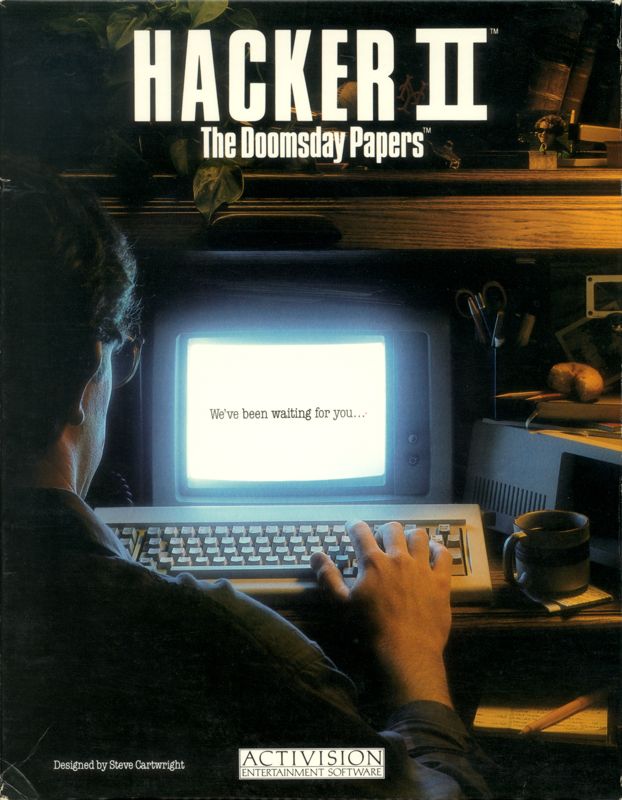
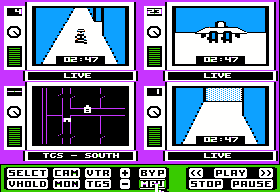
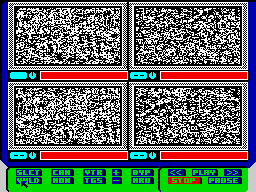
Hacker II: The Doomsday Papers places you at the center of a high-stakes infiltration where multitasking and precision are rewarded. You control a remote drone inside a fortified Russian facility through a split-screen interface that includes security cameras, radar maps, and VCR playback systems. The core loop involves tapping into the security network, swapping live camera feeds for prerecorded loops, and guiding your drone past patrolling guards and active cameras without triggering alarms.
(HEY YOU!! We hope you enjoy! We try not to run ads. So basically, this is a very expensive hobby running this site. Please consider joining us for updates, forums, and more. Network w/ us to make some cash or friends while retro gaming, and you can win some free retro games for posting. Okay, carry on 👍)
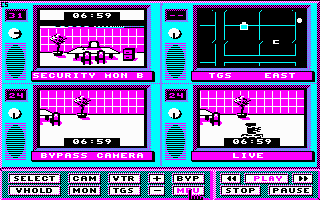
Each level’s complexity ramps up as you juggle four monitors—security monitor, radar overview, VCR output, and a selectable camera feed—while piloting your drone across a 2D blueprint of the compound. You must continuously switch views to chart guard patrol paths and time your recordings so the drones remain undetected. This real-time puzzle requires you to think several moves ahead: a mistimed recording or inattentive guard can force a complete mission restart.
The user interface, though minimalist, is surprisingly intuitive once you get the hang of toggling between screens. Controls rely on quick keyboard shortcuts to switch monitors and adjust the drone’s movement, making dexterity just as important as strategy. The steep learning curve is balanced by a strong sense of accomplishment when you successfully navigate the drone through labyrinthine corridors and reach vault entrances.
What sets Hacker II apart from other strategy titles of its era is its emphasis on stealth through technological subterfuge rather than direct combat. There are no weapons to fire—only your wits and the ability to outsmart an automated security grid. Players who enjoy cerebral challenges and layered puzzles will find this gameplay loop deeply rewarding, even if it occasionally feels punitive when the margin for error is slim.
Graphics
Visually, Hacker II embraces a utilitarian style that mirrors its hacker-versus-corporate espionage theme. The game’s monochrome camera feeds and simple wireframe maps evoke the look of 1980s mainframe terminals. While you won’t find lavish textures or animated cutscenes, the stripped-down presentation effectively immerses you in a world where every pixel on a security monitor matters.
Each camera feed offers just enough detail to distinguish walls, doors, and guards in silhouette form. The radar map strips the facility into geometric shapes with moving dots representing personnel, making planning and real-time adjustments straightforward. The visual design keeps distractions to a minimum, forcing you to focus on timing and coordination rather than flashy effects.
On platforms that support higher resolutions, the crispness of the lines and text clarity make it easier to read monitor labels and timing bars on the VCR recorder. The animation of your drone’s movement is rudimentary but functional, clearly indicating direction changes and ensuring that you always know where your asset is located within the compound.
Sound effects are equally minimalist—beeps, static bursts when cameras switch, and the occasional alarm tone. While there’s no full musical score, the ambient hum of computer hardware and the subtle clicks of your input add atmosphere. The stark audiovisual style reinforces the game’s emphasis on methodical, tension-driven gameplay over sensory spectacle.
Story
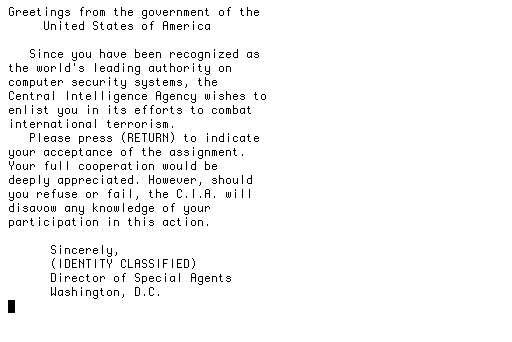
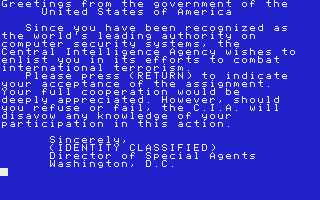
Hacker II picks up where its predecessor left off, dropping you into another covert operation for the government’s clandestine hacking division. You start by breaching the “Actisource” help hotline system—an amusing inside joke—only to be conscripted into a mission that has you routing a drone into a Russian fortress. The narrative premise is succinct and never overstays its welcome, leaving the bulk of the storytelling to environmental hints and mission briefings.
As you progress, snippets of dialogue and textual updates explain why the Doomsday Papers—plans for global domination—are hidden deep within the vaults. The game’s minimalistic narrative shines through in mission debriefs from your handlers, whose terse, businesslike tone heightens the feeling of operating under a shadowy government agency. You never meet characters in person, but their digital voices come through loud and clear.
While Hacker II’s plot isn’t heavy on twists, it effectively sets up each stage as a unique challenge with higher stakes. Discovering the next security upgrade, reading intercepted messages hinting at a mole, or realizing you’ve been given only one chance at a level adds to the tension. The story’s brevity allows gameplay to remain front and center, but the underlying thriller context keeps you invested.
Series fans will appreciate the continuity nods to the original Hacker title, yet newcomers won’t feel lost. The narrative framework is simple: infiltrate, retrieve, and escape. It’s a classic espionage setup that complements the gameplay without bogging it down in exposition, ensuring that every mission feels purposeful.
Overall Experience
Hacker II: The Doomsday Papers delivers a uniquely tense strategy experience built around stealth and electronic subterfuge. Its high-pressure, real-time puzzle design makes each mission feel like a carefully choreographed performance, where one mistimed action can send you back to square one. For players who crave cerebral challenge and cerebral multitasking, this game offers hours of satisfying deep-focus gameplay.
The game’s learning curve can be steep, and early levels may induce frustration as you adjust to monitor-switching and timing your recordings. However, persistence pays off: once you internalize guard patterns and interface controls, you’ll begin to breeze through missions with surgical precision. The minimalistic graphics and sounds, rather than detracting, help maintain focus on the challenge at hand.
If you’re looking for narrative depth or flashy audiovisuals, this title won’t cater to those expectations. But if you appreciate stripped-down, authentic hacking simulations wrapped in a spy thriller, Hacker II is a gem from the late ’80s that still holds up as a strategic brain-teaser. It stands as a testament to how gameplay innovation can trump high-end presentation.
For modern players, the retro aesthetic offers both nostalgia and an intriguing counterpoint to today’s nightclub-lit action titles. Hacker II demands patience, critical thinking, and nimble coordination—qualities that, once mastered, make every successful infiltration feel triumphantly earned. Ultimately, it remains a standout entry in the hacking-strategy subgenre and a must-try for fans of vintage puzzle-based gameplay.

Reviews
There are no reviews yet.