 Retro Replay Retro Replay gaming reviews, news, emulation, geek stuff and more!
Retro Replay Review
Gameplay
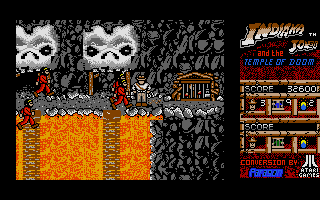
Indiana Jones and the Temple of Doom offers a classic arcade-style gameplay loop that stays true to its source material. Players cycle through three distinct level types—mine exploration, mine cart rides, and temple infiltration—each demanding quick reflexes and strategic thinking. The mine levels task you with using Indy’s whip to swing over chasms, climb ladders, and fend off Thuggee guards, bats, snakes, and the occasional fireball-throwing Mola Ram, all while freeing captive children.
(HEY YOU!! We hope you enjoy! We try not to run ads. So basically, this is a very expensive hobby running this site. Please consider joining us for updates, forums, and more. Network w/ us to make some cash or friends while retro gaming, and you can win some free retro games for posting. Okay, carry on 👍)
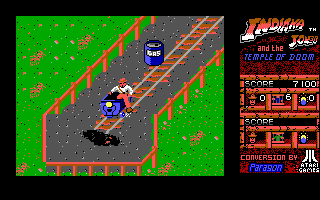
The mine cart sequences inject a fast-paced thrill as you choose the correct track through a branching network of rails. Split-second decisions are essential to avoid broken tracks, looming potholes, and rival carts piloted by Thuggee henchmen. This section of the game can feel like a high-stakes puzzle, where memorization and trial-and-error are both rewarded and punished.
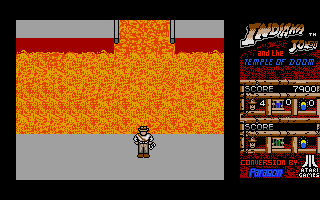
Finally, the temple levels bring the hunt for Sankara stones to life. You navigate a perilous environment filled with lava pits, hostile Thuggees, and swarms of bats, all leading up to a climactic rope bridge confrontation with Mola Ram. While the temple layout remains consistent, the mounting difficulty across cycles keeps the adrenaline pumping. After several rounds of these stages, the ultimate showdown on the rope bridge provides a fitting, nail-biting finale to each run.
As you progress through each cycle, the mine and mine cart levels become increasingly complex, introducing more enemies, tighter platforming sequences, and faster-paced hazards. Though the temple levels lack variety in layout, the repeated challenges and relentless enemy waves still manage to maintain tension. Controls are responsive enough for most players, though precise timing on jumps and whip attacks can sometimes feel unforgiving by modern standards.
Graphics
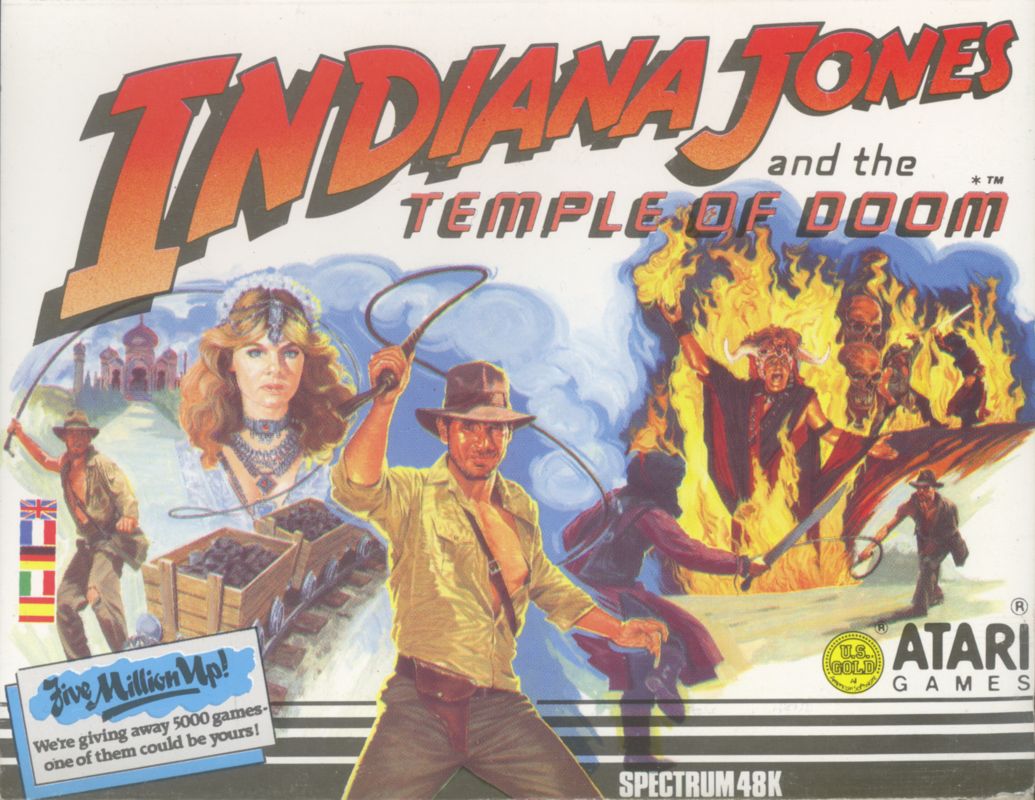
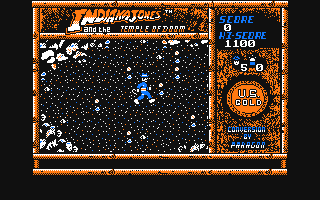
The Atari-to-computer conversion of Indiana Jones and the Temple of Doom preserves the vibrant color palette and characterful sprite work of the original arcade title. Indy himself is rendered with surprisingly expressive animations, from the flail of his whip to the leap of joy when a freed child scampers off-screen. Backgrounds in the mine and temple areas are detailed with dripping cave walls, flickering torches, and ominous carvings that capture the Indiana Jones aesthetic.
Despite the hardware limitations of early home computers, environmental hazards like flowing lava and bouncing fireballs are animated smoothly enough to convey real danger. The mine cart levels feature parallax scrolling that enhances the sensation of speed, though occasional flicker and slowdown can occur when multiple enemies or effects appear on screen simultaneously. Still, these minor performance hitches are part of the retro charm.
Enemy sprites—ranging from Thuggee guards in red robes to scuttling snakes and swooping bats—are distinct and instantly recognizable. The showdown with Mola Ram on the rope bridge showcases well-crafted boss art, complete with dramatic fireball attacks and a menacing stance. Overall, the graphics may feel dated by today’s standards, but they effectively evoke the spirit of the film and deliver clear visual feedback during intense moments.
For fans of pixel art and classic arcade visuals, the game stands as a nostalgic treat. The limited color palettes and sprite resolutions are part of its enduring appeal, reminding players of a time when gameplay ingenuity outweighed graphical polish. Modern re-releases or emulations can smooth out some rough edges, but nothing beats the authenticity of the original presentation.
Story
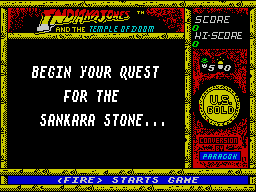
Indiana Jones and the Temple of Doom loosely adapts the plot of the film, framing each level as a mission to rescue enslaved children and recover sacred Sankara stones from the clutches of the Thuggee cult. While the game does not feature extensive cutscenes or dialogue, it relies on level design, enemy types, and occasional on-screen text to convey the narrative beats.
Each mine level reinforces Indy’s role as a heroic liberator, swinging in to free innocent captives before they’re lost forever. The mine cart segments feel like an escape from certain doom, recapturing one of the movie’s most thrilling sequences. In the temple stages, you can sense the cult’s dark rituals and oppressive atmosphere through dripping lava pools, ominous chanting sound effects, and ancient iconography.
The climax on the rope bridge offers a dramatic showdown with Mola Ram, the film’s primary antagonist. Though the boss’s AI is relatively simple—dodging fireballs and attacking in predictable patterns—the mere act of balancing on a narrow rope bridge while fending off a cult leader encapsulates the high-stakes drama of the movie. The final victory shot, complete with a triumphant snatch of the Sankara stone, provides a satisfying conclusion to each playthrough.
While the storyline is rudimentary compared to narrative-driven adventures, it successfully channels the essence of Indiana Jones. The game’s minimalistic approach allows the gameplay to shine, and players already familiar with the film will appreciate the faithful nods to iconic scenes. For newcomers, the stakes are clearly defined, and the cyclical level structure gives a palpable sense of progression and urgency.
Overall Experience
Indiana Jones and the Temple of Doom offers a compelling blend of platforming, action, and pulse-pounding chase sequences that keep players engaged across multiple runs. Its straightforward level design, coupled with steadily ramping difficulty, strikes a balance between accessibility and challenge. Though modern gamers may find certain segments punishingly precise, veterans of retro action titles will relish the sense of accomplishment that comes with mastering each cycle.
The graphics and sound design, while dated, are infused with character and nostalgia. Flickering torches and echoing temple drips may be simple by today’s standards, but they build an immersive environment that supports the action. The game’s soundtrack and sound effects, though limited by the hardware of its era, succeed in heightening tension—especially during the mine cart escapes and climactic rope bridge battle.
Storytelling is minimal but effective, leaning on players’ familiarity with the Indiana Jones mythos. The game excels at translating the film’s most memorable moments into interactive form, whether it’s swinging across chasms, racing through underground tracks, or seizing the Sankara stone from beneath a dark shrine. Repeated cycles add replay value, challenging players to outdo their previous runs and uncover the most efficient paths through each level.
Overall, Temple of Doom stands as a standout example of early film-to-game adaptations. Its blend of tight controls, varied level types, and escalating tension makes it a must-play for fans of retro arcade action and Indiana Jones aficionados alike. While it may feel unforgiving by modern design standards, its relentless pace and authentic atmosphere continue to captivate, making every successful rescue and final showdown all the more rewarding.


Reviews
There are no reviews yet.