 Retro Replay Retro Gaming History, Reviews & Emulation
Retro Replay Review
Gameplay
Pollymorph earns your attention quickly because its goal is so clean. You guide one small ball around a game area and use it to push other balls into their same-coloured partners. A successful match removes both, and clearing every ball completes the board. There is no need to decode a complicated ruleset before the puzzle can begin; you can start thinking about your first useful push immediately.
The catch is that matching a colour is only the final step. Positioning is the real game. Every push changes the routes available to the remaining balls, so it pays to pause before you act and consider which pairs need open space around them. A move that looks productive can create an awkward obstruction, while a less obvious push can free the board for several later matches. That tension gives the simple premise genuine bite.
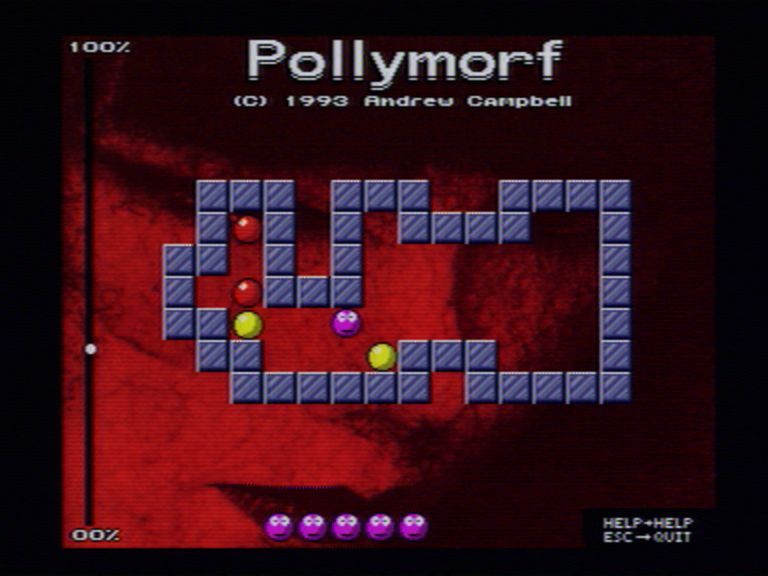
Difficulty rises through additional balls and more complex play areas, which is the right way to make this format tougher. Instead of replacing the central idea, Pollymorph asks you to manage more possibilities at once. The friction comes from the same source as the satisfaction: when you misjudge the order of operations, you are left looking at a board you made harder yourself. If you enjoy puzzles that reward deliberate setup over fast reactions, that is a feature rather than a flaw.
Graphics
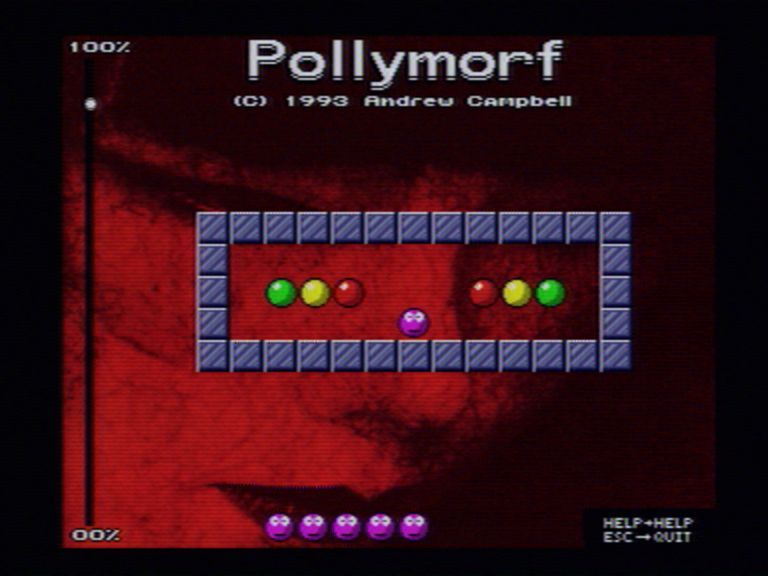
The view is top-down and focused on the puzzle area, putting the coloured balls and their positions at the center of every decision. That simple layout suits a game built around judging space, routes, and which pieces can still be brought together.
Story
Pollymorph is a pure abstract puzzle game, built around clearing each game area rather than a narrative premise. Its sense of progress comes from moving on to denser, more complicated boards.
That absence of story works in its favour here. You are not being interrupted between puzzles or asked to invest in a setting; the board itself is the challenge and the reward is seeing it emptied.
Anyone wanting characters, plot turns, or a larger adventure will find little to hold onto. The game instead asks whether the next arrangement of coloured balls is interesting enough to solve, and its answer rests entirely on the puzzle design.
Overall Experience
Pollymorph is modest but purposeful: a colour-matching game where the action of making a match is inseparable from the puzzle of arranging one. The first few boards offer an inviting route in, then the growing number of balls makes planning ahead essential. It is an easy game to understand and a tougher one to play carelessly.
The strongest moments come when a board that initially looks cluttered begins to open up. You find the right sequence, create room for a blocked pair, and the last few matches suddenly feel inevitable. Conversely, its most frustrating moments arrive when an earlier push has boxed you into an unhelpful arrangement. Your enjoyment will depend heavily on whether that kind of spatial problem-solving feels motivating or merely punishing.
Give it a chance if you like focused, board-clearing puzzles and prefer working through a layout at your own pace to chasing arcade pressure. It does not need a complicated premise to be engaging; its value is in how much thought it can draw from the straightforward task of pushing like colours together.



Reviews
There are no reviews yet.