 Retro Replay Retro Replay gaming reviews, news, emulation, geek stuff and more!


Retro Replay Review
Gameplay
The Colonel’s Bequest offers a deliberate, slow-burn approach to mystery-solving that sets it apart from more action-oriented adventures. Rather than relying on an inventory of myriad items or complex puzzles, the core of the gameplay revolves around exploration and conversation. You guide Laura Bow through the sprawling mansion and its grounds by typing simple verb-object commands—“Look Garden,” “Talk Colonel,” “Open Door”—or by using convenient keyboard shortcuts. Every action you take advances the in-game clock by fifteen minutes, creating a real sense of time pressure as you piece together clues before night falls or another tragedy strikes.
(HEY YOU!! We hope you enjoy! We try not to run ads. So basically, this is a very expensive hobby running this site. Please consider joining us for updates, forums, and more. Network w/ us to make some cash or friends while retro gaming, and you can win some free retro games for posting. Okay, carry on 👍)
Where many Sierra titles lean heavily on inventory manipulation, Colonel’s Bequest emphasizes subtle observation and deduction. Each of the thirteen characters has a personal schedule that unfolds over the weekend, and witnessing their comings and goings often reveals critical hints. You might spot someone sneaking into the wine cellar late at night or overhear a whispered quarrel in the orangery—details that propel your investigation. This living-world mechanic encourages multiple playthroughs, since you can’t be everywhere at once and may easily miss key events.
Puzzles in Colonel’s Bequest are understated but meaningful. Instead of a dozen interchangeable keys lying around, you’ll find yourself unlocking new insights by piecing together information from dialogue or discovering secret passages behind bookcases. While it is possible to finish the game without identifying the true culprit—an odd quirk that rewards curiosity over completion—Sierra’s lack of a traditional scoring system is offset by a detective ranking at the end. This final evaluation tells you which narrative branches you missed, offering strong replay value for players eager to explore every twist.
One potential hurdle for modern audiences is the text-parser interface, which can occasionally misinterpret commands if you don’t phrase them exactly as expected. Yet this limitation also reinforces the era’s immersive qualities; you feel like a real detective, carefully choosing your questions and observations. If you relish methodical, character-driven mysteries rather than bombastic puzzles, Colonel’s Bequest provides a vintage gameplay experience that few contemporary titles attempt to emulate.
Graphics
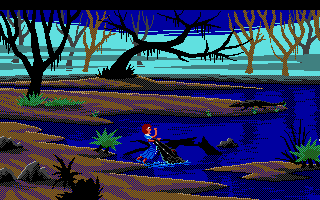
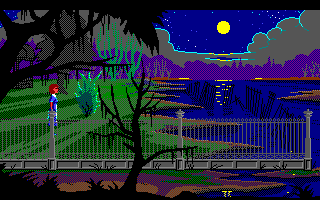
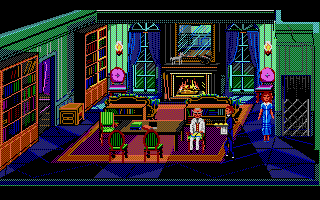
Visually, The Colonel’s Bequest is a product of late-80s Sierra craftsmanship, boasting rich EGA or VGA color palettes depending on your setup. The mansion’s opulent dining hall, dimly lit hallways, and lush tropical foliage are rendered in pixel art that captures the fading grandeur of Colonel Dijon’s estate. Though the resolution may seem quaint by today’s standards, the backgrounds are impressively detailed, from peeling wallpaper to shafts of moonlight on the veranda.
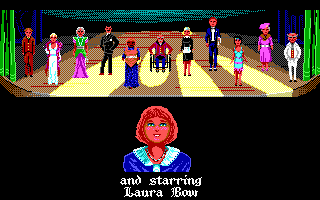
Character portraits appear in dialogue windows, giving each guest a distinct silhouette, expression, and wardrobe befitting the Jazz Age. Animations are sparse but effective—Laura’s walking cycle, a flickering lantern, or a sudden splash of blood in a crucial scene all create atmospheric tension. The absence of flashy effects actually works in the game’s favor, reinforcing the restrained, claustrophobic mood of a family reunion gone horribly wrong.
Sound design complements the visuals with terse MIDI tunes and intermittent sound effects: the creak of floorboards, the distant toll of a bell, a gunshot echoing through the corridors. While some modern players may find the audio minimalistic, it serves to heighten the suspense. Sierra’s engine never competes with the story for your attention; instead, each graphic and sound cue draws you deeper into the mystery.
In today’s era of high-definition textures, Colonel’s Bequest stands as a reminder that strong art direction and thoughtful design can outweigh technical polish. If you appreciate pixel-perfect environments with character, you’ll find the game’s graphics timelessly charming, more like illustrated storybook pages than crude relics of a bygone age.
Story
Set in 1925, The Colonel’s Bequest immerses you in a classic whodunit scenario worthy of Agatha Christie herself. Laura Bow arrives at Colonel Henri Dijon’s decaying sugar plantation for a weekend gathering of eccentric relatives and long-estranged friends. Under the guise of visiting family, each guest carries hidden motives—jealousy over inheritance, old vendettas rooted in colonial exploits, or secret romances that could scandalize polite society.
From the moment Laura steps onto the veranda, she’s thrust into an intricate web of lies and half-truths. The narrative unfolds not in rigid chapters but through a dynamic clock system: conversations about rumors, overheard arguments, and chance discoveries gradually reveal the Colonel’s darkest secrets. As the body count rises, your role shifts from a curious observer to a determined sleuth, racing against time to prevent further tragedy.
What truly distinguishes Colonel’s Bequest is its emphasis on character interaction over puzzle-driven plot twists. Each dialogue choice can open—or close—avenues of inquiry, and the game doesn’t hold your hand. You might accuse the wrong person and disrupt their alibi, or miss a hushed confession in the library. These branching possibilities make the story feel alive, as though you’re the protagonist in a radio play where every moment counts.
Ultimately, the game encourages multiple runs to witness every hidden conversation and secret passage. Even after you unmask the murderer, a final summary outlines clues you overlooked, rewarding your detective instincts and inviting you back to explore alternate storylines. It’s a narrative structure that feels remarkably modern, despite being over three decades old.
Overall Experience
The Colonel’s Bequest stands out as a unique blend of interactive fiction and graphic adventure, offering an experience that is equal parts theater and detective novel. The game’s slow pacing and thoughtful design may feel unconventional compared to today’s fast-paced thrillers, but for players who savor atmosphere and character depth, it delivers an unparalleled sense of immersion. There’s genuine satisfaction in piecing together scattered clues, staking out a suspect’s room, or racing to the chapel before midnight strikes.
Accessibility may pose a challenge—some commands require precise wording, and the lack of modern conveniences like autosave or hint systems means you’ll need patience and note-taking. However, overcoming these hurdles only deepens your engagement with Laura’s investigation, fostering a personal connection as you unravel each layer of the Colonel’s past.
Replayability is a core strength. Because you can’t see everything on one playthrough, each subsequent visit to the island reveals new motives, hidden corridors and shocking revelations. Whether you’re a veteran of Sierra’s Golden Age or a newcomer curious about adventure gaming history, Colonel’s Bequest feels like discovering a lost classic—a storybook mystery reinvented for interactive media.
In an era dominated by high-budget productions, The Colonel’s Bequest remains a testament to the power of narrative ingenuity and player agency. It may not dazzle with modern visuals or fast action, but its depth of character, subtle time mechanics, and richly woven story create a lasting impression that keeps you investigating long after the credits roll.


Reviews
There are no reviews yet.