 Retro Replay Retro Replay gaming reviews, news, emulation, geek stuff and more!
Retro Replay Review
Gameplay
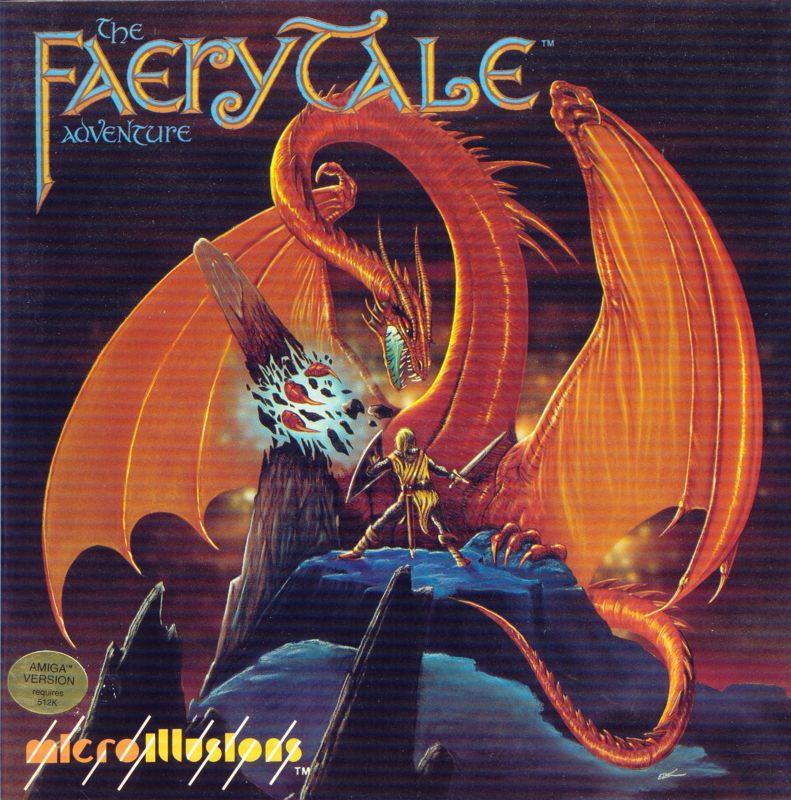
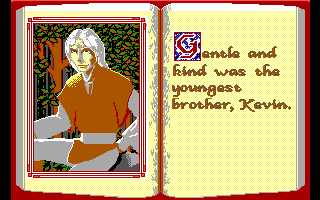
The Faery Tale Adventure offers an expansive open-world experience that was groundbreaking at the time of its release and still holds up for players who appreciate old-school exploration. You begin by choosing one of three brothers—Julian, Philip, or Kevin—each with distinct traits that influence your playstyle. Julian excels in melee combat, Philip boasts high luck and intelligence for magic and critical hits, while Kevin’s kindness grants him social advantages among NPCs. If one brother perishes permanently after exhausting his “revivals,” you simply continue with the next, creating a layered narrative tension that few RPGs of its era attempted.
(HEY YOU!! We hope you enjoy! We try not to run ads. So basically, this is a very expensive hobby running this site. Please consider joining us for updates, forums, and more. Network w/ us to make some cash or friends while retro gaming, and you can win some free retro games for posting. Okay, carry on 👍)
As you traverse approximately 17,000 interconnected screens of terrain, the bulk of your time will be spent exploring villages, forests, caves, and even underwater passages. The world is seamless—there are no loading screens separating biomes—so you might unexpectedly wander from a sunlit meadow into a shadowy crypt. This design choice fosters genuine immersion, though it also can make mapping your progress a challenge. NPC interactions and optional side quests punctuate the journey, lending purpose to your exploration beyond mere treasure hunting.
Combat in The Faery Tale Adventure is deceptively simple, leaning heavily on real-time strikes and timing rather than complex menus. You press a key or mouse button to swing your weapon or cast spells while maneuvering around enemies. Bravery points, akin to a combined experience and strength metric, accumulate with each victory, slowly boosting your maximum hit points. While straightforward, this system rewards patience and careful positioning, as reckless charging can lead to quick defeat—especially at night when more dangerous foes emerge.
Graphics
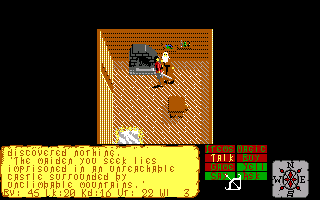
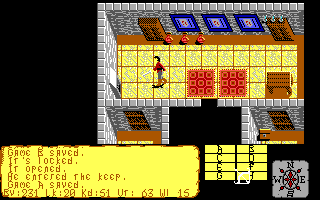
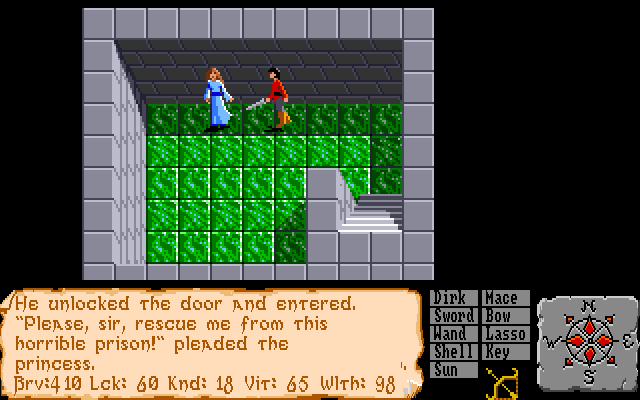
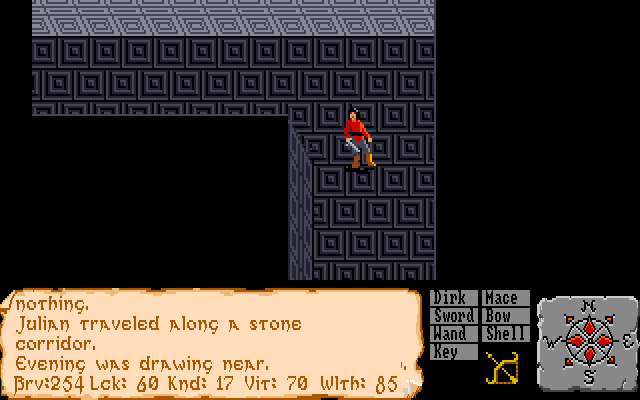
Visually, The Faery Tale Adventure is a time capsule of late-80s graphics design. On platforms like the Amiga and early PCs, the game boasted colorful, hand-drawn sprites and richly detailed backdrops for its era. The world’s vast scale is communicated through simple but evocative tiles—rolling hills, dense forests, and ancient ruins each have a distinct palette. Despite the low resolution by today’s standards, the environments convey a fairytale atmosphere that draws you in.
Sprite animations are modest but effective: sword swings, spell effects, and NPC gestures all flicker to life with a charming roughness. The day-night cycle is particularly noteworthy, as the lighting subtly shifts from bright daylight to dusky evenings, and then to moonlit nights. This dynamic adds realism and urgency to your travels—villages close their gates after dark, and tougher enemies prowl the roads, encouraging you to plan your activities around sleep and mealtimes.
Caveats include limited color depth and occasional sprite flicker on crowded screens, especially during intense battles. However, these technical imperfections are part of the game’s nostalgic charm. For modern players, running the game in an emulator or with an updated re-release can smooth some rough edges while preserving the original aesthetic. Overall, the graphics serve the game’s scale and mood admirably, even if they can’t compete with today’s standards.
Story
The narrative premise is straightforward yet compelling: the land of Holm was guarded by a powerful talisman until it was stolen by an evil Necromancer. Your three hero-brothers are sent to recover it after their father’s dying breath reveals the talisman’s fate. This classic “quest for the stolen MacGuffin” framework sets the stage for exploration but leaves much of the storytelling to environmental encounters and optional dialogues.
Throughout your journey, you’ll meet a variety of NPCs—villagers, merchants, and mystical beings—each offering bits of lore or side objectives that flesh out Holm’s history. While there’s no fully voiced or heavily scripted storyline, the game excels at world-building through text descriptions and contextual details. Rumors of hidden caves, legendary guardians, and mystical artifacts motivate side treks that feel rewarding to uncover.
Some players may find the plot minimalistic compared to modern narrative-driven RPGs, but the sense of discovery compensates for a lack of cinematic cutscenes. The shifting personalities of the three brothers—Julian’s courage, Philip’s wit, Kevin’s compassion—add small but meaningful variations to conversations and quest outcomes. In essence, the story emerges organically from your exploration, with the main quest serving as a spine to an otherwise freeform experience.
Overall Experience
The Faery Tale Adventure: Book I remains a must-play for fans of retro RPGs and vast open worlds. Its blend of seamless exploration, simple yet engaging combat, and a lightly woven narrative creates a unique experience that many modern titles struggle to match in spirit. Although the mechanics and graphics are dated, the sense of scale and the freedom to chart your own path are timeless qualities.
For newcomers, be prepared for a learning curve: inventory management can feel clunky, mapping is manual, and death can be permanent if you lose all three brothers. Yet overcoming these challenges yields a rewarding sense of accomplishment. The day-night cycle and survival elements—eating, sleeping—add layers of strategy and immersion. If you enjoy roaming large worlds at your own pace, hunting for secret items, and tackling quests in any order, this game will captivate you.
In the context of gaming history, The Faery Tale Adventure stands out as one of the earliest titles to offer a truly massive, interconnected world. Its influence can be traced through countless RPGs that followed. Whether you’re revisiting it for nostalgia or discovering it for the first time, the journey through Holm is a memorable adventure that exemplifies the charm and ambition of early role-playing games.

Reviews
There are no reviews yet.