 Retro Replay Retro Replay gaming reviews, news, emulation, geek stuff and more!


Retro Replay Review
Gameplay
Where in Time Is Carmen Sandiego? builds its gameplay around investigation and deduction, turning each case into a puzzle that spans continents and centuries. Players begin by selecting a warrant for a specific villain, often an accomplice of Carmen herself, and are provided with the approximate era and location where the suspect was last seen. From there, you navigate a world map interface, choosing destinations to gather clues that narrow down both “where” and “when” the culprit will strike next.
(HEY YOU!! We hope you enjoy! We try not to run ads. So basically, this is a very expensive hobby running this site. Please consider joining us for updates, forums, and more. Network w/ us to make some cash or friends while retro gaming, and you can win some free retro games for posting. Okay, carry on 👍)
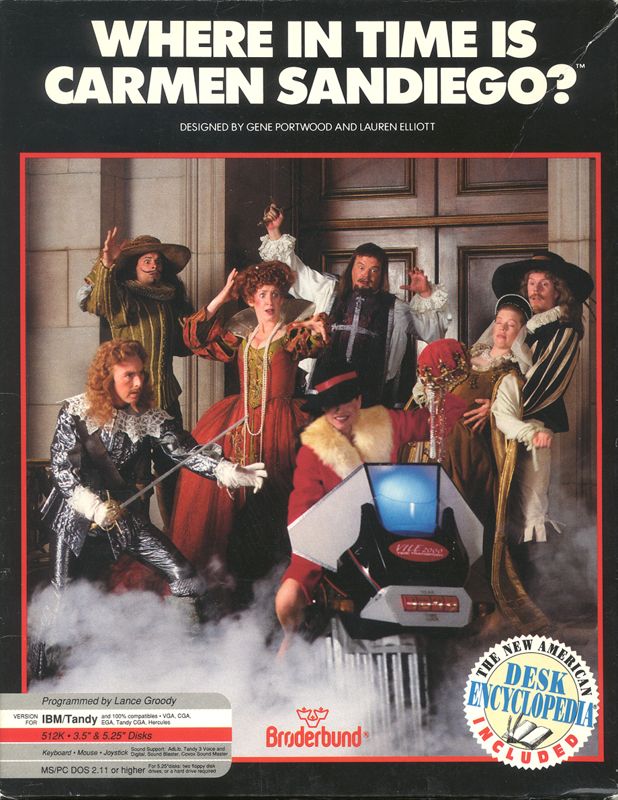
The core mechanic revolves around interviewing witnesses, examining artifacts, and decoding contextual hints. To make each clue meaningful—and to prevent software piracy—the game comes packaged with The New American Desk Encyclopedia. When a witness mentions “the Renaissance” or “the Gold Rush,” you’re expected to reference the encyclopedia, connecting historical facts to the in-game hints. This blend of in-game detective work and real-world research elevates the challenge, ensuring that players learn while they hunt.
Cases vary in complexity and length, with early missions serving as tutorials and later files demanding sharper reasoning and faster responses. Time pressure adds a layer of excitement: if you dawdle, the villain slips away to another era and locale. Successfully issuing an arrest warrant and arriving at the correct spatiotemporal coordinates before your suspect’s getaway yields a satisfying reward screen—complete with biographical notes on the villain and the historical context you’ve just explored.
Graphics
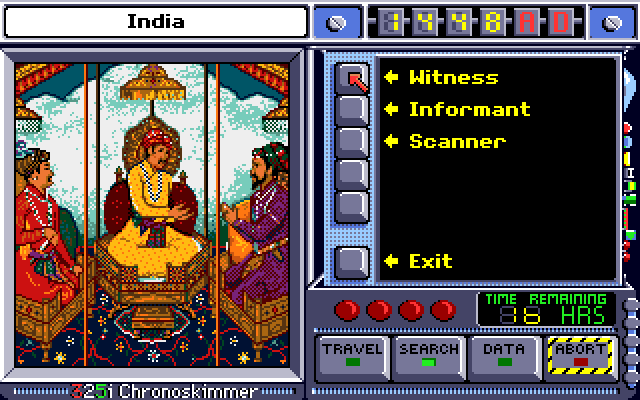
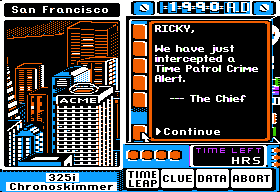
Graphically, Where in Time Is Carmen Sandiego? adheres to the late 1980s/early 1990s educational game aesthetic. The art is rendered in clean, colorful pixel graphics that capture the spirit of each historical setting, whether it’s ancient Egypt, Victorian London, or the Roaring Twenties. Character sprites—witnesses, suspects, and citizens—are small but expressive, while background scenes use palette shifts to convey different periods convincingly.
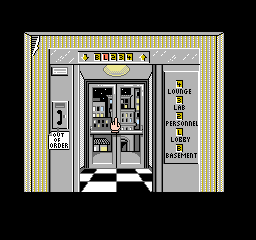
The world map is a simplified globe projection, marked with ports of entry to different eras rather than modern-day locations. This stylized approach keeps the focus on gameplay clarity over geographical precision. Iconography—such as hourglasses, passports, and period-specific items—fills the UI, offering visual cues that tie directly into your investigation. Animations are minimal but purposeful: a suspect hustles away when you’re too slow, giving immediate feedback on your progress.
While modern gamers might find the visuals rudimentary, there’s an undeniable charm in the game’s retro presentation. The interface is intuitive, with menus that clearly display your current time period, outstanding clues, and days remaining. Sound effects and brief musical stingers accompany key actions, reinforcing the sense of urgency without overwhelming the screen with flashy animations.
Story
The narrative framework is straightforward but effective: Carmen Sandiego, the elusive criminal mastermind, has recruited a new wave of thieves who are plundering important artifacts throughout history. As an agent of ACME’s Time Patrol, your mission is to track down these operatives before history itself is rewritten. This premise permits a rich tapestry of mini-stories, each tied to a different epoch and cultural milestone.
Each case unfolds like a short historical vignette. You might follow a trail from ancient Rome’s Senate to the courts of Charlemagne, or from the Boston Tea Party to the Californian goldfields. Along the way, you encounter historical figures—some famous, some obscure—who provide snippets of dialogue or cryptic clues. The game encourages genuine curiosity: discover a tip about Cleopatra and you’ll learn about her reign; chase a bootlegger in 1920s Chicago and you’ll pick up context on Prohibition.
Although the overarching goal remains consistent—capture the crook and return them to the present—the variety of settings keeps the storytelling fresh. Each arrest includes a brief epilogue that details the criminal’s misdeeds and the real-world impact of the event you’ve preserved. This structure not only motivates players to solve the mystery but also to reflect on the significance of historical events.
Overall Experience
Where in Time Is Carmen Sandiego? offers a unique blend of education and entertainment. Its strength lies in making history interactive: you’re not merely reading from a textbook, you’re a detective piecing together evidence, racing against the clock to protect the timeline. For families, classrooms, or solo learners, this replayable format transforms passive study into active problem-solving.
The requirement to consult The New American Desk Encyclopedia is both a clever anti-piracy measure and an authentic learning tool. Players develop research skills as they flip through real encyclopedia entries, reinforcing memory through hands-on engagement. While some may lament the reliance on an external book, most find that it deepens immersion and encourages further exploration into topics sparked by in-game clues.
Ultimately, Where in Time Is Carmen Sandiego? remains a standout in the genre of edutainment. Its balance of challenge, whimsy, and historical richness continues to resonate with players who appreciate thoughtful puzzles and a dash of nostalgia. If you’re seeking a game that educates as effectively as it entertains, don your detective hat and join the chase—Carmen’s waiting in your favorite era.


Reviews
There are no reviews yet.