 Retro Replay Retro Gaming History, Reviews & Emulation
Retro Replay Review
Gameplay
The opening naval section is Assault on Port Stanley at its most immediately engaging. You sit behind a warship cannon in first person, firing at enemy ships as they appear and trying not to absorb return fire. The key decision is not simply whether you can hit targets; it is when to leave. You can launch the helicopter at any time, but doing so too soon strands you before the island. Staying aboard longer also means facing more danger, so the first stage gives you a genuine risk-versus-reward call rather than a routine shooting gallery.
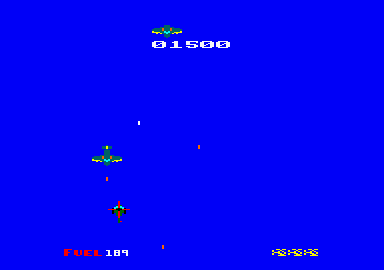
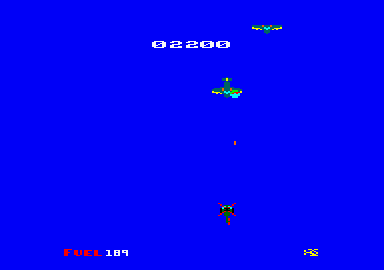
That decision has a welcome consequence in the helicopter shoot-’em-up stage. Destroy more ships at sea and you will face more waves of enemy planes. It is a simple connective idea, yet it makes the stages feel less like unrelated arcade tests. If you want a cleaner route to shore, restraint on the warship pays off; if you have confidence in the air, pushing for more naval kills can turn the middle section into a tougher scoring run.
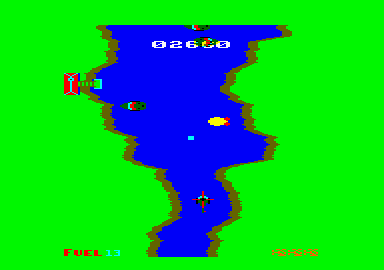
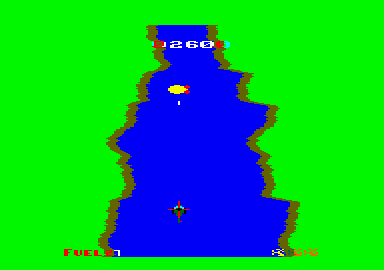
The final channel flight is the strongest fit for the game’s rescue premise. You must avoid cliffs, boats, and barrages while looking for bank-side stations where you can land, collect men from the sabotage mission, and refuel. Fuel turns every detour into a calculation, and the bonus for rescued men gives you reason to take risks beyond merely reaching the end. The controls and goals are direct, but the chain of shooting, fuel management, and landings asks for more attention than its arcade framing initially suggests.
Graphics
The game shifts camera views with its changing tasks: the warship cannon is seen from first person, while the helicopter sections use a top-down view. In the final stage, the channel, cliffs, enemy boats, barrages, and landing stations put the hazards plainly around your flight path, which suits the quick reactions the run demands.
Story
The Falklands War setting gives the mission a clear destination: you are an S.A.S. commander attempting to liberate Port Stanley from Argentinian occupants. Rather than pausing for a broad campaign narrative, the game tells its purpose through the route itself—break the blockade, collect troops who have been on a sabotage operation behind enemy lines, and get them through to the objective.
That is a lean setup, but it works because the rescued men are not just a line of mission text. They are the people you have to land for and pick up during the final helicopter section, and they directly affect your bonus points. The story and the score chase meet in a practical way: a successful run should bring people home, not merely carry your helicopter to the finish.
The historical framing also makes the escalating journey feel purposeful. Naval combat leads into the air, then into a constrained approach along the channel, so you are always moving closer to Port Stanley rather than repeating the same battle in a new backdrop. If you are interested in another assault-titled release, Assault on Planet Equidon is worth a look as a related published game.
Overall Experience
Assault on Port Stanley earns its interest from how briskly it changes the problem in front of you. The first hour is likely to be spent learning the costly temptation of one more ship kill, then realizing that surviving the naval section is only the start. Each transition refreshes the action without abandoning the central pressure of limited safety and incoming fire.
Frustration will come from the demands the game layers onto its final stretch. You need to thread between cliffs and hostile defenses, find places to land, manage fuel, and avoid leaving would-be rescuees behind. That can make a strong run disappear quickly, but the structure at least makes failure legible: timing, route choices, and the number of risks you accepted all matter.
Give it a chance if you enjoy old-school action games that tie several short arcade disciplines into one mission. It is not a deep simulation of the conflict; it is a focused, score-driven assault where smart caution in one stage can change the next. The payoff is the satisfaction of completing a dangerous route with fuel, helicopter, and rescued troops all accounted for.



Reviews
There are no reviews yet.