Retro Replay Retro Gaming History, Reviews & Emulation
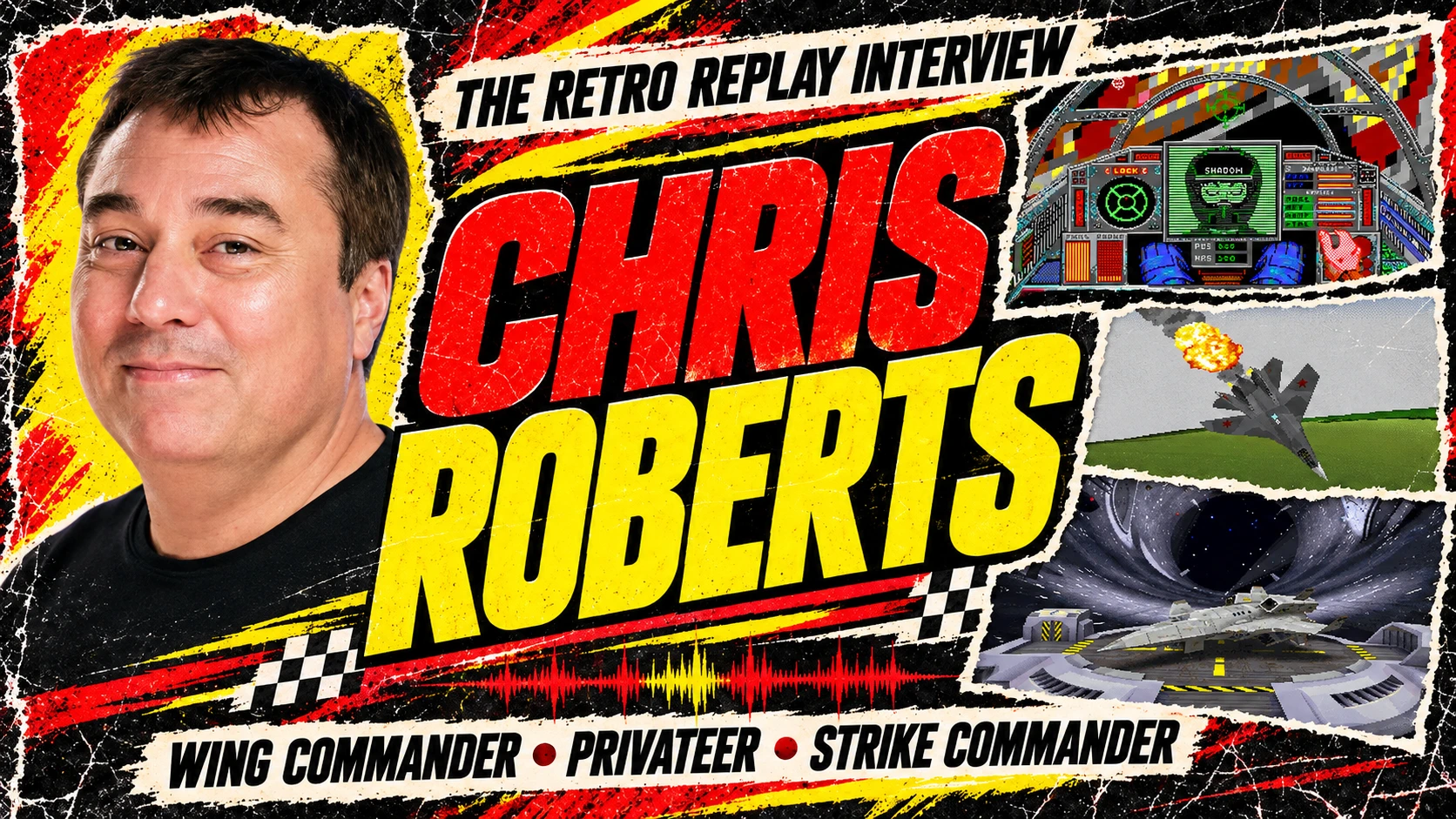
You could survive a mission in Wing Commander and come back to a war that was going badly. The briefing room, the conversations aboard the Tiger’s Claw, and the next scramble into space belonged to the same struggle. Chris Roberts wanted the shooting to have consequences, with pilots who felt like people you had fought beside.
That interest in making pictures move began well before Origin. Roberts recalls teaching himself to program at eleven, experimenting with his father’s Apple II, and getting paid for a game at thirteen. He went on to push BBC Micro and Commodore 64 hardware before Wing Commander gave him a much larger canvas on the PC. He remembers the crowds around its CES 1990 demonstration as the first sign that the team had something special.
His work at Origin took several forms. Wing Commander II leaned harder into the characters, while Wing Commander III brought live actors into the cockpit drama. Privateer offered another fantasy: pick your work, travel, trade, and find your own way through the universe. Strike Commander put its ambitions into jet combat, and it is the game Roberts singles out here as deserving another look.
Roberts’s career has also taken him into filmmaking and, with Cloud Imperium Games, back to large-scale space simulation. In this written interview, he discusses the original games, Origin’s development culture, and the connection he sees between those early ambitions and Star Citizen and Squadron 42. His follow-up answers were relayed by Sandi Roberts, who coordinated the conversation.
For the wider story behind the games, read The History of Wing Commander: Making the PC Feel Like a Movie, from the Tiger’s Claw and its branching campaign to Privateer, live actors, and the anniversary restorations.

Making pictures move
Retro Replay: Going all the way back to the beginning, what first made you interested in creating computer games, and when did you realize this was something you wanted to pursue seriously?
Chris Roberts: I was an artist and was fascinated by animating things, playing arcade games so I taught myself how to program at the age of 11. I was paid for my first game at 13 and just kept going. I would play around with my fathers Apple 2 computer at his university dept.
Wing Commander and the movie in the player’s head
Retro Replay: Wing Commander arrived at a time when PC games were still often seen as less visually impressive than their console and arcade counterparts. How important was it to you to prove that a PC game could deliver something that felt cinematic?
Chris Roberts: I was playing games and watching films and I wanted to create the feeling I got from seeing films in games. At the time there was a new graphics mode called VGA for PCs which I decided I would utilize to make the best looking game I could.
Retro Replay: When you first envisioned Wing Commander, what came first: the space combat itself, the characters and story, or the idea of combining them into one larger experience?
Chris Roberts: The combination but originally I always wanted to create a game that made me feel like I was in a movie like in Star Wars.
Retro Replay: Early 1990s PCs had enormous limitations compared with what developers have available today. What were some of the biggest technical obstacles the original Wing Commander team had to overcome?
Chris Roberts: Memory was a big one. Processing power. Hardware acceleration for 3D was non-existent. And the knowledge and techniques of 3D was confined.
Retro Replay: You also mentioned memory being one of the biggest technical limitations on the original Wing Commander. Do you remember a specific feature, animation, character moment, visual effect, or other idea that you really wanted but had to cut simply because you could not fit it into memory?
Chris Roberts: Seeing your hand moving on the joystick was only if you had extra memory.
A war that could continue after defeat
Retro Replay: Wing Commander’s branching campaign was unusual because failure did not necessarily mean simply reloading a save. Why was it important to allow the story and war to continue even when the player lost missions?
Chris Roberts: I wanted the gameplay to have a cause and effect on story which applied to both succeeding and failing in your missions.
Retro Replay: The conversations aboard the Tiger’s Claw helped make the pilots feel like actual characters rather than just names attached to spacecraft. How much emphasis did you personally place on building that sense of a living crew?
Chris Roberts: The living crew was a key component and a core principle of WC to simulate the feeling of fighting alongside other real people/characters.
Retro Replay: Were there features or ideas you originally wanted in Wing Commander that the technology simply could not handle at the time?
Chris Roberts: Well that’s Squadron 42 🙂 – seamlessly fluid, putting you in the story.
The Secret Missions and a sequel
Retro Replay: When Wing Commander became successful, did you immediately realize you had created a franchise, or did the scale of its popularity surprise you?
Chris Roberts: It surprised me. I did not realize I had created a franchise. We had created more content than we could have used on WC 1 so we did the first example of extra game content / expansion in the industry at the time with secret missions and then we started to work on WC II as people really wanted more.
Retro Replay: You mentioned that the original Wing Commander team had created more material than could fit into the first game, which eventually helped lead to The Secret Missions. Even after The Secret Missions, was there anything left on the cutting-room floor that you still remember wishing players could have seen?
Chris Roberts: We shipped it all, nothing on the cutting room floor.
Retro Replay: Wing Commander II pushed the storytelling and presentation considerably further. What lessons from the first game most influenced the sequel?
Chris Roberts: The idea worked but in the first game we didn’t lean in as much as into the story and the effect of characters. So WC II had a more dramatic story.

Live actors and the move into FMV
Retro Replay: Wing Commander III was a huge leap with full-motion video and actors such as Mark Hamill, Malcolm McDowell, John Rhys-Davies and Tom Wilson. Did that project feel more like making a game, making a movie, or something completely new that fell somewhere between the two?
Chris Roberts: WC III used the newest tech at the time to create a more sophisticated story. I was able to push the storytelling even further.
Retro Replay: Looking back at the FMV era today, what do you think developers got right about combining film and games, and what do you think the industry still had to learn?
Chris Roberts: Back when we first did FMV it was quite passive but today what we’ve done in Squadron 42 it’s more immersive as I’ve been able to capture all the performers inside the game world. The technology has allowed this seamlessness so it needed to catch up from then until now.
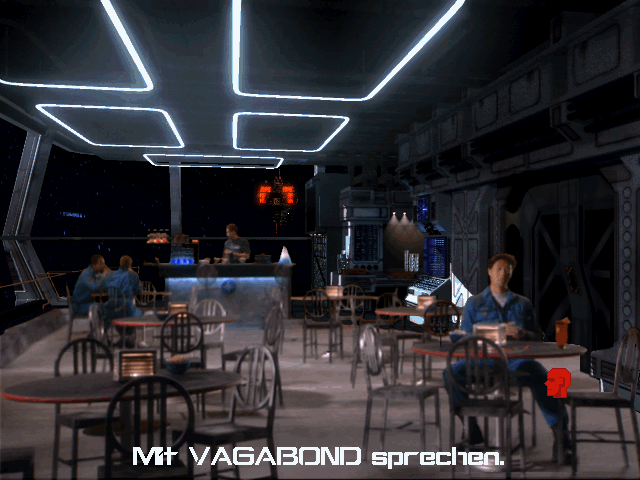
Privateer and the freedom to choose
Retro Replay: Privateer took the Wing Commander universe in a very different direction by giving players much more freedom. Where did the idea for Privateer’s open-ended approach come from?
Chris Roberts: The idea came from various role playing games I had played where I wanted the freedom to adventure out into a wide world and do what I wanted to do. It was one of the earliest open world games at the time. It’s spiritual successor is Star Citizen 🙂
Retro Replay: Privateer has developed a particularly devoted following over the years. Why do you think that style of trading, exploration and player freedom has remained so appealing?
Chris Roberts: I think it allows you to have agency which is a timeless concept.

Inside Origin
Retro Replay: Origin Systems produced an extraordinary collection of games and developers during that period. What was it about the culture at Origin that allowed so many ambitious ideas to make it into actual games?
Chris Roberts: I think because Richard Garriott was very focused on making sure it was a great environment for developers so it was – ‘developer and world building driven’. We made great games that we all wanted to play and making games as immersive as possible. We were all passionate about the immersive experience.
Retro Replay: Is there anything about the way games were developed at Origin that you miss when compared with the way large games are made today?
Chris Roberts: I miss it being quicker and simpler to do BUT things weren’t as sophisticated as they are now. It’s more difficult to manage larger teams over a longer time and things are a lot more complex today.
Pushing the hardware
Retro Replay: You have consistently pursued games that aim beyond what existing technology comfortably allows. Do you think that tendency to push the hardware started with Wing Commander, or was that already part of your personality as a developer?
Chris Roberts: I was always trying to push the limits of the hardware back when I did my BBC games or Commodore 64 games. I like doing things on the cutting edge of technology to push what I do in games that people haven’t experienced before.
Retro Replay: Looking back across Wing Commander, Privateer, Freelancer and your other earlier work, is there one game or particular feature that you think had a bigger influence on modern gaming than it generally receives credit for?
Chris Roberts: The sense of immersion in games.
Retro Replay: Is there anything from the original Wing Commander era that you would approach completely differently today if you were designing it with modern technology?
Chris Roberts: Seamless transitions. Full immersion.
Returning to a much larger universe
Retro Replay: Star Citizen has allowed you to revisit many ideas involving space simulation, immersion and player freedom on a dramatically larger scale. Are there concepts you dreamed about during the Wing Commander or Privateer years that you can finally pursue today because the technology has caught up?
Chris Roberts: Ability to travel to any planet moon and fully explore and everything is fully realized with no faking.
Retro Replay: Squadron 42 also brings you back to a cinematic, story-driven single-player space experience. How has your approach to interactive storytelling changed since Wing Commander III and IV?
Chris Roberts: Because of the technology there’s no difference between the story and the game and it’s seamless – only possible now and not back then but always what I dreamed of.
Retro Replay: After spending decades watching computer hardware evolve, are there still technological limitations today that frustrate you, or has the challenge shifted more toward managing the sheer complexity of what is now possible?
Chris Roberts: I’m always pushing technology to the limits – there’s always more 🙂
Retro Replay: When you look at the modern space-sim genre, what developments or games outside your own work have impressed you the most?
Chris Roberts: What No Man’s Sky achieved with a small team very impressive. What Elite did with a huge universe and billions of planets is impressive. Eve Online with a player driven economy and drama is impressive.
Strike Commander deserves another look
Retro Replay: Of all the games you have worked on, is there one that you personally feel is underrated or that you wish more people would go back and experience today?
Chris Roberts: Strike Commander
Retro Replay: You singled out Strike Commander as the game you wish received more recognition. Is there any piece of Strike Commander’s design philosophy or technology that has unexpectedly resurfaced in Squadron 42? Something where longtime fans might play Squadron 42 and not realize that the idea actually traces back to Strike Commander rather than Wing Commander?
Chris Roberts: Strike Commander was the first game to have 3D textures and Gouraud shading, a fully dynamic 3D cockpit which you could look around in (we were the first game engine to do that), most advanced 3D engine at the time, even before Doom.

Roberts is describing his recollection of Strike Commander’s engine and ambitions here. The technical “first” claims in his answer are his own, rather than a separate finding about the entire history of 3D graphics.
The crowd around the booth
Retro Replay: Is there a particular moment from the Origin years that still stands out as one of your favorite memories from your career?
Chris Roberts: CES 1990 was the first time we showed WC to anyone, no-one expected it and then it became the talk of the show. Huge crowds surrounded our booth. First moment we realized we had something special.
Retro Replay: For someone discovering the original Wing Commander games for the first time today, what would you want them to understand about what the team was trying to accomplish more than 35 years ago?
Chris Roberts: It’s not about the top score or beating the game it’s about the fantasy of being a hot shot pilot, saving the human race and the experience and journey you took doing it.
The pilot’s name on the helmet
Retro Replay: What are you personally most excited about in your current work right now?
Chris Roberts: Shipping Squadron42 shortly and the opportunity of people to experience it and take the same journey of WCs but to a whole other level
Retro Replay: As Squadron 42 gets closer to players finally experiencing it, is there a particular feature, scene, technology, or design idea that you are personally extremely proud of but that has received surprisingly little public attention so far? Basically, what is something you think people may be talking about after release that they are not really talking about yet?
Chris Roberts: We have a bunch of technology in the game that people haven’t seen much of yet. The character you create is in all the cinematics with a lot of personalization: your own call sign on your helmet and ship and last name on your uniform like the military, dynamic kill markings on your ship and a lot of other personalized customization that really makes you feel like you’re immersed in your own story.
Wing Commander’s future
Retro Replay: Steam and GOG just re-released legacy editions of the original Wing Commander games alongside anniversary restorations, which is introducing the franchise to a whole new generation of players. Are there any plans to do full remakes of the original franchise entries using modern hardware capabilities?
Sandi Roberts, relaying Chris’s response: Chris says who knows what will happen in the future as he just talked to Richard Garriott about how he got his Ultima IP back so he plans to do the same with WC.
This reply describes an intention to pursue the Wing Commander rights. It does not announce a completed rights transfer or confirm a remake.
Follow Chris’s current projects
Find official updates at Roberts Space Industries, the Squadron 42 website, and Cloud Imperium Games. Roberts’s comments about upcoming work reflect this interview; refer to those official channels for release announcements.
Thank you, Chris and Sandi
Our thanks to Chris Roberts for sharing these memories and answering our follow-ups, and to Sandi Roberts for arranging and relaying the conversation. We appreciate the opportunity to hear directly about the games and the people behind them.
For more on the move into filmed performances, our history of FMV video games follows the wider era. Our interview with George Sanger also explores the music surrounding games such as Wing Commander, with George telling us a funny story about Chris and his Ferrari.