Retro Replay Retro Gaming History, Reviews & Emulation
Change characters in the NES version of Maniac Mansion and you change the music. The mansion is still a terrible place to spend an evening, but now the teenager you have sent into it has brought a different record collection.
Bernard gets twitchy electronic energy. Razor gets something with teeth. A few rooms, a few verbs and a handful of little sprites become a house full of personalities. You can spend an unreasonable amount of time wondering what to do with an inventory item and still enjoy the company.
Follow some of the musicians behind that cartridge and the next stop is a space war. Then comes a haunted house, a neighbourhood full of monsters and a purple car having an extremely eventful childhood. George Sanger and his collaborators could make a fighter launch feel enormous, then turn around and give a children’s adventure a tune worth hearing again.
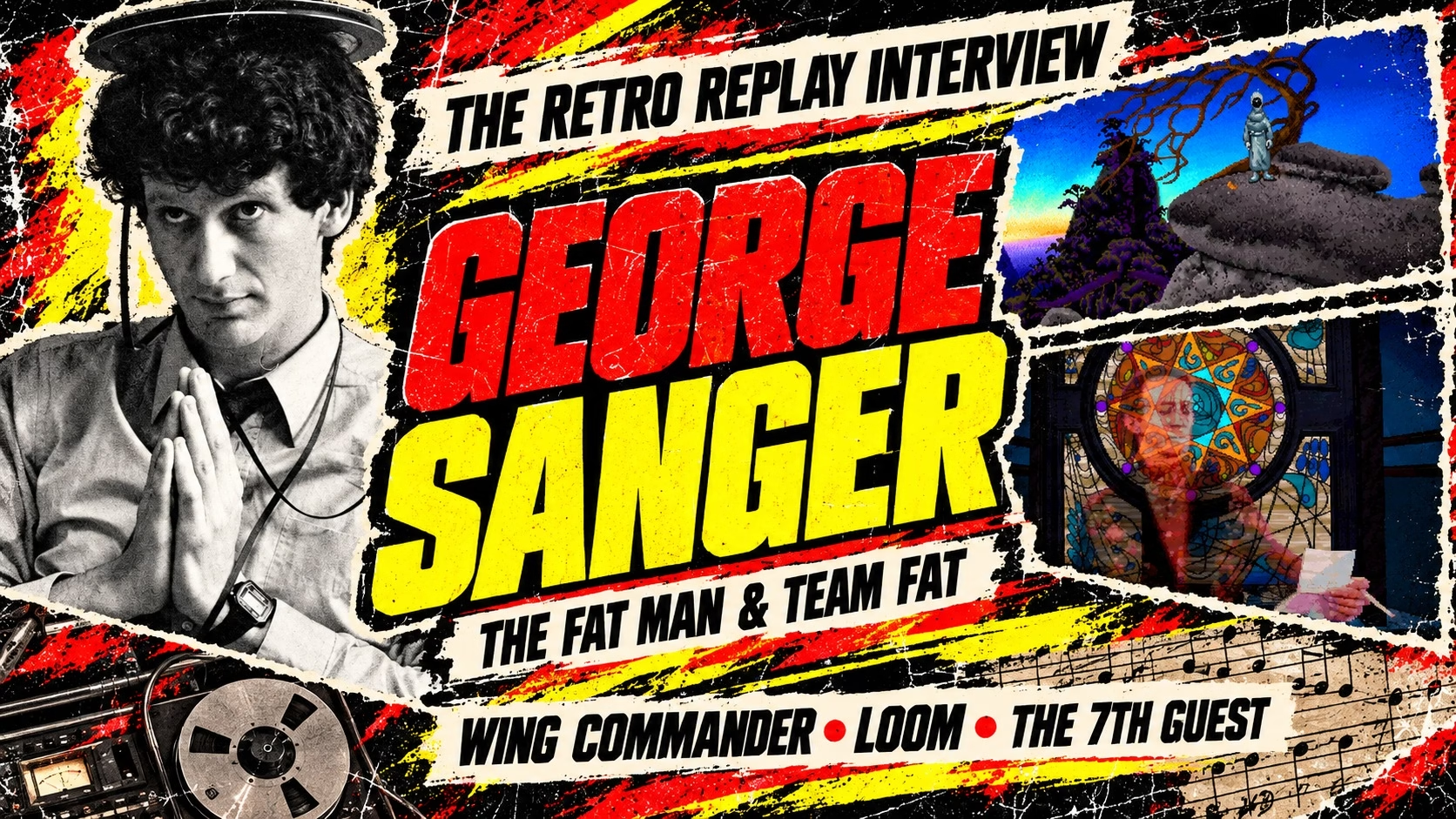
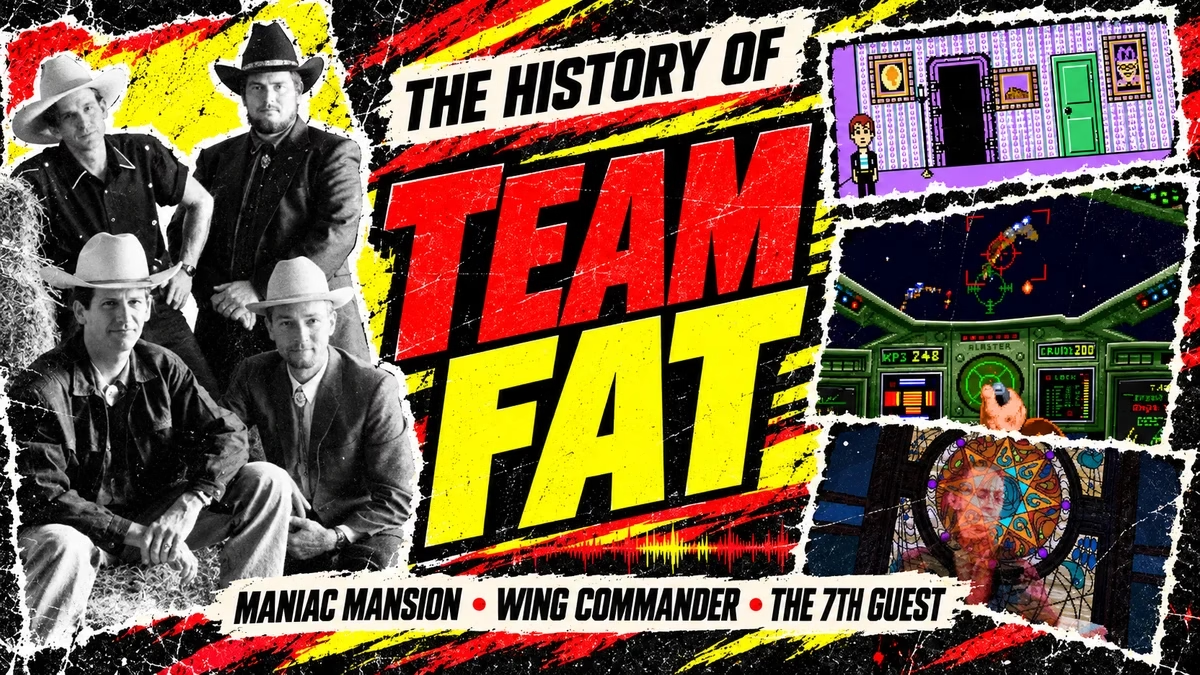
Sanger became known as The Fat Man. The classic Team Fat brought him together with Dave Govett, Joe McDermott and K. Weston Phelan, four musicians working around Austin, Texas, whose games often sounded very different from one another. Before they had a shared studio and cowboy photographs, though, there was a much smaller assignment: some music for a penguin.
Explore the history of Team Fat
- Thin Ice (1983 to 1986): a guitar, a tape recorder and some penguins
- Maniac Mansion (NES, 1990): everybody gets a theme
- Loom (1990): finding room for Swan Lake
- Wing Commander (1990): Dave Govett gets the big assignment
- Team Fat (1992): four musicians and a shared address
- The 7th Guest (1993): music for a house that enjoys keeping you waiting
- Zombies Ate My Neighbors (1993): Joe McDermott’s monster movie
- Putt-Putt (1993 to 1995): the purple car gets a band
- The mid-1990s: getting the music out of somebody else’s computer
- The recordings return (2021 onward)
- One more listen
Thin Ice (1983 to 1986): a guitar, a tape recorder and some penguins
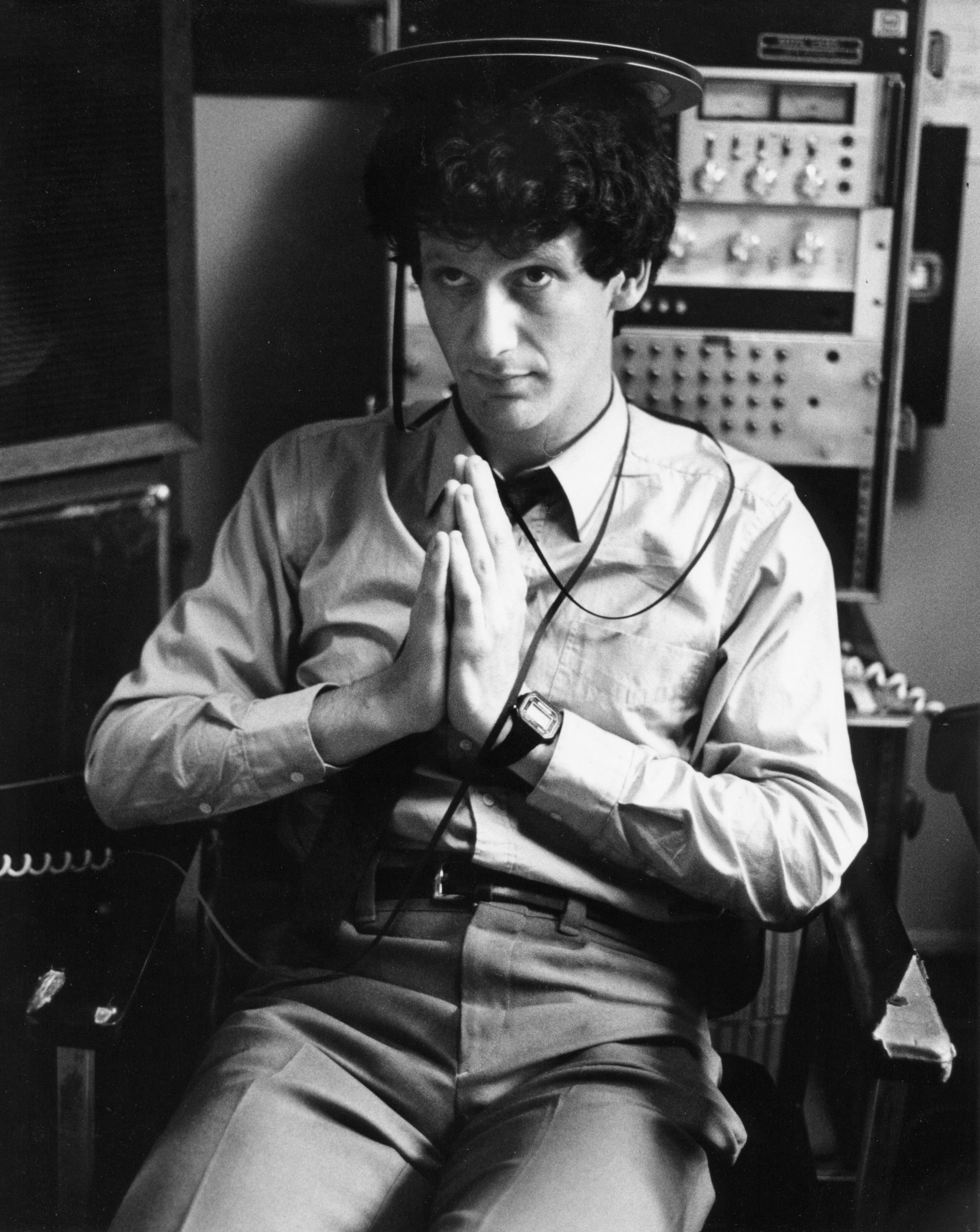
Dave Warhol was visiting when Sanger heard that he worked on Intellivision games. Warhol had been Sanger’s brother’s college roommate, which gave an aspiring game composer a useful connection in a business that barely had a recognised job for him. Sanger wanted a way in. Warhol wanted to know whether he could write music.
The assignment was wonderfully specific: ice-skating penguins, two musical voices. Sanger took out a guitar and a four-track tape recorder. He tried bass lines, found one that suggested penguins, then overdubbed melodies until he had something that felt like skating. Once he was happy, he wrote the music out by hand. Warhol put it into the game.
The composition dates to 1983. Thin Ice itself reached players in 1986, after the collapse of Mattel’s original Intellivision business. Sanger had begun writing for games before his first game reached the shops.

In Thin Ice, Duncan the penguin skates around other penguins, cutting loops in the ice and dropping them into the water. The little tune has to keep moving with him. There is no recorded orchestra hiding in the cartridge, no spare room for a luxurious arrangement. A bass and melody have to suggest the whole performance.
For Sanger, working with Warhol also meant that writing a tune and programming a machine did not have to be the same job. He could work with instruments, phrasing and a melody. Warhol could translate that into something the hardware understood. Their partnership would survive several changes of machine and a considerable increase in the number of available notes.
As the work moved onto later systems, Sanger could send MIDI files rather than handwritten manuscript. MIDI carried the instructions for a performance, such as which notes to play and when, rather than a recording of the sound itself. Warhol could hear the intended arrangement on a Roland MT-32 synthesizer, then work out how to make a much smaller console sound system deliver its character. There was still a musician at each end of the handover.
Maniac Mansion (NES, 1990): everybody gets a theme
Maniac Mansion already had a marvellous premise when it reached the NES in North America in 1990. Choose two companions for Dave, enter the Edison family’s house and try to rescue Sandy. Different teenagers can solve different problems, and a household member wandering into the wrong room can wreck a carefully arranged plan.
The original computer adventure had appeared in 1987. The North American NES adaptation gave its cast a much more insistent musical presence. Sanger, Govett and other contributors, including David Hayes and Warhol, helped supply the cartridge’s music. This was an early collaboration in the story that led to Team Fat, before the familiar four-member lineup came together.
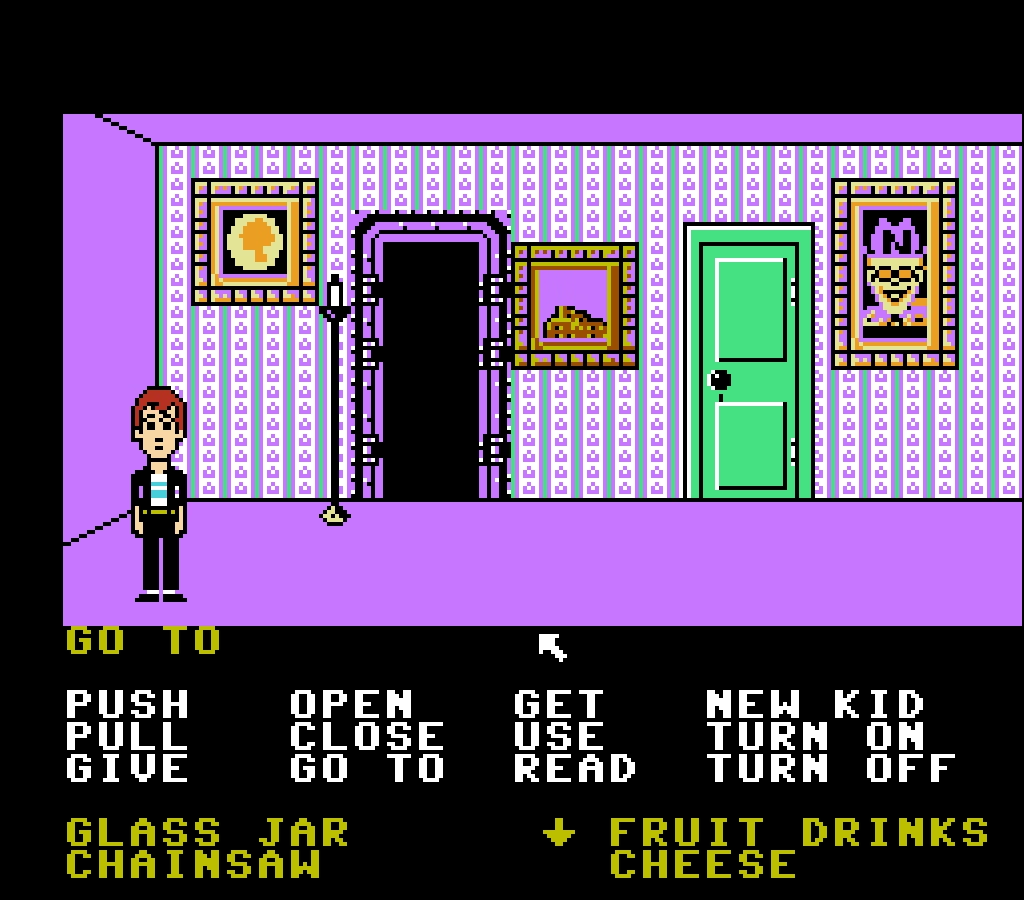
Putting a separate theme behind each playable teenager suits a game where choosing the cast is already part of the puzzle. Switch to Bernard and the music reinforces the awkward, brilliant kid standing in the room. Switch again and the mood changes without the house needing to change at all. Even someone who has never read the character descriptions can hear that these people have different tastes.
It also gives the cartridge a peculiar advantage over a more restrained presentation. A room can be almost motionless while the music keeps supplying attitude. You are choosing verbs, checking objects and trying to remember who has the key. The soundtrack sounds ready to start a band in the basement.
Govett’s contribution included Bernard’s music, a detail Sanger recalls when describing how their partnership developed. Dave’s theme had its own collaborators: Sanger’s MAGWest 2023 appearance with Pixelated Audio credits that piece to Hayes and Warhol. The affection for the NES soundtrack has sometimes gathered every tune under The Fat Man’s name, but the actual music was already a group effort.
Warhol’s conversion work helped those personalities survive the trip from a composer’s equipment to the NES. The console could not simply play back the studio sound. Instruments had to be suggested through a small set of voices, with rhythmic details and carefully chosen tones doing much of the work. The finished themes are bright, direct and very difficult to mistake for background wallpaper.
Loom (1990): finding room for Swan Lake
While the NES teenagers were bringing their own music into a mad scientist’s house, another Lucasfilm adventure asked players to listen closely enough to perform magic. In Loom, Bobbin Threadbare learns short musical drafts and plays them on his distaff. Hearing a sequence, remembering it and sometimes reversing it opens a path through the world.
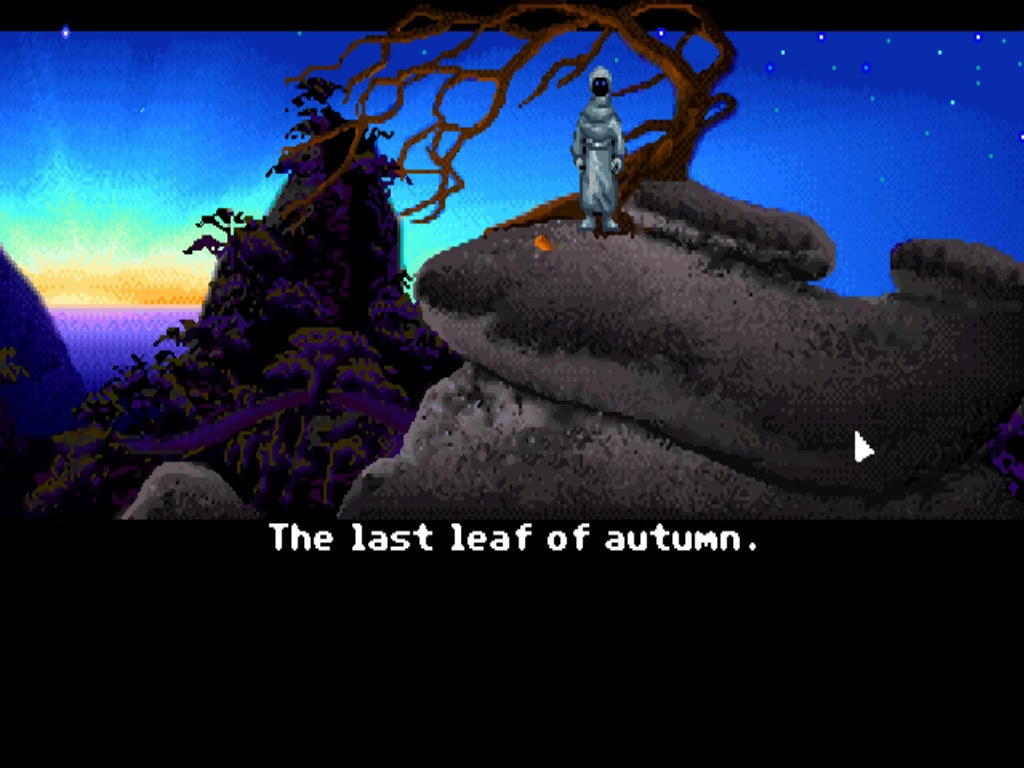
That musical puzzle language belonged to designer Brian Moriarty’s game. Sanger’s task was to adapt Tchaikovsky’s Swan Lake for its score, preparing the music for the MT-32 and reducing it for other sound hardware. A familiar ballet had to accompany a very unfamiliar adventure, with its hooded weavers, transformations and unsettling disappearances.
Sanger studied the movement of an orchestral performance, following changes of tempo and dynamics rather than treating the printed notes as enough. That extra attention is easy to appreciate in a game this quiet. Bobbin can stand beside a tree above the sea while the music does much of the speaking. Rush the phrase and the scene becomes impatient. Let it breathe and there is room to look.
Loom is a short, concentrated journey, and different releases changed its sound and presentation. The original MIDI arrangements belong to a particular version of that journey. A later CD release is not an interchangeable recording of the same performance.
Put it beside Maniac Mansion’s NES themes and Sanger’s working week begins to look rather interesting. One project needed teenagers who sounded like themselves. Another needed a nineteenth-century ballet to feel at home on a computer. Before Team Fat had its best-known studio identity, its musicians were already learning to change musical clothes quickly.
Wing Commander (1990): Dave Govett gets the big assignment
Chris Roberts wanted the music in Wing Commander to carry the excitement of a space film. The ships, pilots and carrier life were there to persuade you that a mission mattered before you had even reached the launch tube. A thin little tune would have had a lot of scenery to compete with.
In our George Sanger interview, Sanger remembers Roberts asking for something like Star Wars, or the Star Trek movie.
Sanger was busy. He passed the assignment to Govett, who loved John Williams’s music and had orchestral ideas waiting for somewhere to go.
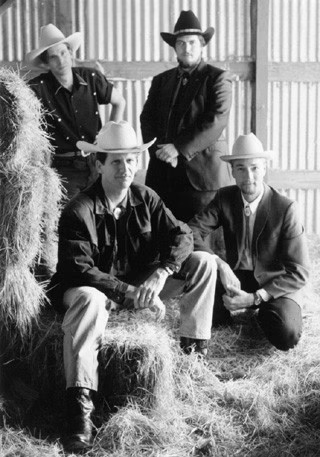
Govett supplied the main theme and dogfight music. Sanger brought the assignment and helped produce the work; the soundtrack credits name both men. The opening’s military sweep belongs at the centre of Govett’s story. You can hear the ambition immediately: a computer game announcing its space war with the confidence of something that expects a cinema screen.
Once you climb into the cockpit, the score has another job. The display is busy with shields, radar, weapons and an enemy that refuses to stay where you want it. The music helps that small window onto space feel urgent. A fighter passing across the screen becomes part of a much larger battle than the visible handful of ships.
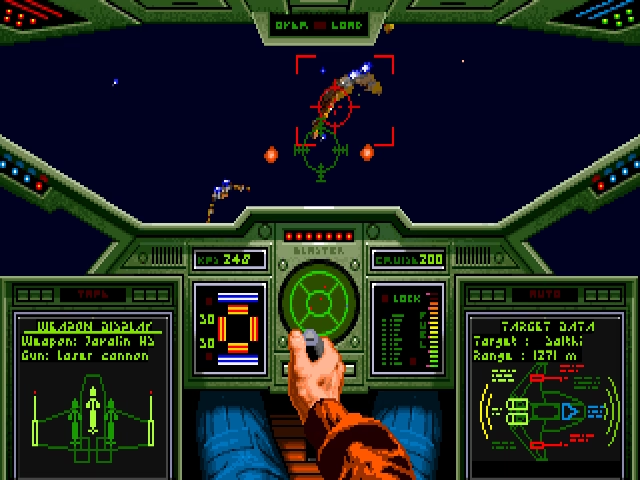
Roberts then wanted changes for particular combat situations. Sanger describes requests for moments such as a missile chasing the player or a wingman taking a hit. The existing dogfight music was divided into sections that the game could switch between. The composer was no longer handing over one piece that simply ran until the fight ended.
Those cuts can sound abrupt to modern ears. Wing Commander did not have the vast recorded layers and smooth transitions available to a contemporary audio team. But the sudden change could still make the game feel alert to your predicament. When something went wrong, the music did not have to continue behaving as though everything was fine.
The carrier scenes gave the excitement somewhere to settle. Briefings, conversations and the return from a mission let a player live with the consequences between sorties. Govett and Sanger were helping score a whole routine of anticipation, action and recovery, not merely a shooting gallery. The complete original soundtrack makes those changes of mood particularly easy to hear.
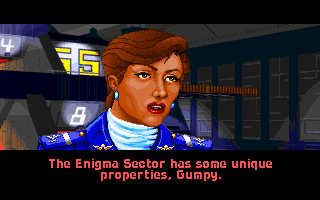
Wing Commander II: Vengeance of the Kilrathi followed in 1991, bringing the pilots and their relationships further forward. It belongs to the same early stretch of Govett and Sanger’s collaboration, before later games brought other composers into the series. Away from the carrier, their own circle of musicians was growing.
Team Fat (1992): four musicians and a shared address
By 1992, the partnership had grown into the classic Team Fat: Sanger, Govett, McDermott and Phelan. Bandcamp Daily’s interviews with the group place that lineup’s formation in 1992, nine years after Sanger’s penguin commission.
Govett could take an orchestral idea and make it stride into the room. McDermott brought experience in rock and children’s music. Phelan worked across music, sound design and engineering, including the business of getting a convincing instrument out of the available equipment. Sanger composed, produced and connected people with assignments. Kathleen Maher’s June 1994 Game Developer profile catches those different strengths while the group was working together.
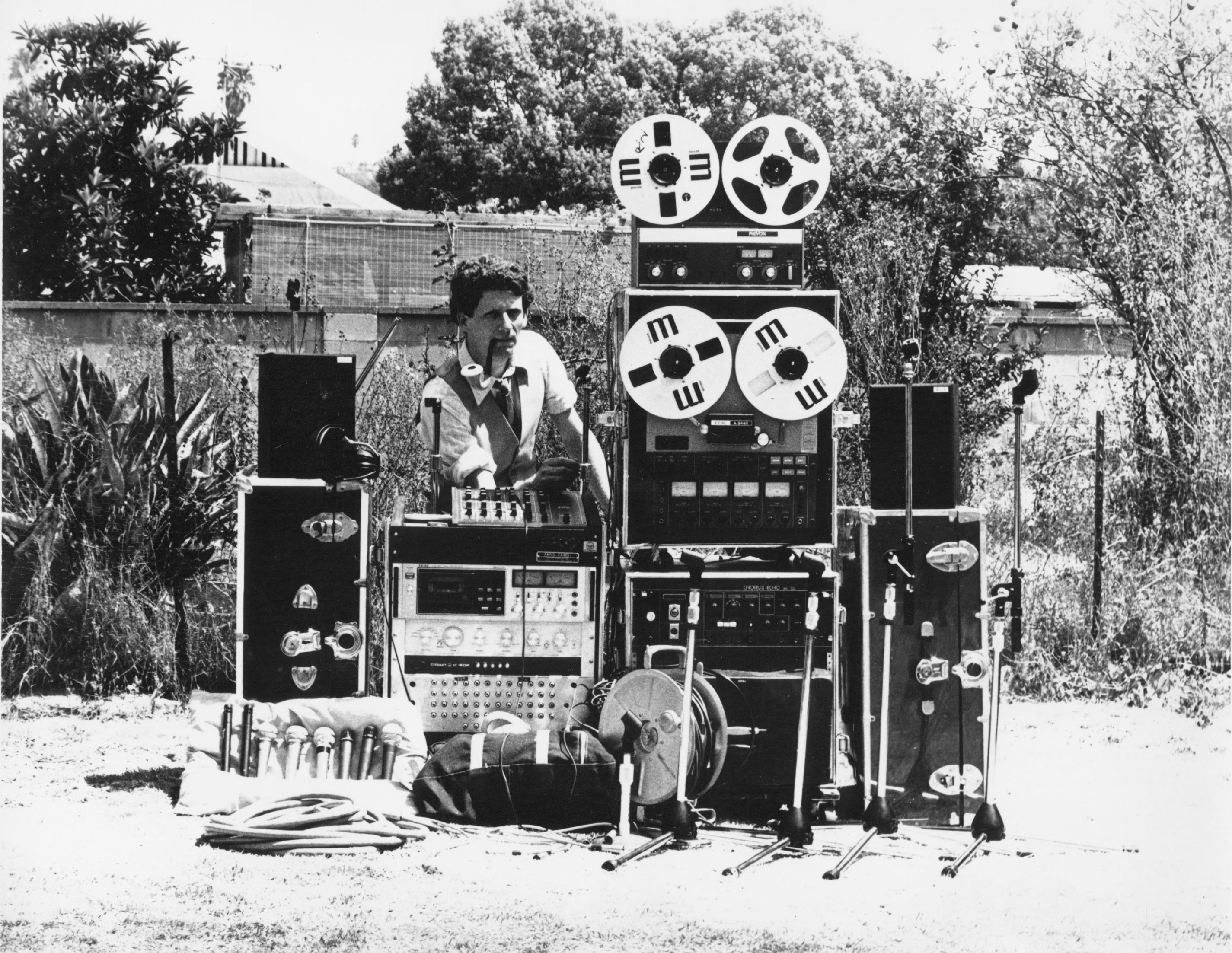
The shared space made it possible to hear what someone else was doing, lend a hand or try a different approach without arranging a formal studio session across town. These were musicians with overlapping skills and distinct enthusiasms. A commission could grow beyond the contents of one person’s keyboard.
Sanger remembers the friendship before the organisation chart. The miracle was that the right people showed up.
In his conversation with Retro Replay, the studio becomes a clubhouse full of instruments, tools, curiosities and friends. The cowboy outfits and funny cars fit a musical life he had imagined through the Beatles and the Monkees on screen.
There were deadlines underneath the hats. Developers needed finished music, sound effects, usable files and somebody who understood how those sounds would reach a player. A catchy idea could lose much of its charm if it arrived late or played through the wrong instrument. Team Fat’s ability to move between composition and practical audio work kept that shared room busy.
The 7th Guest (1993): music for a house that enjoys keeping you waiting
Henry Stauf’s house is an excellent place to get stuck. There are elaborate rooms to explore, spectral people acting out a dreadful past and puzzles that can stop an evening dead. Trilobyte’s The 7th Guest dressed its obstacles in rendered scenery and filmed performances, giving a new CD-ROM drive something suitably extravagant to show off.
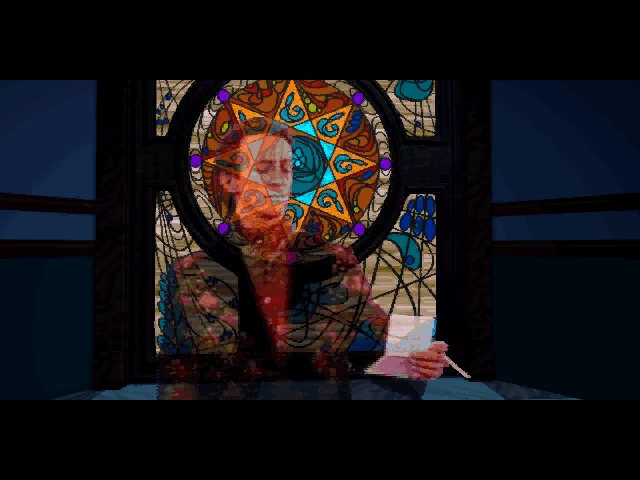
Sanger’s score had to live in that house for as long as the player did. A piece that sounds impressive on first entering a room still has to bear being heard while someone fails a puzzle, thinks about it, then fails in a slightly different way. The music can creep, brood and poke fun without exhausting every surprise in the first minute.
It helps that the score has personality beyond a supply of ominous noises. There is theatrical mischief in the house alongside the menace. Melodies give you something to recognise on returning to its spaces, while the strange setting allows sounds that would be comically out of place in a more sober mystery. Stauf is not running a tasteful country hotel.
The CD-ROM reputation can obscure a useful detail: the original game combined MIDI gameplay music with recorded audio in selected sequences. An April 1993 Electronic Musician report describes the gameplay score being composed with a Roland Sound Canvas and CD-standard audio used for the opening, credits and ending. The whole soundtrack was not simply one long CD recording playing behind the puzzles.
Then there were the songs. The Game and Skeletons in My Closet could step outside the room-by-room puzzle routine and give the production a different voice. Sanger’s enthusiasm for that possibility remains wonderfully direct: But songs make the game’s world so much bigger, don’t they?
He discusses that side of the work in our interview about The 7th Guest and Team Fat.
Skeletons in My Closet was written by George’s brother, David Sanger, as the official soundtrack credits record. The family resemblance in the credits conceals a separate songwriting contribution, one that gave the haunted house a particularly memorable song of its own.
The 7th Guest can be awkward to return to. Its puzzles do not all become better with age, and the performance style will not persuade every visitor. The soundtrack is much easier company. It can keep its theatrical grin when the expensive novelty of the filmed ghosts has worn away.
The 11th Hour brought Sanger back for the 1995 sequel. Its more adult horror and renewed live-action spectacle gave the music another trip through Stauf’s territory. The two games later shared space on 7/11: Music from The 7th Guest and The 11th Hour, released in 1997. Listeners could finally spend time with those pieces without earning the next one by solving something.
Zombies Ate My Neighbors (1993): Joe McDermott’s monster movie
Leave Stauf’s house and there are monsters in the suburbs too. Zombies Ate My Neighbors sends its young heroes through neighbourhoods, shopping areas and other increasingly unpleasant places to rescue people who have chosen a very bad day to stand outside. The weapons are ridiculous, the enemies arrive in crowds and a second player can turn a rescue into a noisy argument over who needs help first.

The composer was Joe McDermott, with Sanger producing and mentoring him. In McDermott’s own account, Sanger first brought him into sound-editing work and then composition. Warhol encouraged research into old science-fiction films. A lonely guitar sound from remembered monster-movie television helped feed the music that became Is Anyone Outside?
That combination of menace and fun fits the game beautifully. You can recognise the horror-film ingredients without being asked to take every wandering enemy seriously. The music gives a chase an extra nudge and makes a suburban street feel just wrong enough. It has room for a joke without announcing that the whole adventure is a joke.
McDermott also had to make the SNES version’s sounds fit a very small memory budget. Short samples and loops had to suggest much larger instruments, with tiny scraps of voice among the available tricks. You hear the character of a sound before you have time to worry about how much of it has been stored.

The score has an identity far removed from Wing Commander’s ceremonial brass or Loom’s ballet. That distance is part of the pleasure in following the people through the credits. Team Fat could put a different musician’s strengths at the front of a project. McDermott’s monster music deserves his name beside it.
Putt-Putt (1993 to 1995): the purple car gets a band
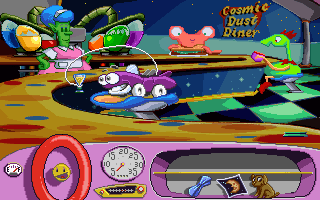
A child playing Putt-Putt Goes to the Moon has no reason to care how many synthesizers are in the studio. There is a friendly car to steer through a cartoon adventure, a way home to find and plenty of things worth clicking along the way. The music makes this peculiar trip feel like somewhere it might be nice to spend an afternoon.
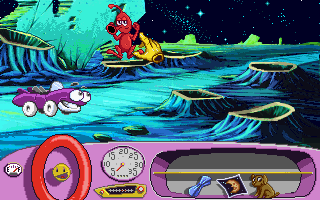
For the 1993 game, Sanger brought players together to perform parts of the score, including pianist Floyd Domino, organist and bassist Nick Connolly, and drummer David Sanger. His original notes, reproduced with the soundtrack, describe musicians playing together while the computer captured the performance. MIDI could retain the movement of a shared performance as well as carry the notes of one person working alone.
The resulting soundtrack has swing, ragtime and little changes of pace that make the Moon a surprisingly sociable destination. It does not have to sound cold simply because the setting is space. These are tunes for a cartoon adventure where a purple car is already a perfectly acceptable protagonist.
The album credits also acknowledge Tom McMail’s melody from Putt-Putt Joins the Parade. Sanger’s score was entering an existing character’s musical world, then taking it somewhere new. Even a car launching towards the Moon benefits from having something familiar to take along.
Putt-Putt Saves the Zoo in 1995 gave the whole classic team a particularly happy assignment. Its lost baby animals create small, understandable problems, with the pleasure of putting the place back together. A tune can welcome a player into a new area, then stay cheerful while that player works out what the animal needs.
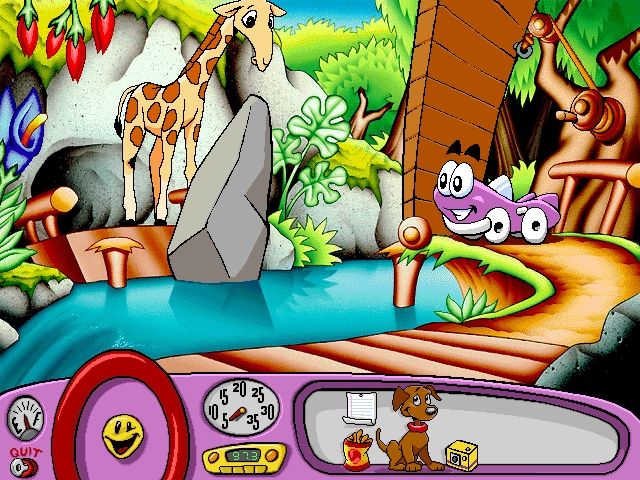
The complete soundtrack recordings let you hear individual contributions inside that shared outing. Track credits move between McDermott, Govett, Phelan and Sanger. The same collection makes room for percussion, whistling, songs and the Rhyming Monkeys, voiced by Sanger, John Houck and Phelan.
Sanger’s album notes remember the group sharing a little house in Leander, with goats next door, a porch for whittling and a hand-operated pump in the floor. It is a much more appealing studio picture than another photograph of a dark room full of equipment. You can imagine stepping away from a difficult arrangement and finding somebody on the porch.
Those children’s games were substantial musical work, with arrangements, performances and voices to organise. They also gave the musicians permission to be silly. A zoo full of singing and chatting animals could absorb a good deal more musical misbehaviour than a solemn military briefing.
The mid-1990s: getting the music out of somebody else’s computer
A player could buy a game, install it correctly and still hear a different arrangement from the one the composer intended. MIDI told a sound card which instrument to use, but two cards could have very different ideas of what that instrument sounded like. A carefully balanced passage might arrive with a weak lead, an overbearing accompaniment or a sound that suggested the wrong thing altogether.
Team Fat took on some of that less visible work. Maher’s 1994 Game Developer report describes Yamaha licensing a Fat Man General MIDI instrument set for its OPL2 and OPL3 technology, with Phelan central to building the sounds. Sanger’s Fat Seal work also concerned the quality and consistency of playback. It was an attempt to make the music survive the journey into the customer’s machine, where the composer could no longer reach over and adjust it.
For someone playing Wing Commander or a children’s adventure, this could change the feel of the whole performance. The right notes were not much comfort if the instrument meant to carry the tune could barely be heard. A musician’s day might therefore include writing a melody, changing a synthetic instrument and testing what happened on another piece of hardware.
In 1996, Sanger helped start Project Bar-B-Q, bringing people from different corners of the audio business together to work through common problems. Its official archive records gatherings from 1996 through 2019, with reports from working groups. These were meetings where composers, engineers and other industry people could talk about the awkward bits between their jobs.

The working environment retained some fairly unusual diversions. Booger, Sanger’s pet ferret, had a tube from his cage into a non-working microwave in the neighbouring studio. A visiting musician could encounter a small furry animal emerging where dinner ought to be. The photographs make the story easier to believe, although probably no easier to explain to a visitor.
There is a practical breadth to the career that the game-title lists miss. The same circle could be composing, recording, solving playback problems and connecting other people who needed to solve them. Sanger later worked in mixed reality as Magic Leap’s first audio hire and audio director, according to his official biography. New machines kept bringing new questions about where a sound should come from and what a listener would actually hear.
The recordings return (2021 onward)
For years, a favourite piece of game music might be easiest to hear by loading the game, reaching the right room and leaving the character there. A soundtrack release could change that, but finding the correct files decades later was another job entirely. Different versions, missing material and the sound of the playback equipment all had to be untangled.
Fan and curator Tim Knox contacted Sanger in 2014. Their work eventually helped bring a group of Humongous Entertainment soundtracks to Bandcamp in 2021, a process described in Bandcamp Daily’s conversations with the musicians. The album credits give that recovery work names, alongside the original performers and composers.
The Putt-Putt Goes to the Moon release, for example, credits Justin Kovar at the University of Texas at Austin Video Game Archive with recovering Come Home Soon and its variations. The collection includes unused material as well as familiar pieces. The purple car’s short adventure had left behind more music than a player could hear on one journey through it.
Wing Commander received its own detailed treatment. The 2022 MT-32 archival edition credits Andrew Harrington with research, curation, recording, editing and track notes. It lets the opening fanfare sit beside the smaller cues that accompanied life on the carrier, failure and return. The big theme is still the obvious attraction, but the complete programme has room for the music a successful mission might cause you to miss.
The 2021 Come Back releases revisited The 7th Guest and The 11th Hour too. Sanger’s notes thank fans who found MIDI files, compared versions and helped arrange a coherent listening order. That kind of assistance is less glamorous than recording a new theme, but it determines whether a listener hears the intended piece or simply the first surviving copy somebody found.
In 2023, the mansion opened again in The 7th Guest VR. The new score was composed by Jonathan van den Wijngaarden, using Sanger’s original themes. The soundtrack credits also bring Sanger back on vocals and guitar. This was a new musician revisiting the house, with one of its original musical inhabitants invited along.
One more listen
Team Fat’s official site keeps the classic four-man group in view, while describing the wider name as Sanger gathering the talent an audio project needs. New collaborators can join a project without displacing the affection for that old photograph of four musicians in cowboy hats.
For a return to the adventures, ScummVM is a useful starting point for supported versions of Loom, The 7th Guest and the Humongous games. Check the project’s compatibility information for the edition you own, and remember that a later release may have a different soundtrack arrangement. The Putt-Putt soundtrack pages also supply files and instructions for using their recovered recordings with ScummVM.
For the music alone, the official Fat Man and Team Fat catalogue is a much easier route than leaving a character waiting in a room. Go from Wing Commander’s opening to a Putt-Putt tune, then to something from Stauf’s house. The change is half the fun. A small collection of musicians had a remarkably broad set of places to take you.
And if you go back to the NES mansion, try changing characters before deciding what to do next. Bernard still has his own music. The house is still full of trouble. At least the company is good.
Related histories
Sources and further reading
- George Sanger interview, Retro Replay. Our conversation about Thin Ice, Warhol’s implementation work, Loom, Govett’s Wing Commander assignment, the studio and songs.
- The Fat Man and Team Fat, official biography. The classic group, the wider Team Fat name and Sanger’s later audio work.
- Kathleen Maher, The Fat Man Sings, Game Developer, June 1994, pp. 18 to 22. A contemporary profile of the four musicians, sound-card work and studio practice.
- Electronic Musician, April 1993. The contemporary multimedia report describes The 7th Guest’s MIDI gameplay score and recorded CD audio.
- Pixelated Audio, MAGWest 2023 with George Sanger. A live conversation and musical programme with individual track credits.
- Bandcamp Daily, Team Fat’s Goofball Children’s Music Revolutionized Video Game Audio. Interviews covering the 1992 lineup, the shared studio and later soundtrack recovery.
- Joe McDermott, Zombies Ate My Neighbours Q&A, 2016. McDermott describes composing the music, Sanger’s mentorship and sample constraints.
- Wing Commander I, complete original soundtrack, MT-32 archival edition. Composer, production and archival credits for the 2022 release.
- The 7th Guest, Come Back soundtrack. Composition credits, including David Sanger’s Skeletons in My Closet, and recovery notes.
- 7/11: Music from The 7th Guest and The 11th Hour. The 1997 soundtrack collection and original composition credits.
- Putt-Putt Goes to the Moon, official soundtrack. Sanger’s 1993 and 2021 notes, performers and recovered material.
- Putt-Putt Saves the Zoo, the complete recordings. Individual track credits, group reminiscences and vocal and percussion performers.
- Project Bar-B-Q, official reports archive. The audio gatherings and working-group reports from 1996 through 2019.
- The 7th Guest VR, original soundtrack. Jonathan van den Wijngaarden’s new score, original themes by Sanger and performers.
- ScummVM, official compatibility information. Check supported games and the notes for the stable release and edition you use.
- The Fat Man and Team Fat, official music catalogue. Official soundtrack releases and listening pages.